

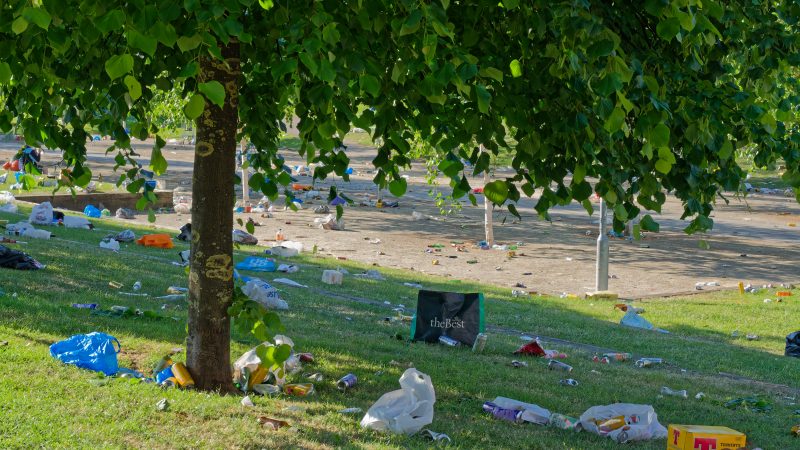

Most people want clean streets and parks, and they recognise that maintaining public spaces is a vital public service. While Labour councillors across Britain fight to protect these services, we see the Green Party councillors have chosen to attempt to insert themselves into these services with their weekly litter picks that are often shared widely on social media, where their grassroots action at times resembles performative photo opportunities.
Despite the political and social value of councillors of all parties engaging in occasional community clean-ups, the problem with weekly litter picks is that the focus remains fixed on the litter problem rather than the long-term solutions.
Local councils invest significant funds in cleaning services, including litter picking. Litter picks should not replace councillors’ scrutiny of these services.
To ensure constituents live in clean and tidy communities, surely councillors should prioritise walkabouts, identify where cleaning agreements are not being met, and advocate for change. In Southwark, instead of ensuring public money is well spent, Green Party councillors and activists are attempting to subtly position themselves as part of cleaning teams in their wards. This may explain why they do not appear to hold the Green-led coalition controlling Southwark Council to account in this area, which neglects a core part of the councillor role. And if they do challenge the council, I think we can all agree that any scrutiny is less visible than their weekly litter picks shared widely on social media.
READ MORE: ‘A renaissance of our high streets is in reach’
Despite changing societal attitudes towards climate change and recycling, littering remains a persistent social problem. Rather than encouraging behavioural change and empowering people to hold the council accountable, Southwark’s Green Party councillors and their activists create the impression that community uncleanliness can be solved through voluntarism alone. This may encourage reliance on them over personal and collective responsibility, which can do a disservice to communities.
A study by Keep Britain Tidy found that 52% of people believe that littering has become a social norm, while 62% felt that a ‘lack of pride’ in the maintenance of community spaces increased littering.
The report also revealed that ‘the most deprived areas had nearly three times as much litter compared to the least deprived areas’. It is clear that littering is tied to socio-economic inequalities. While littering is often framed as an individual failure, solving it requires challenging social norms and policy interventions, from bin sizes to collection frequencies.
Become a friend of LabourList and join our community. Our friends support our vital non-factional work and get access to exclusive content and events.
We can also learn from European countries that have introduced incentives to encourage people to reduce, recycle and reuse their waste responsibly. For example, in Germany , the Pfand deposit-return scheme places a refundable deposit on many drinks containers, creating a direct financial incentive for consumers to return bottles and cans for recycling. With return rates of around 96-98%, it is one of the most successful recycling systems in Europe. In Belgium, a “smart deposit” scheme has been piloted to incentivise the return of drinks containers which builds on the country’s effective recycling infrastructure. France is also expanding deposit-return schemes for glass bottles and jars, offering citizens refunds for returned containers.
These examples show that litter reduction is possible, when governments combine personal responsibility with policy interventions that include financial incentives, rather than relying on volunteer community clean-ups. Councillors’ engagement in community clean-ups are valuable, but they should not become a substitute for holding councils to account and policy interventions.
Subscribe here to our daily newsletter roundup of Labour news, analysis and comment– and follow us on TikTok, Bluesky, WhatsApp, X and Facebook. You can also write to our editor to share your thoughts on our stories and share your own. The best letters are published every Sunday.
-
- SHARE: If you have anything to share that we should be looking into or publishing about this story – or any other topic involving Labour– contact us (strictly anonymously if you wish) at [email protected].
- SUBSCRIBE: Sign up to LabourList’s morning email here for the best briefing on everything Labour, every weekday morning.
- BECOME A FRIEND: If you enjoyed this, why not consider becoming a Friend of LabourList? Help sustain our journalism, and of course Friends do get benefits…
- PARTNER: If you or your organisation might be interested in partnering with us on sponsored events or projects, email [email protected].
- ADVERTISE: If your organisation would like to advertise or run sponsored pieces on LabourList‘s daily newsletter or website, contact our exclusive ad partners Total Politics at [email protected].




More from LabourList
‘Why Iceland’s EU referendum matters to British progressives’
‘Beyond recruitment: a new fostering plan that offers real hope’
Reform’s rotten culture is exposed