

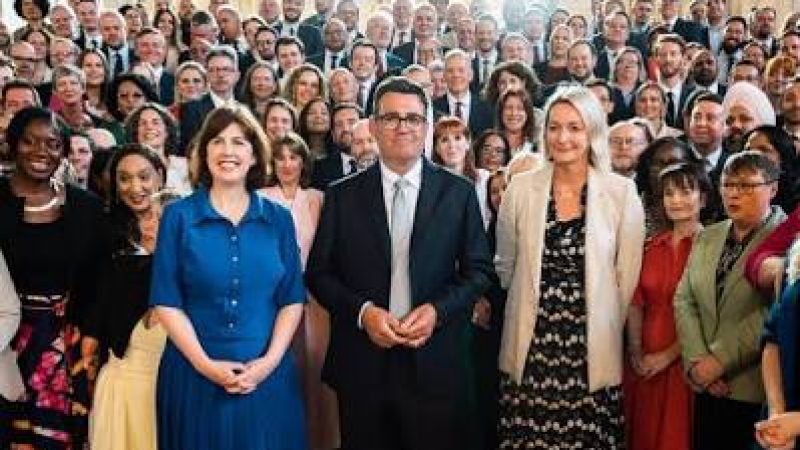

I’ve worked in political, campaigning and voluntary sector organisations for about a quarter of a century. I have worked in high-functioning organisations and ones that were deeply dysfunctional. I’ve worked for good bosses and bad ones. I’ve seen leadership and culture change up close – done well and done badly. As Andy Burnham sets out the very different way he wants Labour to work in Parliament, I have been thinking about the lessons I’ve learned from the good and the bad over the years. Here are my three key takeaways:
Culture has to match values, but values do not always match culture
Most of the organisations I have worked for over the years all have missions that I truly believe in. I have had the enormous privilege of being able to spend most of my professional life working for causes that matter and organisations that make a difference whether in direct delivery or in the policies they advocate for.
None of which means that there has ever been a guarantee that these organisations will be a model of good workplace culture. In fact, because staff tend to believe in the cause they are working towards, it can often be easier to accept a poor culture in the belief that the organisation and its mission matter more.
In my experience that feeling does not – and cannot – last. Because, from MPs to campaigners everyone in these organisations are people too. They have their own needs and ambitions and need to see that they are valued in the contribution they are making or they will find somewhere else to make it.
READ MORE: Teamwork makes the dream work
Organisations are most successful when they do not just try to change the world but model the world they want to see. Staff that understand their value not just in how they are remunerated but – often more importantly – in how they are treated are more productive. They are more likely to feel happy and comfortable giving their all. They can happily take the message of their mission into the outside world, talking to their friends and acquaintances about what they do with passion and pride.
Culture can’t just be talked about at the top – it has to be modelled there too
A small example of excellent leadership has stayed with me for many years. I worked for an organisation with several hundred employees. The CEO was in constant meetings with government officials, appearing on national television, taking difficult decisions about the strategy and management of a highly complex organisation. But they also had a rule that if you sent them an email (something I, even as a pretty junior employee, always felt free to do), if they were in the building they would come to your desk to talk to you about it. They wrote personalised Christmas cards to everyone. I still have one because the message in it – that they understood the work I did and valued it – mattered so much to me.
Equally, I have worked for people who talk a great deal about the need for good leadership, good strategy, good culture and radical empowerment of workers. All the while they would refuse to engage in any conversation about staff frustrations, things that could improve our own culture and sense of empowerment.
This might feel safer for an insecure CEO, but in the end I have, almost without exception, seen it blow up into a much bigger problem for the organisation. To truly run an effective organisation (and nothing matters more in politics than being effective because we are not doing all this for ourselves but for the people we represent) you have to have the bravery to talk about issues as they arise and work in tandem with people to ensure the best outcome for the mission.
If Burnham is to succeed in changing the culture of the PLP, the biggest challenge for him will not come in pleasing those who agree with his approach but in making those who don’t feel that they are valued and included members of the team able to voice concerns and not have them simply dismissed even if they are ultimately not agreed with.
The people you like the most are not always the people best suited to their job
One of the hardest challenges in modelling good culture comes when having to deal with the failings of individuals within it. One of the most complicated things any leader has to face is the difference between being nice and doing what is right. Equally, there is nothing more destabilising for an organisation than a leader who is failing in an organisation where staff have no way of trying to help them turn that around.
Become a friend of LabourList and join our community. Our friends support our vital non-factional work and get access to exclusive content and events.
People who are failing or who are behaving poorly are often the first ones who know this themselves at heart. It is not good for them to ignore it and fail yourself in helping them to learn and grow. Equally, the impact is felt not just by them and their managers but by all of those around them. This is hugely damaging to them in terms of deteriorating relationships with colleagues, to their hurt and frustrated colleagues and to the wider organisation. Culture change demands radical honesty where people are able to speak freely about where they feel they may be failing and leaders can intervene with confidence before any crisis is even on the horizon. None of which is even close to the way any of us are used to doing – or talking about – the cutthroat world of politics.
An organisation that can support them to change their behaviour or improve their work is one which will succeed. An organisation that knows where the line is in terms of that behaviour and failure and has strong processes to deal with it is also one which will succeed. An organisation which has neither of these things will fail. It will fall into drift at the top as huge amounts of time and energy are taken up with dealing with internal issues and management rather than having the time, space and capacity to focus on the mission that is what brought everyone to the organisation in the first place.
However, this does not mean simply swapping people out of their jobs without any thought to what has led to this moment of failure. As Andy chooses his new Cabinet some people will remain either in their current positions or in different ones within the top team. Others will move to the backbenches. How they are treated in that process will matter enormously to how they behave next. And how they behave next will – as recent history has shown – have a huge impact on the success or failure of the government.
I really hope that Burnham can succeed in changing the culture of the PLP. Because a well-functioning happy group of MPs who understand their role and its value within a wider team – from the Chancellor to backbencher – will be one far more likely to succeed against the headwinds Labour faces. It won’t guarantee success – but it will make it considerably more likely.
Subscribe here to our daily newsletter roundup of Labour news, analysis and comment– and follow us on TikTok, Bluesky, WhatsApp, X and Facebook. You can also write to our editor to share your thoughts on our stories and share your own. The best letters are published every Sunday.
-
- SHARE: If you have anything to share that we should be looking into or publishing about this story – or any other topic involving Labour– contact us (strictly anonymously if you wish) at [email protected].
- SUBSCRIBE: Sign up to LabourList’s morning email here for the best briefing on everything Labour, every weekday morning.
- BECOME A FRIEND: If you enjoyed this, why not consider becoming a Friend of LabourList? Help sustain our journalism, and of course Friends do get benefits…
- PARTNER: If you or your organisation might be interested in partnering with us on sponsored events or projects, email [email protected].
- ADVERTISE: If your organisation would like to advertise or run sponsored pieces on LabourList‘s daily newsletter or website, contact our exclusive ad partners Total Politics at [email protected].



More from LabourList
Good growth in every postcode 21st October 2026
‘Labour must put culture at the heart of their youth mental health plan’
‘The Thames Valley is driving growth. Devolution can turbocharge it.’