

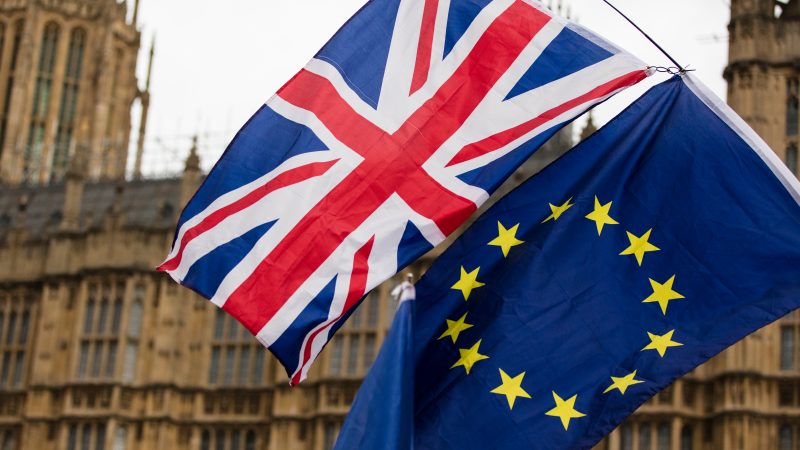

This is the second of two pieces exploring the options for Britain’s future relationship with the EU by former European Parliamentary Labour Party leader Richard Corbett. You can read the first part here.
It is likely that the debate launched by Andy Burnham on the options of what to do about the failure of Brexit, will lead to a majority view that EU membership is in our best interests. Public opinion has already been shifting slowly but very steadily in that direction.
But such a conclusion would immediately give rise to questions about its feasibility and opponents will point to alleged constraints and obstacles and problems. Indeed, they already conjured up a long list. What are these alleged obstacles and difficulties, and do they stack up?
Would the EU want us back?
Yes. If the one member state ever to have left the EU comes back a few years later saying leaving was a dreadful mistake, it would vindicate the existence and raison d’etre of the EU. Indeed, several national leaders from across the political spectrum have already made it clear that they would like us back if that is what the British people want.
Brexit has damaged the EU too, albeit not as much has it damaged Britain, and the opportunity to rectify that would be welcomed and even (unlike the complicated piecemeal and partial approach taken by Britain so far) see them take a positive position in the negotiations.
Would it take ten years?
No. Britain, as a former Member State, is still aligned with most EU rules. It is worth recalling that when Finland applied to join, negotiations took just two years, as it was similarly already aligned with much EU legislation through the EEA.
READ MORE: Ed Miliband addresses party conference for first time as Foreign Secretary – his speech in full
Would we have to join Schengen?
No. Ireland is not in the Schengen passport-free travel area. Neither Britain nor Ireland joined it back in the day for objective reasons: both are islands with limited points of entry where it makes sense to check identities, given that neither have an internal system of identity cards and official residences, making subsequent checks much more difficult. This was accepted by the EU and Ireland continues to defend it.
Would Britain have to join the euro?
No. There are now five EU member states who are not in the euro and show no intention of joining it. The EU is also about to welcome some new members who will not be in a position to join the euro for a generation or more. In such circumstances, would the EU really insist that Britain joins the euro? It is more likely that they would agree to a form of words giving the UK the right to join but no obligation to do so within any deadline.
In any case, no country has in practice ever had to join the euro against its will.
What about our budgetary contribution to the EU, and would we lose our rebate?
Britain’s budgetary contribution – even in the grossly inflated and exaggerated figures used by the Brexiters – was much smaller than the economic benefits of membership. The losses to the UK economy arising from Brexit are between five and eight percent of GDP. Britain’s net contribution to the EU budget was less than half a percent of GDP.
As to the ‘rebate’ that Britain had for being a high net contributor to the budget, while it was originally unique to the UK, the EU now has rebates for all countries whose net contribution was seen as unduly high – now no fewer than five member states (Germany, Denmark, The Netherlands, Austria and Sweden). Rebates are now established practice.
But in any case, the EU budget is increasingly focused on items where spending at the EU level saves money at national level by avoiding duplication or through economies of scale. That benefits everybody.
Become a friend of LabourList and join our community. Our friends support our vital non-factional work and get access to exclusive content and events.
What about migration?
Most migration to Britain is from outside the EU and is therefore almost entirely a matter for national, not EU, rules. To the extent that it is affected by EU rules, it is on two useful aspects that we have lost with Brexit: access to shared police data bases on criminal records, wanted suspects, fingerprints, etc that enabled easier checks on anyone seeking to enter the UK, and the right under the EU’s ‘Dublin’ regulations to return asylum seekers to the first EU country they entered to be evaluated there. It is no coincidence that the small boat phenomenon arose after we left the EU.
Migration to Britain from inside the EU, is numerically much smaller and is less problematic. The EU’s internal Freedom of Movement is conditional on finding employment or proving self-sufficiency – much more acceptable to those who have concerns about migration numbers. In any case, due to the increased standard of living in countries like Poland, far fewer are likely to come to the UK and, when they do, they are more likely to return after a few years. Not to mention that the EU’s internal Freedom of Movement is a reciprocal right, and over a million Brits worked, studied or retired lived in other EU countries, something that is now much more difficult and is missed by many.
Do EU rules prevent public ownership of industries?
No. Article 345 of the Treaty says very clearly: “The Treaties shall in no way prejudice the rules in Member States governing the system of property ownership”. And just look at the publicly owned railways, water companies and so on in countries across the EU.
Isn’t the EU being taken over by the far-right?
Like in Britain, far right parties have made gains in several EU countries. They have also been voted out of office again in, for example, Hungary and Poland. They are unlikely ever to lead governments in a majority of member states. Fears that the AFD might take over Germany are greatly exaggerated: with its proportional system and the reluctance of any other party to work with them, they would need over half of the vote nationally to do so, which is an extremely unlikely prospect. France remains a risk, but it is by no means certain that Le Pen will win the next presidential election, and if she does, that she would be in a position to be as radical as feared (look at Meloni in Italy). This is a risk – here and abroad – but not yet likely.
Would we need a referendum?
Legally no, but politically yes. Both for internal reasons – to copper-bottom the decision to rejoin through public endorsement so that it cannot willy-nilly be undone by a future Conservative or Reform government without going back to the public again, and to reassure the EU that readmitting Britain does not entail the risk of the subsequent government taking us out again.
Would it not be a divisive issue?
Brexit has remained a divisive issue anyway. This is because Brexit bears no resemblance to the promises that were made. It continues to cause problems. Not addressing this would make it more difficult to address other issues, such as financing adult social care, infrastructure and housing, where failure would cause bigger divisions.
Subscribe here to our daily newsletter roundup of Labour news, analysis and comment– and follow us on TikTok, Bluesky, WhatsApp, X and Facebook. You can also write to our editor to share your thoughts on our stories and share your own. The best letters are published every Sunday.
-
- SHARE: If you have anything to share that we should be looking into or publishing about this story – or any other topic involving Labour– contact us (strictly anonymously if you wish) at [email protected].
- SUBSCRIBE: Sign up to LabourList’s morning email here for the best briefing on everything Labour, every weekday morning.
- BECOME A FRIEND: If you enjoyed this, why not consider becoming a Friend of LabourList? Help sustain our journalism, and of course Friends do get benefits…
- PARTNER: If you or your organisation might be interested in partnering with us on sponsored events or projects, email [email protected].
- ADVERTISE: If your organisation would like to advertise or run sponsored pieces on LabourList‘s daily newsletter or website, contact our exclusive ad partners Total Politics at [email protected].



More from LabourList
Inside the Fabian Society: ‘Ideas matter and change is possible’
‘Procurement must be at the heart of our growth agenda’
‘Public ownership of public services is a vote-winner which Labour should seize’