


Against the backdrop of a summer of extreme heat, wildfires and record poor harvests in the UK, and warnings of extreme winter weather to come, the UK’s plans to meet its carbon targets and strengthen the resilience of our communities has come into sharp focus.
While much of the media and political commentary has focused on the future of oil and gas licences in the North Sea, a just-as-important policy debate and test of the government’s climate credentials has largely sailed under the radar: the zero-emission vehicle (ZEV) mandate.
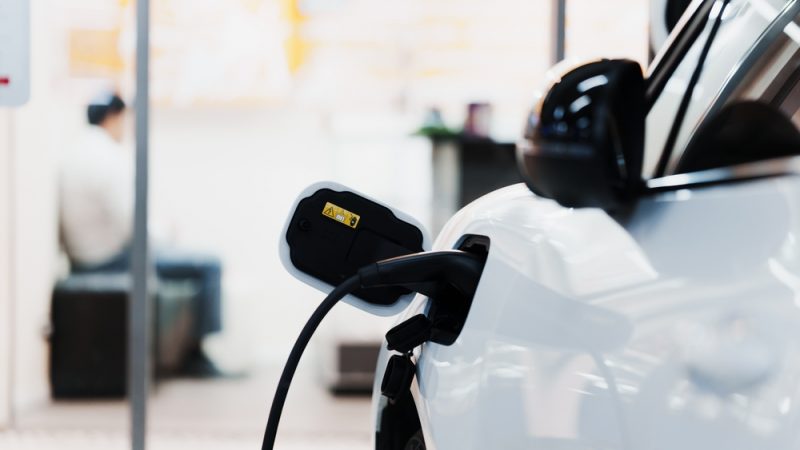
The ZEV mandate is the UK’s primary policy mechanism to increase the sales of electric vehicles by setting gradually increasing annual targets for automotive manufacturers to hit. Critically, the ZEV mandate is the UK’s single biggest carbon saving measure to date and one of our most effective measures to cut air pollution in urban areas.
The policy sets a target for the percentage of EVs sold, compelling manufacturers to bring down the upfront costs of EVs and widen the number of models available.
The good news is that the policy is working. EVs passed the tipping point of becoming cheaper to buy than petrol cars for the first time earlier this year. Combined with the significantly lower running costs, a more accessible EV transition is a massive win for consumers.
In addition, EVs have made up over a quarter of new car sales so far this year, up by 30% from the same time last year, putting EVs ahead of conventional petrol cars in terms of market share. In fact, September recorded the highest number of EVs sold in a single month to date. Despite commentary from sections of the media and industry, EV sales are ahead of what is needed to meet targets this year – just as they were in 2024 and 2025 – due to flexibilities provided that rewards for selling more efficient combustion cars, such as hybrids and plug-in hybrids.
Become a friend of LabourList and join our community. Our friends support our vital non-factional work and get access to exclusive content and events.
Yet, the government has been under sustained pressure from the car industry to water down the ZEV mandate, leading to the acceleration of a government review of the policy. For any environmental policy it’s important for the government to find a balance between ambition and achievability, and it’s understandable for the government to be responsive to industry and union concerns. But there is a false dichotomy forming. We are no longer at the point where it’s true to just say the future of the automotive industry lies with electrification; the present does too. If this government is serious about reindustrialising the country, then it cannot afford to fall into the trap of sticking with declining technologies being rapidly consigned to the history books.
There are undoubtedly ways the government can provide more breathing room and support for the British automotive industry on their transition to electric vehicles, but the UK cannot afford to retreat from the overall ambition of the policy. Doing so would be at odds with the UK’s position as a leader on climate action, Labour’s commitments to strengthen our energy security and bring down living costs and put billions of pounds of investment at risk that has already been made or committed into the EV transition in the UK.
With the impacts of climate change being increasingly felt in the UK, not only is there a moral imperative for this Labour government to continue leading the way in tackling climate change, but a political one too. Anyone in the party who thinks voters will thank, or even be indifferent to, the rowing back on climate policy is kidding themselves. Ambition on climate change is one of the key policy areas that will be vital for holding together Labour’s fragile electoral coalition.
While the ZEV mandate will not move progressive voters on its own, there is a serious risk that it contributes to a perception that Labour’s green credentials are not strong enough seen against the backdrop of the summer of climate chaos we have experienced and a supercharged El Nino due to be experienced in the months and year to come.
Instead, Labour needs to prove to voters that the party is the home of climate leadership and environmentalism. While it is a tragedy that the political consensus on climate action has crumbled, with Reform in hock to fossil fuel donors and Kemi Badenoch abandoning the climate record her own party (which ironically includes the ZEV mandate), it’s more important now than ever that this Labour government leads the way. The ZEV mandate is a key test of this.
Subscribe here to our daily newsletter roundup of Labour news, analysis and comment– and follow us on TikTok, Bluesky, WhatsApp, X and Facebook. You can also write to our editor to share your thoughts on our stories and share your own. The best letters are published every Sunday.
-
- SHARE: If you have anything to share that we should be looking into or publishing about this story – or any other topic involving Labour– contact us (strictly anonymously if you wish) at [email protected].
- SUBSCRIBE: Sign up to LabourList’s morning email here for the best briefing on everything Labour, every weekday morning.
- BECOME A FRIEND: If you enjoyed this, why not consider becoming a Friend of LabourList? Help sustain our journalism, and of course Friends do get benefits…
- PARTNER: If you or your organisation might be interested in partnering with us on sponsored events or projects, email [email protected].
- ADVERTISE: If your organisation would like to advertise or run sponsored pieces on LabourList‘s daily newsletter or website, contact our exclusive ad partners Total Politics at [email protected].



More from LabourList
‘Reopening the Brexit debate would be a mistake’
‘The message from Labour Conference is clear: we must get SEND reform right’
Friends of the Month: Amritpal Gill