

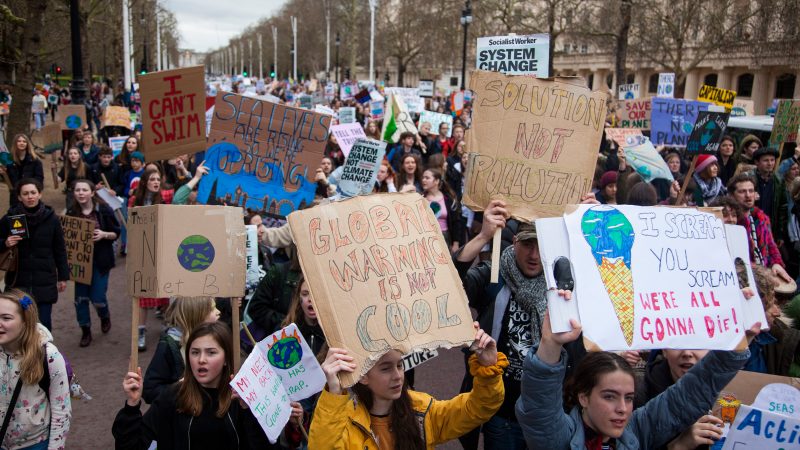

Labour’s strength lies in its breadth and depth. Its traditions and networks keep it connected to the country and able to renew itself. However, many young environmentalists in Labour do not feel included. The Party’s status as the natural home for climate conscious young people cannot be taken for granted. To address this, we must build a dynamic, youth-led engagement on climate and the environment – a collective voice for future generations. This matters because the political space is shifting.
For the first time, 16-year-olds will be eligible to vote in the next election. At the same time, the Young Greens have become the largest youth and student wing of any British political party. Whether you agree or disagree with them, this is an electoral threat that must be reckoned with, and that may as well begin with understanding it.
The Greens present themselves as the natural home for climate-conscious young people. Too often, young voices are elevated by platitudes but treated as optional: spoken to cautiously, told to wait, or ignored. For every clean energy apprenticeship, there’s a Rosebank or a weakening of Biodiversity Net Gain, sending mixed messages about Labour’s commitment. Meanwhile, others offer clarity and belonging, even if their answers are thinner. The danger for Labour is not only defection, but also apathy: young people switching off, losing trust, or organising elsewhere.
READ MORE: ‘If we don’t define our ends, populists will define them for us’
Young SERA, Labour’s Environment Campaign youth network, aims to prevent this by championing a youth-led vision. We have launched Our Earth 2050 – a national initiative for young people to share experiences, develop a long-term vision, and shape Labour’s approach to climate, nature and work. This is about evidence and ideas by and for young people – not demands from the sidelines.
The urgent need for a strong agenda was clear at Young SERA’s recent roundtable on green jobs and skills, which brought together young people from across the country. We didn’t hear ideological opposition to Labour’s direction, but frustration at a system failing to give young people confidence or certainty in the transition to net zero and a nature positive economy.
Participants were clear that the current green jobs and skills landscape is hard to navigate. There is no clear, accessible pathway into green employment. Many young people simply do not know what green jobs exist, how to access them, or which skills employers actually value. This uncertainty is particularly acute beyond the energy sector, with limited visibility of opportunities in nature, construction, food systems and land-based work.
Education and training were seen as too narrow, academic and poorly connected to real-world jobs. Careers guidance is patchy. Vocational and technical routes are undervalued. Environmental careers are often framed as elite or abstract, rather than practical, local and grounded in everyday work. While awareness of climate issues is high, it is not matched by structured support to turn concern into skills, training and secure employment.
Subscribe here to our daily newsletter roundup of Labour news, analysis and comment– and follow us on TikTok, Bluesky, WhatsApp, X and Facebook.
Access also matters. Training is concentrated in certain places and transport costs put opportunities out of reach for many. Inconsistent political messaging about green jobs undermines confidence in long-term security and raises doubts about whether a society-wide transition is truly prioritised.
Looking ahead, young people want green skills embedded in education with clear routes into secure, well-paid work. They stressed Labour must integrate climate and nature, not treat them as separate concerns. This would unlock more jobs, make the transition visible across communities, and connect policy to health, pride of place, and opportunity.
In the short term, priorities are clear: integrate sustainability across the curriculum; create inclusive pathways into green and nature-based jobs, including vocational routes; invest in accessible training hubs supported by affordable transport; and speak with confidence about environmental policy – including the nature economy – as a source of good jobs and national renewal, not sacrifice or trade-offs.
We’re now taking Our Earth 2050 to our next roundtables. In Holyrood, with Sarah Boyack MSP, we’ll explore how nature interacts with identity and community. The Welsh Deputy First Minister, Huw Irranca Davies AM, will join a roundtable on The Future Generations Act and the role of young people. Findings from these roundtables, alongside interviews and surveys, will inform a youth-written report launched in Parliament.
Share your thoughts. Contribute on this story or tell your own by writing to our Editor. The best letters every week will be published on the site. Find out how to get your letter published.
Labour was founded to build a better future for future generations. If it wants to remain the natural home for the next generation of environmentalists, it must show, in policy and practice, that it understands this responsibility. Our vision must show how healthy communities, good jobs, strong services, and security require joined-up action on nature and climate. As the climate crisis accelerates and youth engagement falls, this role is more important than ever.
If you are under 27 and would like to contribute, please fill out this survey: or visit our website.
-
- SHARE: If you have anything to share that we should be looking into or publishing about this story – or any other topic involving Labour– contact us (strictly anonymously if you wish) at [email protected].
- SUBSCRIBE: Sign up to LabourList’s morning email here for the best briefing on everything Labour, every weekday morning.
- DONATE: If you value our work, please chip in a few pounds a week and become one of our supporters, helping sustain and expand our coverage.
- PARTNER: If you or your organisation might be interested in partnering with us on sponsored events or projects, email [email protected].
- ADVERTISE: If your organisation would like to advertise or run sponsored pieces on LabourList‘s daily newsletter or website, contact our exclusive ad partners Total Politics at [email protected].



More from LabourList
‘From referee to coach – Labour needs a new theory of what it’s for’
Ben Cooper column: ‘Labour must intervene to tackle the causes of the cost of living crisis’
Labour launch major attack ad campaign exposing Reform’s record