

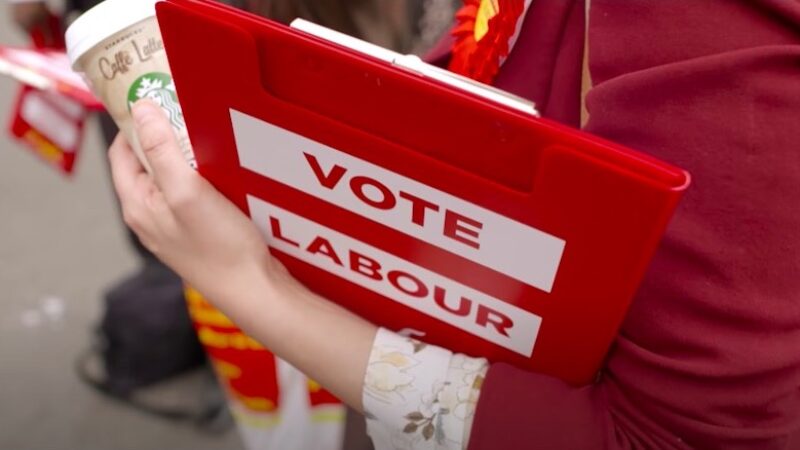

At the weekend, a woman shouted at me from her upstairs window while I was out canvassing. She was angry about grooming gangs. I made an assumption. I assumed she was weaponising the issue, seeking to inflame rather than protect. I disengaged.
I was wrong.
I saw her later and we spoke properly. She wasn’t minimising violence by white men. She wasn’t making a racialised argument. She was furious about all violence against women and girls, whoever commits it. She was angry that girls and young women had been failed. Angry that institutions had looked away. Angry that politics so often turns women’s trauma into a culture war talking point or political point-scoring.
And she was right to be angry.
‘Too often, politics has treated this issue selectively’
The exploitation scandals in towns across the country exposed catastrophic institutional failure. So too did the long protection of powerful men in cases like Jeffrey Epstein. Different contexts. Different perpetrators. The same underlying truth: when men abuse power, systems often close ranks. Women and girls pay the price.
Too often, politics has treated this issue selectively. Some are eager to talk about sexual exploitation only when the perpetrators fit a narrative about immigration or ethnicity. Others become defensive and hesitate to engage robustly at all. In that polarised space, victim-survivors get lost.
Violence against women and girls is a male violence problem. It cuts across race, religion, class and geography. The common denominator is not heritage. It is misogyny, power and impunity.
READ MORE: ‘The politics of the Gorton and Denton by-election’
‘Women are exhausted’
Labour’s new Violence Against Women and Girls strategy is serious and ambitious. Ministers are committed and have real expertise. There is progress being made – on domestic abuse, on specialist support, on working with boys and young men, on policing standards. That matters.
But if I learned anything on that doorstep, it is that there is something deeper simmering in the country. Women are exhausted. They see rape convictions at historic lows. They see online misogyny metastasising. They see girls harassed in schools. They see abuse excused as “banter”. And when scandals break, they see institutions hesitate before protecting the vulnerable.
It is, of course, vital that women are in the rooms where decisions are made. Representation matters. But representation on its own is not enough. Women must be listened to. Their analysis must shape and determine outcomes. Their warnings must be acted upon.
And men in positions of power – including Labour men – should be capable of making sound, principled decisions about whom they elevate and appoint without needing to be dragged there. Equality cannot mean that women alone carry the burden of spotting risk or insisting on standards.
But beyond Westminster, beyond appointments and strategy documents, it is the voice of women like the one who shouted at me – and the voices of victim-survivors in communities across the country and beyond – that most urgently need to be heard. Not managed. Not triangulated. Heard. And what they say must be acted upon.
READ MORE: ‘Someone to bring them together’: The Gorton and Denton by-election campaign from the ground
‘We have to lean into uncomfortable conversations, not retreat from them’
We cannot allow this issue to be owned by the right, nor can we allow it to be reduced to a culture war proxy. We must be able to say, without qualification: every girl matters. Every victim-survivor matters. Every perpetrator must be held accountable, whatever their background.
On the doorstep, I made a snap assumption of bad faith and walked away. That was my mistake and I am sorry. If we want to rebuild trust, particularly with women who feel unheard, we have to lean into uncomfortable conversations, not retreat from them.
Whilst election campaign canvassing is understandably focused on data, it underlines the importance of regularly checking in all year round, never taking anyone or anywhere for granted.
The anger I heard that morning was rage at a system that too often fails women.
We should heed that.
Subscribe here to our daily newsletter roundup of Labour news, analysis and comment– and follow us on TikTok, Bluesky, WhatsApp, X and Facebook.
Share your thoughts. Contribute on this story or tell your own by writing to our Editor. The best letters every week will be published on the site. Find out how to get your letter published.
-
- SHARE: If you have anything to share that we should be looking into or publishing about this story – or any other topic involving Labour– contact us (strictly anonymously if you wish) at [email protected].
- SUBSCRIBE: Sign up to LabourList’s morning email here for the best briefing on everything Labour, every weekday morning.
- DONATE: If you value our work, please chip in a few pounds a week and become one of our supporters, helping sustain and expand our coverage.
- PARTNER: If you or your organisation might be interested in partnering with us on sponsored events or projects, email [email protected].
- ADVERTISE: If your organisation would like to advertise or run sponsored pieces on LabourList‘s daily newsletter or website, contact our exclusive ad partners Total Politics at [email protected].



More from LabourList
Labour launch major attack ad campaign exposing Reform’s record
‘It is time for the Lords Spiritual to leave the House of Lords’
‘MattGPT and Me’