

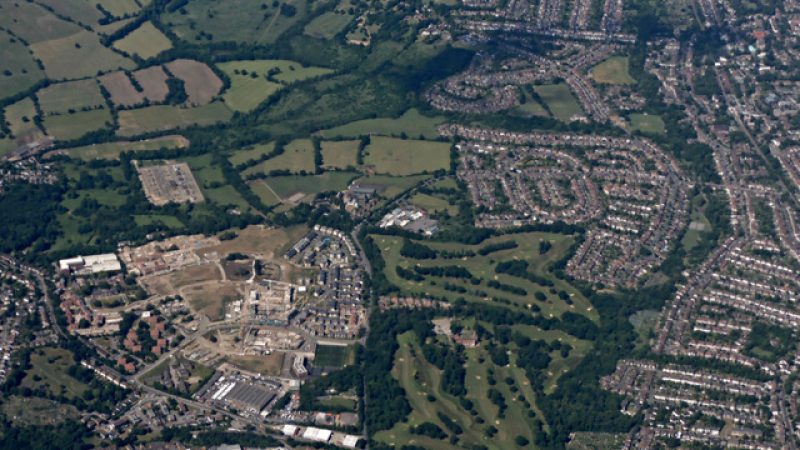

Look closely at a map of any city in England, and you will see vast tracts of well-maintained green space within easy reach of public transport, local jobs, and other amenities. You would think millions of people would be able to access it easily, and enjoy the benefits of nature. But this space is not for the public. It is gated off for the handful of people who are members of private golf clubs.
In England, around 730,000 people are members of a golf club – just one percent of the population. Yet golf takes up more land than either Greater Manchester or the New Forest National Park. In London alone, there are 93 golf courses – with another 74 within a short drive of the city’s boundaries. There is more space dedicated to golf in the capital city than bowling greens, tennis courts, football pitches, and playing fields combined.
This is such a waste of good land – and in the middle of a housing crisis. More than a million households are stuck on social housing waiting lists, and young people are locked out of homeownership. Considering the scale of the crisis, the land that golf courses take up needs to be brought into the conversation.
READ MORE: ‘Only Labour is delivering for leaseholders facing a cost-of-living crisis’
But too often, planning policy actually protects golf courses. Many golf courses are protected by the Green Belt, but those in London are often preserved by a ‘Metropolitan Open Land’ policy designed to prohibit development. However, many people are unlikely to view golf courses as meeting the ‘sporting and leisure use, heritage value, biodiversity, food growing, and health benefits’ required for protection.
This is perhaps why the Mayor of London has suggested that golf courses in London be considered for development – and the next London Plan should enable this. In London alone, releasing golf courses for housing could enable the building of 85,000 new homes – accommodating 340,000 people. Around 40 per cent of the land for London’s golf courses is publicly owned, giving councils the ability to create great places to live and help people afford a safe, decent home. But this should not apply to just London, it is needed right across England.
Indeed, this use of golf courses for development is a win-win for homes and green spaces. Voters understandably want politicians to balance new housing with access to nature. More in Common found 67 per cent of respondents think developers and planners should have to ‘accommodate and look after’ nature around a new development. Campaigners in favour of new housing or the environment should recognise that building homes on golf courses is an opportunity to deliver more nature, green spaces, and biodiversity – not less.
Subscribe here to our daily newsletter roundup of Labour news, analysis and comment– and follow us on TikTok, Bluesky, WhatsApp, X and Facebook.
There are already examples for how this could be done. In Enfield, architects have proposed a master plan that protects nine holes of golf but delivers 650 homes, accessible leisure spaces, and a biodiverse wetland. This shows that nature and homes can both be enhanced, even while maintaining facilities for those who play golf. Inspired by this and other examples, the government should put nature and green spaces at the heart of building new homes on golf courses.
Building on golf courses will be controversial. The inboxes of MPs and councillors might make for painful reading. No doubt many people would claim to care about nature, despite opposing developments that increase accessible green spaces.
The government should treat opposition like the minority opinion it is. Those who favour golf courses over tackling the housing crisis are small in number – and besides, they are unlikely to back Labour at the next election. Instead, the government should appeal to the strong middle ground of opinion, which is in favour of development alongside accessible green spaces. People want good quality homes, and they want access to parks, playing fields, and biodiversity. This is the coalition that the government should be appealing to.
Share your thoughts. Contribute on this story or tell your own by writing to our Editor. The best letters every week will be published on the site. Find out how to get your letter published.
The government is facing up to the policy and political difficulties of delivering the 1.5 million new homes – and no stone should be left unturned to achieve this. Rather than green spaces locked behind memberships that can cost thousands of pounds, sensitive development of golf courses could mean thousands more accessing homes and green spaces. The government can win this argument if it chooses to make it forcefully. It should.
-
- SHARE: If you have anything to share that we should be looking into or publishing about this story – or any other topic involving Labour– contact us (strictly anonymously if you wish) at [email protected].
- SUBSCRIBE: Sign up to LabourList’s morning email here for the best briefing on everything Labour, every weekday morning.
- DONATE: If you value our work, please chip in a few pounds a week and become one of our supporters, helping sustain and expand our coverage.
- PARTNER: If you or your organisation might be interested in partnering with us on sponsored events or projects, email [email protected].
- ADVERTISE: If your organisation would like to advertise or run sponsored pieces on LabourList‘s daily newsletter or website, contact our exclusive ad partners Total Politics at [email protected].



More from LabourList
‘Let’s work together to reset our relationship with Business’
‘Scrapping the two-child limit is a huge moral victory, but our social security system still traps families in poverty’
Labour split over North Sea oil and gas drilling as fuel costs rise