


Through the years, one of the Labour Party’s most notable voting alliances was that of young voters. However, recent polling from Statista and YouGov suggests that Labour has slipped into third place among younger voters, behind the Greens and the Liberal Democrats.
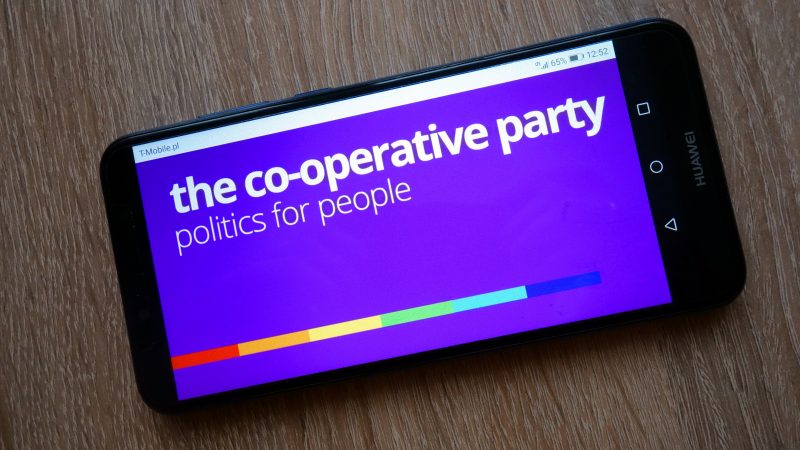
Since 1927, the Labour Party has had an electoral pact with their lesser-known sister-party, the Co-operative Party. Despite almost a century-long pact and being the fourth largest parliamentary party, many people still have never heard of the alliance.
However, the emphasis on mutualism, co-operativism, and democratic decision making could be the solution to winning back young voters, who have begun to move towards the Greens. For them, these principles would mean greater opportunities to have their say in an era where political parties have long been favouring older voters needs because they are more likely to turnout.
READ MORE: ‘The budget give Labour an opportunity to unleash grassroots growth through co-operation’
According to YouGov, 18 to 24-year-olds rank the economy as the most important issue facing the country, yet the Government appears to be outlining a strategy that targets immigration despite this concern only ranking fourth among young voters. It is important that a new strategy adapts to the increasing left-wing views of young Brits.
Co-operatives UK have stated that “the co-operative movement offers hope and solutions to transform and enable a fairer future for all… [a]gainst the backdrop of an uncertain future”. By understanding this, Labour can take back control of the narrative, but only if they are willing to increase the influence of co-operative principles when shaping policy.
A key example where the Co-operative Party has thrived is the English Devolution and Community Empowerment Bill. Jim McMahon, who chairs the Co-operative Party, proposed the legislation and was instrumental in embedding co-operative principles throughout the Bill, highlighted by the community-right-to-buy scheme. Clearly, this demonstrates the power that the Party can have when in positions of power and this policy has been generally well-regarded by the public.
Subscribe here to our daily newsletter roundup of Labour news, analysis and comment– and follow us on TikTok, Bluesky, WhatsApp, X and Facebook.
Young people are shifting towards more socialist ideas with the Institute for Economic Affairs finding that 53% of young Brits support socialism. This would explain the strengthening of the Greens in the polls. To combat this, when developing a new youth focused strategy, Labour needs to utilise its sister party, who argue for a different, co-operative model of governing that could appeal to young people.
By presenting a government sponsored Co-operative Bill, the Government would be able to shape discussions surrounding alternative options for the British economy, while also bringing attention to their sister party. By strengthening protections for co-operatives and encouraging their creation, it could build upon previous Acts of Parliament, such as the Co-operatives, Mutuals and Friendly Societies Act 2023.
Importantly, there is no legal definition of what a co-op is in the UK; so, by presenting a new piece of legislation, the Government would be able to claim a forward-thinking approach to policy-making as they come into their second year of governing.
The Co-operative Party has dedicated itself to public ownership of utilities, which YouGov polling indicates would be popular with the public with 82% supporting nationalising water and 71% supporting nationalising energy. Also, the Party supports the expansion of co-operative housing, which could aid in reducing the housing crisis. This is important to note, as YouGov cites housing as the second most important issue to young voters.
These key policy issues became even more important following the loss of the Gorton and Denton by-election – a seat held by Labour since 1931. A change of strategy is clearly necessary if Labour is to win back the youth in upcoming elections.
Many factors went into the loss of the by-election, but losing nearly 10,000 votes (compared to 2024) signals a clear problem. When it comes to the rise of the Greens, the pioneers of this movement are young people, who are calling for more grassroots politics. So, if Labour are serious about challenging the Greens on key policy issues, young people need to be the focus of a new strategic picture.
Share your thoughts. Contribute on this story or tell your own by writing to our Editor. The best letters every week will be published on the site. Find out how to get your letter published.
A focus on communities, change, and democratic ownership is the only way that Labour can reassert themselves as the ‘party of the left’. To achieve this, the Labour Party needs to encourage greater collaboration with their long-time partner – the Co-operative Party – to win back support from the youth.
-
- SHARE: If you have anything to share that we should be looking into or publishing about this story – or any other topic involving Labour– contact us (strictly anonymously if you wish) at [email protected].
- SUBSCRIBE: Sign up to LabourList’s morning email here for the best briefing on everything Labour, every weekday morning.
- DONATE: If you value our work, please chip in a few pounds a week and become one of our supporters, helping sustain and expand our coverage.
- PARTNER: If you or your organisation might be interested in partnering with us on sponsored events or projects, email [email protected].
- ADVERTISE: If your organisation would like to advertise or run sponsored pieces on LabourList‘s daily newsletter or website, contact our exclusive ad partners Total Politics at [email protected].



More from LabourList
‘It is time for the Lords Spiritual to leave the House of Lords’
‘MattGPT and Me’
Fight for London begins as Labour launch local election campaigns across England