

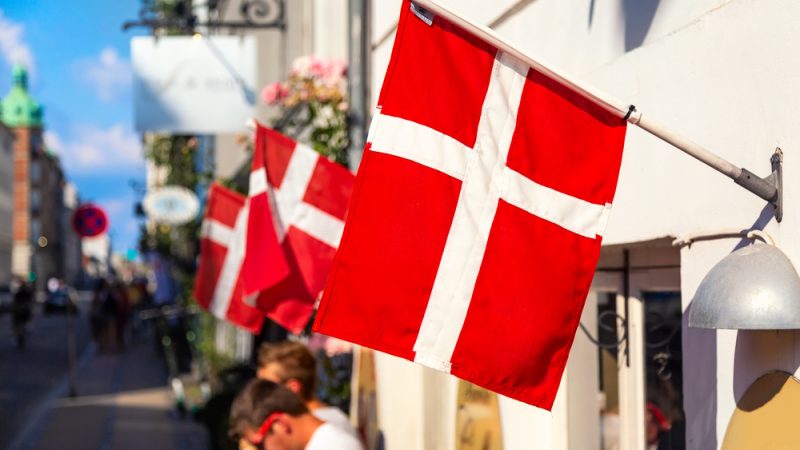

Labour has its eyes on Denmark. The story told by the Home Office is that the Danish Social Democrats owe their success to getting tough on migration. While that was part of the story when Mette Frederiksen first took office in 2019, it was never the full story.
As a Dane, the current political situation in the UK feels like slight deja-vu. While Denmark is, of course, very different, there are still lessons from the Danish Social Democrats that Labour might want to take note of – and oversimplifications of the Danish story that they should avoid.
Frederiksen is credited for writing the playbook for how left-wing parties can adopt right-wing immigration policies and combine them with social democratic welfare policies to fight off the populist right. Her 2019 election win was seen as proof; the populist right party, the Danish People’s Party, that had won more than 21 percent of the vote in the 2015 election, was halved.
However, the Social Democrats got more votes in 2015 than they did in 2019, and only ten percent of the Danish People’s Party’s voters went to the Social Democrats – most of the voters the Danish People’s Party lost went to other right-wing parties. Instead, Frederiksen was able to get a majority behind her because the smaller left-wing parties did significantly better in 2019 than 2015.
‘Trying to stop the drift to the right by focusing too much on one voter group can result in a stronger drift to the left’
Similar to Labour, the Danish Social Democrats have relied on a ‘hero-voter’ approach. In a multi-party system, they knew they could not be a party for everyone, so they made intentional choices of who they are for, who they are not for, and who they are against.
They identified their base voter as primarily pensioners and working-class people in provincial towns. They built everything around that group, combining tough immigration policies with retirement age reform and increased minimum wage for care workers, nurses and prison guards as flagship political wins. In doing so, they were prepared to sacrifice the young, university-educated metropolitan vote, knowing it would flow to other parties.
The consequences of this strategy, however, have been significant. In last year’s council election, they lost the mayoral seat in Copenhagen for the first time in more than 100 years. The current polls also predict that they will lose 19 percent of their 2022 voters to other left-wing parties.
The Social Democrats learned the hard way that trying to stop the drift of voters to the right by focusing too much on one voter group, might result in a stronger drift to the left.
‘The grocery cheque’
Realising this, Frederiksen’s 2026 campaign is bearing signs of ‘course correcting’; her priorities and announcement are clear returns to ‘traditional’ social democratic policies with broad appeal.
While Denmark has a strong economy, the cost of living is still the primary concern of voters in this election. Frederiksen therefore called the election right after the Danish Parliament passed what has been dubbed “the grocery cheque”: a one-off cash transfer of between £117 and £586 for more than a third of the population.
As a policy, it is easy to explain, easy to feel, and easy to remember. It shows that the Government takes voters’ concerns seriously and it is immediately felt in people’s pockets.
Recent IPPR research has argued that cost-of-living interventions should be a priority for this government in the UK. These interventions do not need to be large to be effective; but the longer the list, the more convincing the case becomes that the Government is doing everything within its power to ease the pressure on working people.
‘Danish wealth tax communicated whose side the government is on’
The clearest example of Frederiksen’s ‘course correction’, however, came in her election announcement speech: Frederiksen wants to introduce a wealth tax on the wealthiest 0.5 percent of the population, with the money ringfenced for reducing class sizes in primary schools.
This is a near perfect Social Democratic policy; it raises money on the principle that those with the broadest shoulders should bear the heaviest load, spends it on something universally valued, and communicates something clear about whose side the government is on: the 99.5 percent.
Labour might consider introducing similar broad-appeal policies to address voters’ concern with the growing inequality in the UK. Polling by IPPR and Persuasion UK from November 2025 shows that there would be public support for a ‘narrow’ wealth tax if it was clear that it would benefit the wider public.
‘Adopting a simplified Danish playbook is unlikely to be a silver bullet’
Frederiksen has been an impressive Prime Minister. But her story is about more than ‘getting tough on migration’. It is also a story about the consequences of getting too caught up in the ‘hero voter’ strategy. Denmark’s multiparty system kept her in power, but she has realised that she cannot afford to overlook her wider voter base.
Adopting a simplified idea of the Danish Social Democratic playbook is therefore also unlikely to be a silver bullet for Labour, especially if it largely just focuses on ‘getting tough on immigration’.
Subscribe here to our daily newsletter roundup of Labour news, analysis and comment– and follow us on TikTok, Bluesky, WhatsApp, X and Facebook.
Share your thoughts. Contribute on this story or tell your own by writing to our Editor. The best letters every week will be published on the site. Find out how to get your letter published.
-
- SHARE: If you have anything to share that we should be looking into or publishing about this story – or any other topic involving Labour– contact us (strictly anonymously if you wish) at [email protected].
- SUBSCRIBE: Sign up to LabourList’s morning email here for the best briefing on everything Labour, every weekday morning.
- DONATE: If you value our work, please chip in a few pounds a week and become one of our supporters, helping sustain and expand our coverage.
- PARTNER: If you or your organisation might be interested in partnering with us on sponsored events or projects, email [email protected].
- ADVERTISE: If your organisation would like to advertise or run sponsored pieces on LabourList‘s daily newsletter or website, contact our exclusive ad partners Total Politics at [email protected].



More from LabourList
‘We built a game that lets you run a council. Nobody can win it’
‘The fight against online conspiracy theories starts in schools’
Assisted dying bill ‘will fall’, claim House of Lords critics of legislation