

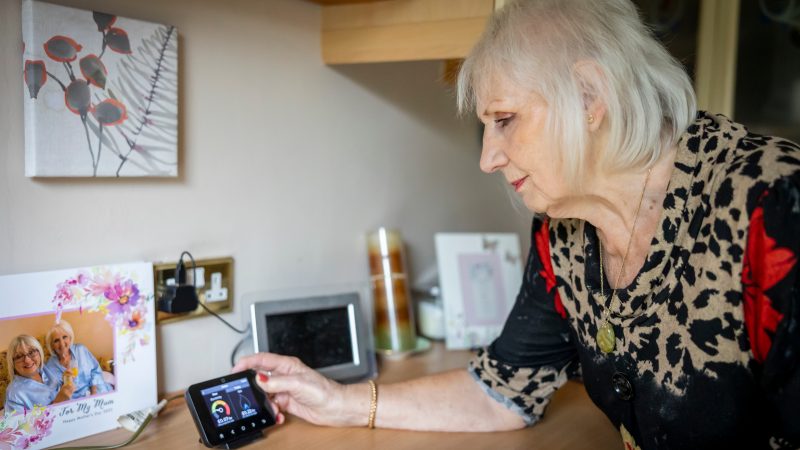

We all understand the importance of a warm, secure home. It’s a crucial foundation for our lives, impacting both physical and mental health. That’s why at Independent Age we welcome the UK Government’s Warm Homes Plan, which commits to raising Minimum Energy Efficiency Standards (MEES) for the private rented sector (PRS) in England and Wales.
As a charity supporting older people facing financial hardship, we know many older private renters are suffering. Staying warm as we age is especially important. Living in a cold home can have a harmful effect on older people’s health, increasing the risk of illness and accidents like falls. Older private renters are also a group more likely to be in financial hardship, with one third in poverty after housing costs. A home that is energy inefficient can quickly eat away at a low income. Older private renters are also more likely to live in the oldest, and therefore coldest homes.
The UK Government’s commitment to improving the experience for all renters, through the planned MEES in the PRS and the introduction of the Renters’ Rights Act this year, is commendable and important. But it’s crucial that the uprating is done well, so it benefits those it needs to.
READ MORE: ‘On housing, Labour should build a lasting legacy’
We at Independent Age want to work with the UK Government to help make sure this happens.
This week, we’ve released Out of the cold: Making Minimum Energy Standards work for older private renters, a report based on research with older renters and professionals from the energy advice sector. It identifies issues and risks with the current plan and also how the system can be improved to make sure plans to raise MEES work effectively.
We found that –unsurprisingly – housing that is already in poor quality can be a barrier to energy efficiency improvements. To tackle this, we’re calling for the Decent Homes Standard and MEES to be aligned on both objectives and timing. There should also be the creation of specific grants to tackle poor housing conditions where they are a barrier to energy improvements.
While 74% of older tenants would be willing to live with some disruption to live in a more energy efficient home, our research found that some older renters can be nervous of the disruption that improvements could cause, risking the tenant refusing works. To make sure that this doesn’t happen, we are recommending that assessments consider the most appropriate efficiency solutions for older people, and that landlords and tradespeople agree a workplan with tenants, with allowances made for older renters to stay in their home. If this is not possible, a portion of the grant available for energy efficiency improvements could cover temporary relocation costs. \
Subscribe here to our daily newsletter roundup of Labour news, analysis and comment– and follow us on TikTok, Bluesky, WhatsApp, X and Facebook.
Older tenants sometimes feel confused about the jargon and measurements used when discussing energy efficiency, with our polling showing that only one in four (25%) know the EPC rating of their home. There is currently no UK Government guidance about MEES targeted at tenants; this gap should be addressed to empower them and ensure the success of the policy. We think that, in addition to the Warm Homes Agency, advice must be localised for both landlords and tenants. All guidance must be accessible and information should be placed in spaces we know older people frequent, such as GP surgeries.
From our interviews with older private renters, it was clear that they are concerned about upheaval because of improvements, the potential for rent hikes or eviction afterwards, and fear that their energy bills will not be reduced. That’s why we are calling for tenants to be given stronger protections from excessive rent increases and evictions after energy efficiency improvements, with this being a condition of the grants and loans that enable them. Local authorities and the PRS Ombudsman must be given the resources to enforce standards.
Older renters must also have the right to refuse works, once they have been fully explained the benefits. Similarly, all tenants must be empowered, with the proposed PRS database made accessible to all. Independent Age want to see the creation of an energy social tariff to make sure that reaching net zero reduces fuel poverty. Finally, we want to work with the UK Government to make sure that the tenants in homes exempted from the changes, because of the price cap to the policy, are not left in fuel poverty.
Share your thoughts. Contribute on this story or tell your own by writing to our Editor. The best letters every week will be published on the site. Find out how to get your letter published.
The proposal to increase the MEES requirements in the private rented sector is brave, and the right thing to do. But its success is not a forgone conclusion without a detailed understanding of who the policy needs to help and how its implementation can be optimised.
Let’s work together to make sure renters of all ages can feel the benefits of raising MEES.
-
- SHARE: If you have anything to share that we should be looking into or publishing about this story – or any other topic involving Labour– contact us (strictly anonymously if you wish) at [email protected].
- SUBSCRIBE: Sign up to LabourList’s morning email here for the best briefing on everything Labour, every weekday morning.
- DONATE: If you value our work, please chip in a few pounds a week and become one of our supporters, helping sustain and expand our coverage.
- PARTNER: If you or your organisation might be interested in partnering with us on sponsored events or projects, email [email protected].
- ADVERTISE: If your organisation would like to advertise or run sponsored pieces on LabourList‘s daily newsletter or website, contact our exclusive ad partners Total Politics at [email protected].



More from LabourList
Labour launch major attack ad campaign exposing Reform’s record
‘It is time for the Lords Spiritual to leave the House of Lords’
‘MattGPT and Me’