

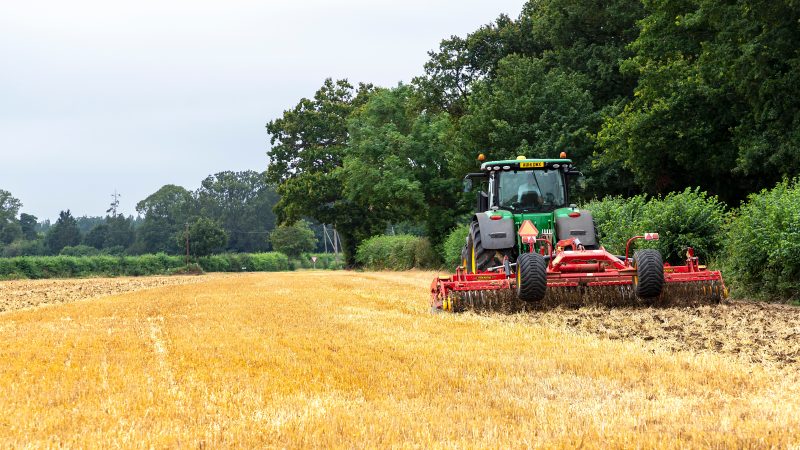

England’s countryside is being asked to do more than ever before. We need to strengthen Britain’s food security. We need to build new homes and infrastructure. We need to deliver clean energy and meet our climate targets. And we need to restore nature after decades of decline.
Underpinning all of this is the same finite resource – land. Constituencies like mine in Hexham – where farmers have shaped the landscape and produced food for generations – are central to solving many of these challenges. Farmers and rural communities will play a crucial role in how we balance these competing demands.
But they are already under significant pressure. Extreme weather is becoming more common. Markets are volatile. And farmers are being asked to adapt to a changing policy and economic landscape.
READ MORE: ‘The Local Power Plan is launching an ownership revolution’
How we use our land will continue to evolve in the years ahead. The real question is whether we manage that change in a way that works with farmers and rural communities – or allow it to happen in a fragmented and uncoordinated way.
Why we need a framework
Without a clear strategy, decisions about land use will continue to happen in isolation. The result is uncertainty for farmers and missed opportunities for rural communities. Too often, a fragmented approach rewards those who already have the most, while communities on the ground are left reacting to decisions made elsewhere.
I believe that people should have a real stake in the places they live and work. That means making sure rural communities are not simply affected by decisions about land – but help shape them. Rural voters helped deliver Labour’s majority – and keeping their trust will be essential to holding it. This is where a Land Use Framework for England comes in.
Today’s framework will confirm, for the first time, that we have enough land to meet all our priorities. The government has been clear that it will not replace the planning system and it will not tell farmers what to do. Instead, it will provide better information, clearer national priorities and a long-term direction of travel. In doing so, it can help direct funding and investment to the communities that want to shape the future of their landscapes.
In partnership with farmers
Farmers know their land better than anyone. If we are serious about shaping the future of the countryside, they must be at the center of the conversation. That starts with ensuring farming can be both profitable and resilient. Producing high-quality food is an essential part of our food security.
Subscribe here to our daily newsletter roundup of Labour news, analysis and comment– and follow us on TikTok, Bluesky, WhatsApp, X and Facebook.
I have been pleased to see this government’s commitment to those priorities reflected in recent policy decisions. Reforms to the Sustainable Farming Incentive have prioritised smaller farms and ensured support is distributed more fairly across the sector. Proposals to make it easier for farmers to secure planning permission for diversification have also been welcomed by the farming community.
Don’t take my word for it. As NFU President Tom Bradshaw recently put it, these reforms represent “a really promising show of intent for domestic food production – perhaps the strongest any government has sent for some time.”
That matters. Because if farmers are going to help shape the future of our landscapes, their businesses must be able to thrive.
Turning change into opportunity and resilience
But honesty matters too. The countryside will continue to change. Farmers are already adapting to new markets, climate pressures and evolving environmental schemes. In areas like Hexham, many farms are exploring ways to diversify their businesses, while continuing to produce food.
The Land Use Framework must ensure this transition works for them. Used properly, it can help direct investment into the countryside and support new markets.
It can also strengthen the resilience of our landscapes and communities – something that is becoming increasingly important. Analysis suggests the number of properties at risk of flooding in Hexham could rise by around 28% between 2025 and 2050. How we manage our landscapes will play a crucial role in protecting communities.
That could mean supporting farmers to improve soil health so crops can better withstand drought and flooding. It could mean rewarding farmers who help manage flood risk for downstream communities. And it could mean unlocking investment in areas such as horticulture, agri-technology and environmental restoration.
Share your thoughts. Contribute on this story or tell your own by writing to our Editor. The best letters every week will be published on the site. Find out how to get your letter published.
The Land Use Framework should not be about telling farmers what to do. It should be about giving them the tools, investment and certainty they need to shape the future of our countryside and the communities that depend on it.
-
- SHARE: If you have anything to share that we should be looking into or publishing about this story – or any other topic involving Labour– contact us (strictly anonymously if you wish) at [email protected].
- SUBSCRIBE: Sign up to LabourList’s morning email here for the best briefing on everything Labour, every weekday morning.
- DONATE: If you value our work, please chip in a few pounds a week and become one of our supporters, helping sustain and expand our coverage.
- PARTNER: If you or your organisation might be interested in partnering with us on sponsored events or projects, email [email protected].
- ADVERTISE: If your organisation would like to advertise or run sponsored pieces on LabourList‘s daily newsletter or website, contact our exclusive ad partners Total Politics at [email protected].



More from LabourList
‘Security, security, security’
‘Hold on to this feeling: Change is a journey’
‘Let’s work together to reset our relationship with business’