

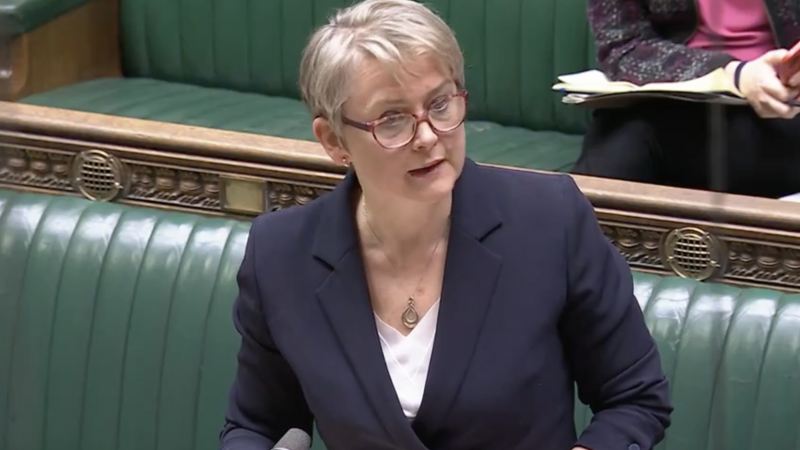

International Women’s Day always brings strong pledges from ministers to protect, support, and empower women and girls, particularly in conflict affected countries or those where girls are excluded from school due to poverty or banned altogether. Yet, this year, within weeks, the government will implement drastic cuts that will impact that work – cuts to development funding proportionally heavier than those imposed by Trump in the USA.
Foreign Secretary Yvette Cooper has recognised violence against women and girls in conflict as an “international emergency” and expressed her determination to force the promises to eliminate it up the global agenda for action. She told the BBC recently: “In the Foreign Office, I am making it now a priority to us in our foreign policy.”
But the sad truth is that her efforts will be fatally undermined if the UK goes ahead with disastrous funding cuts to aid and development that will close down the projects that are so badly needed to stem this emergency – cuts to be confirmed in the next few weeks, unless ministers can be persuaded to pull back.
I recently returned from my regular engagement with the Bangsamoro Peace Process in the Philippines. Twelve years after their Comprehensive Peace Agreement was signed, a sustained peace, supported by the UK, is changing lives.
That agreement was the first in the world to be signed by a female chief negotiator, Miriam Coronel-Ferrer. Women have been central to the progress made since and the government of the Philippines has now created the Women, Peace and Security Centre of Excellence for Asia/Pacific. The UK supports this because we know peace agreements that include women are 35 percent more likely to last for a generation.
It is a rare example of successful peacebuilding in our world today. But this is not the norm.
READ MORE: ‘Foreign aid cuts force a reckoning with the future of development’
Across the world, conflicts are killing women and girls in record numbers and inflicting sexual violence on a terrifying scale, leaving survivors without care after rape and pushing girls into the misery of forced marriage. From Myanmar to Sudan, Nigeria to Haiti, Ukraine to the Middle East, conflict is the brutal reality of life for one in every 17 people on the planet. And, as always, women suffer the most.
Yet, a grave setback is unfolding as the UK, which for so long championed international efforts to address the horrors of conflict for women, pulls the rug away when help is needed more than ever. The cuts that will strip 40 percent from the UK’s international development budget risk abandoning women raped in conflict, women denied access to sexual and reproductive health services, and girls left languishing in refugee camps when they should be in school. Already, the UK has cancelled funding for up to 50 women peacebuilding organisations it intended to support.
The UK Integrated Security Fund will no longer fund Women, Peace and Security programmes and may even stop funding specific gender advisers. Funding has run out for the much-admired initiative launched by William Hague and Angelina Jolie to prevent sexual violence in conflict zones, the UK’s flagship programme to end female genital mutilation is facing the axe, and the list goes on. The chasm between rhetoric and the grim reality grows wider.
The Prime Minister should think again before this becomes the first Labour government ever to spend less on international development than the Tories. And whether the government decides to reverse these cuts or not, it must be clear within any budget that investing in women and girls, especially in conflict zones, is a clear priority for the UK again.
Subscribe here to our daily newsletter roundup of Labour news, analysis and comment– and follow us on TikTok, Bluesky, WhatsApp, X and Facebook.
Share your thoughts. Contribute on this story or tell your own by writing to our Editor. The best letters every week will be published on the site. Find out how to get your letter published.
-
- SHARE: If you have anything to share that we should be looking into or publishing about this story – or any other topic involving Labour– contact us (strictly anonymously if you wish) at [email protected].
- SUBSCRIBE: Sign up to LabourList’s morning email here for the best briefing on everything Labour, every weekday morning.
- DONATE: If you value our work, please chip in a few pounds a week and become one of our supporters, helping sustain and expand our coverage.
- PARTNER: If you or your organisation might be interested in partnering with us on sponsored events or projects, email [email protected].
- ADVERTISE: If your organisation would like to advertise or run sponsored pieces on LabourList‘s daily newsletter or website, contact our exclusive ad partners Total Politics at [email protected].



More from LabourList
‘It is time for the Lords Spiritual to leave the House of Lords’
‘MattGPT and Me’
Fight for London begins as Labour launch local election campaigns across England