


The crisis in the Middle East threatens to pose an economic headache for the government, as well as a diplomatic one. Oil prices have spiked after Iran closed vital shipping lanes in the Strait of Hormuz and launched drone attacks across the region.
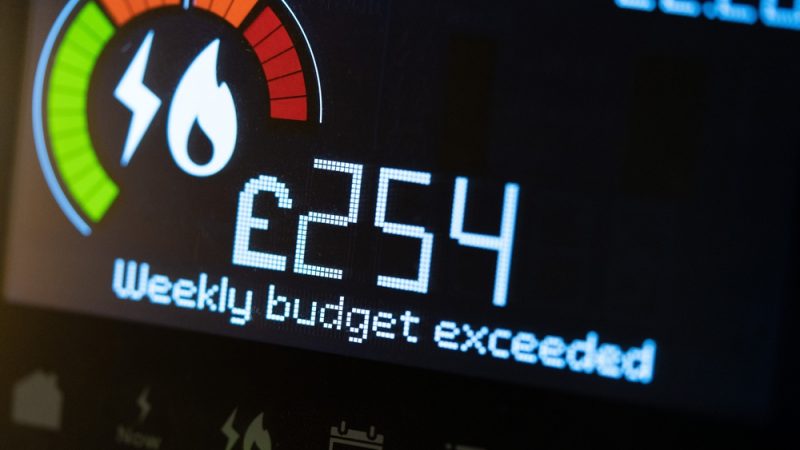
With the cost of living already a major pinch point for communities across the country, the threat of a prolonged war will no doubt be causing some in the Treasury to scratch their heads and consider what options are on the table to relieve the financial pressure on families should the knock-on effects of the war cause energy bills and the cost of groceries to soar.
LabourList spoke to think tanks and some Labour’s MPs to ask what they think the government’s approach should be in navigating the potential cost of living challenge posed by the war – ranging from incentivising businesses and households to make the switch to clean energy to targeted support for energy bills this winter.
‘Government needs to communicate a clear and compelling story about the crisis’
Luke Raikes, deputy general secretary at the Fabian Society, said that the government has its priorities right by being focused on the cost of living and that, while much of the control over that lies out of reach of Whitehall, Labour must do everything in its power to protect people with “the right short-term interventions and long-term shifts”.
Raikes said: “The Prime Minister and Chancellor must drive key government departments to make sure living standards are their priority, from transport to social security, housing and energy. And, in the long term, they must reduce our dependency on oil, taking this moment to push EVs, winning the argument for renewables and nuclear, and getting spades in the ground and wind turbines up in the sky.
“Just as importantly, the government needs to communicate a clear and compelling story about the crisis. They need to level with the public. If they oppose a cut in fuel duty, then they need to make a powerful case that it would be both reckless and ineffective.
“They need to show that only Labour is being responsible and ensuring supply – and then they need to communicate their own policies in a way that cuts through.”
‘Accelerate investment in rooftop solar and batteries’
The Iran conflict has exposed once again how exposed Britain is to the volatility of global oil and gas markets, with the New Economics Foundation stressing how the crisis is another reminder of the need to transition away from fossil fuels and towards energy independence through renewables.
Lydia Prieg, chief economist at the NEF, said the war could make life harder for millions who are already struggling, and that the government should be looking at ways to support people through “what could be a turbulent time”.
She said: “It should start by moving all green and social levies from bills to general taxation and abolish the carbon price support, a levy which makes electricity more expensive than gas. These two measures alone could cut household energy bills by £120.
“It should also accelerate investment in rooftop solar and batteries, which helped those with the technology during the last crisis – and if bills spike again, subsidising essential energy use for everyone, along with targeted support for those with additional needs, would protect vulnerable households more cost-effectively than previous schemes.
“Crucially, it is the government that needs to step up and not rely on the Bank of England to raise interest rates, which would make it harder to invest in what we need to protect us from future fossil fuel crises.”
READ MORE: The Iran war underlines the need for Labour’s net zero commitment
‘Government can’t waste time in creating targeted policy for energy bill support’
The Institute for Public Policy Research said that, although fossil fuel shocks are becoming more frequent, little has been done since the 2022 energy crisis to improve our options.
Associate director for energy and climate at IPPR Sam Alvis said that the UK still lacks the ability to target support to those that need it most, lacks scalable programmes to get people clean energy technology, like solar panels and electric vehicles, and industry support schemes lack an incentive to nudge businesses away from using gas and towards clean electricity.
Alvis said: “All that means the most obvious response from government remains the same policy the UK tried before – broad-based support for energy bills, at a cost of almost £50 billion.
“Two things should cause a rethink. Our fiscal space is tight, in part because we are still paying for the last crisis, and households are already hurting because they are still paying for last time, too – with bills still 40 percent higher than they were before Ukraine.
“Government has the advantage that the current energy price cap will protect consumers until July, and that the coming spring warmth means people will use less gas. This opportunity cannot be wasted – in 2022, the government waited seven months after the Ukraine crisis to act on energy prices, and still adopted a kneejerk, expensive and untargeted policy. The next few months are critical to designing interventions that maintain the incentive to switch from gas and lower the cost of universal support if things deteriorate.”
‘If the shock persists, it will become a public health issue’
In Labour’s rural constituency of South West Norfolk, more than a quarter of residents use heating oil as their main source of fuel – and with heating oil prices rising, MP Terry Jermy has said families in his seat are on the frontline of the energy shock.
Jermy told LabourList: “I have dozens of elderly and vulnerable residents who have exhausted their oil supplies and are now forced to turn off their boilers as they simply cannot afford the new prices. This includes people who had orders confirmed and paid for, only to have their delivery cancelled by the supplier and, in some cases, offered the same order for the new price.
“If this issue persists, it will become a public health issue.”
Jermy has worked with other members of the Labour Rural Research Group to lobby ministers with a four-point plan to address the crisis; a review of “exploitative” heating oil price increases, an examination of potential unfair retail practices, ensuring reliable supply chains, and a consideration of stronger protections for off-grid households.
“Rural Britain cannot be left uniquely vulnerable when global energy shocks hit. I am pleased the government has engaged so well with rural Labour MPs this week and has responded to the challenge – but if this crisis persists, the government must take further action to protect rural families and businesses.”
READ MORE: ‘While the right panics on Iran, Britain needs clean power, not chaos’
‘Keep calm and build clean power at home to shield us from the next shock’
MP for Leeds North West and climate minister Katie White said she has found the Reform and Tory response “baffling”, saying they would keep the country hooked on “the very system that keep throwing Britain around like a cork in the North Sea”.
In a piece for LabourList, she wrote: “The debate triggered by events in Iran cannot be separated from Britain’s energy system. If we want stability when geopolitical crises erupt, the answer is not rhetorical swings between escalation abroad and petrol pump stunts at home. It is reducing our exposure to volatile global fuel markets.”
Subscribe here to our daily newsletter roundup of Labour news, analysis and comment– and follow us on TikTok, Bluesky, WhatsApp, X and Facebook.
She said that the government has been rebuilding the UK’s ability to produce more of its own power, by lifting a ban on onshore wind, streamlining planning barriers and allowing investment in clean energy to thrive.
“None of this will eliminate geopolitical shocks overnight. But the more electricity Britain generates from sources produced here at home, the less exposed our economy becomes to global fossil fuel volatility.
“The lesson from the Iran crisis is not that Britain needs more political theatre or petrol pump stunts. It is that moments like these that demand seriousness, consistency and a clear strategy for the future.
“The job of government is the opposite: keep calm, get serious, and build the clean power at home that shields Britain from the next fossil fuel shock.”
‘Unacceptable for anyone to use crisis to rip people off’
For its part, the government has sought to reassure households over the fluctuations in oil prices, with Energy Secretary Ed Miliband also meeting with industry leaders to discuss the impact of the conflict in the Middle East.
Speaking to the BBC, he hit out at the hikes in the price of heating oil and said he would not tolerate unfair practices – and has spoken to the Competition Authority as they investigate the situation.
“It would be completely unacceptable for anyone to use this crisis to rip people off and we will fight people’s corner to stop that happening.”
He also told the broadcaster that Britain needed to get off the “fossil fuel rollercoaster” and noted a recent report that found that the cost of the clean energy transition is less than the entire cost of the last fossil fuel crisis.
In addition, Miliband revealed that plans to end the freeze in fuel duty in September are now under review.
Share your thoughts. Contribute on this story or tell your own by writing to our Editor. The best letters every week will be published on the site. Find out how to get your letter published.
-
- SHARE: If you have anything to share that we should be looking into or publishing about this story – or any other topic involving Labour– contact us (strictly anonymously if you wish) at [email protected].
- SUBSCRIBE: Sign up to LabourList’s morning email here for the best briefing on everything Labour, every weekday morning.
- DONATE: If you value our work, please chip in a few pounds a week and become one of our supporters, helping sustain and expand our coverage.
- PARTNER: If you or your organisation might be interested in partnering with us on sponsored events or projects, email [email protected].
- ADVERTISE: If your organisation would like to advertise or run sponsored pieces on LabourList‘s daily newsletter or website, contact our exclusive ad partners Total Politics at [email protected].



More from LabourList
‘This Labour Government needs to fix the Tory student loan fiasco’
‘Dunblane’s legacy: how grief, courage and a community’s campaign helped ban handguns’
‘While the right panics on Iran, Britain needs clean power, not chaos’