

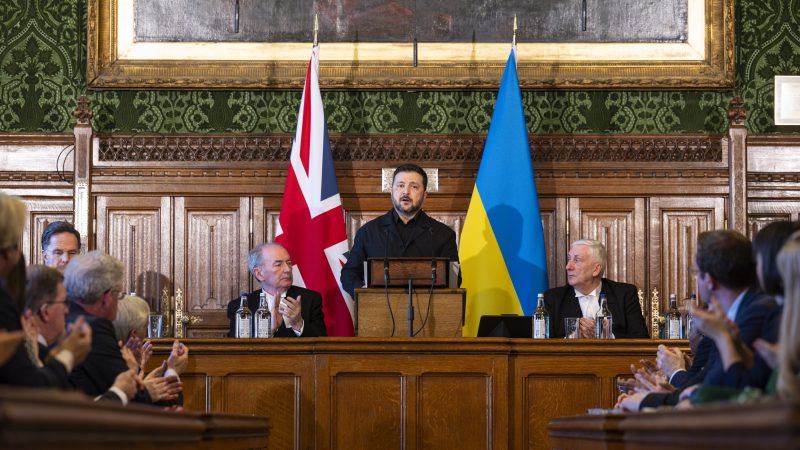

The newest UK-Ukraine deal, shows promise that the Labour Government is learning the proper lessons from Ukraine – from industrial development to training. But a more coordinated approach with Europe as well as more serious investments in defence will be necessary to uphold the declaration’s concluding aim of ‘contributing to wider security’.
One of the most important lessons the declaration recognises is the superiority of the Ukrainian experience in operations and in the field, and especially in the area of Drone Warfare, which is here to stay. For too long, Ukrainian soldiers have been trained by the EU and UK in outdated military strategy, and have left with a better appreciation of command and control that had little benefit on the battlefield. By integrating Ukraine’s experience, we can hope to develop a more effective warfighting spirit in our potential frontline forces, as well as prepare as quickly as possible forces who will be expected to keep any possible temporary ‘peace’ in Ukraine.
Similarly on industry. Ukraine’s ability to scale its technology whilst prioritising domestic production has been unmatched, and while the agreement mostly focuses on drones and UAS interceptors (in high demand everywhere now), again the lessons will hopefully proliferate throughout the UK defence industry which has suffered badly from supply chain losses since Brexit.
READ MORE: ‘NATO won’t follow Trump into his chaotic war with Iran’
This Labour Government rightfully highlights Britain’s contributions in and for Ukraine, and this agreement helps to rebalance that relationship on an equal footing, moving away from a paternalistic tone of support, to one built on a common value of strong European defence. Ukraine’s willingness to support its Allies in the Middle East has been a good example of this, as President Zelenskyy noted in a recent interview, for once Ukraine is realising the cards it has.
Yet this isn’t enough to keep the conflict at bay. While the UK and Ukraine are forming a successful partnership, the 27 countries that exist between London and Kyiv as the European Union, and the several others who join in other formats such as the Joint Expeditionary Force (JEF) form overlapping and sometimes confusing partnerships in their own way.
A closer relationship economically with the EU will be a necessary pillar, but proper engagement with the EU on defence matters, from the UK and from Ukraine, will be necessary to stitch up this patchwork of alliances and agreements. On supply chains for example, how helpful are looser restrictions between the UK and Ukraine if Poland, Germany, and France remain detached?
Subscribe here to our daily newsletter roundup of Labour news, analysis and comment– and follow us on TikTok, Bluesky, WhatsApp, X and Facebook.
Our boldness on Ukraine is to be commended and continued, but it must be matched with equal boldness with our other European Allies, with clear areas of engagement. Whether this be by following the example of French Nuclear confidence or by finally joining the EU’s Defence SAFE programme (it having been an embarrassing mistake to have missed our previous chance), there are a myriad of ways in which Europe is rising to the challenge which we should also be meeting.
It can be hard to take the European Union seriously on defence, and it is right to consider NATO our foremost defence pillar. However, with the upcoming Hungarian elections potentially removing one of the fiercest blockers of European unity, and a year left until potentially catastrophic elections in France, the next 12 months will be crucial to bringing together an ambitious, progressive, and robust series of European defence agreements, built off the UK-Ukraine relationship, that can create genuine security cooperation on the European continent, and project stability and cooperation with partners.
Share your thoughts. Contribute on this story or tell your own by writing to our Editor. The best letters every week will be published on the site. Find out how to get your letter published.
-
- SHARE: If you have anything to share that we should be looking into or publishing about this story – or any other topic involving Labour– contact us (strictly anonymously if you wish) at [email protected].
- SUBSCRIBE: Sign up to LabourList’s morning email here for the best briefing on everything Labour, every weekday morning.
- DONATE: If you value our work, please chip in a few pounds a week and become one of our supporters, helping sustain and expand our coverage.
- PARTNER: If you or your organisation might be interested in partnering with us on sponsored events or projects, email [email protected].
- ADVERTISE: If your organisation would like to advertise or run sponsored pieces on LabourList‘s daily newsletter or website, contact our exclusive ad partners Total Politics at [email protected].



More from LabourList
Mais Lecture 2026: Britain to align closer with Europe says Chancellor
‘England’s Land Use Framework will benefit our farmers and rural communities – here’s how’
‘The European Convention on Human Rights: a vital shield for children’s rights’