


Ten years on, it is easy to forget doing Brexit this way was a choice. Boris Johnson’s deal left us not just out of the single market and the customs union, but out of nearly everything with the word ‘Europe’ in it – from defence, to policing and migration, to culture.
The folly of this is achingly clear in a world of Trump, Putin and Xi. The OBR expects a long-term hit of 4% to GDP. A recent study puts the damage higher still: 6-8% of GDP; productivity and employment down 3-4%; and 12-18% less investment.
Labour’s EU reset will undo some damage. An agrifood agreement will remove red tape in an industry where UK exports to the EU have dropped 21%. Linking our emissions trading systems will save energy-intensive industries up to £800m per year. But the government’s own figures see these hard-won deals adding only 0.3% of GDP by 2040 – bigger than any of the post-Brexit global trade deals, but still only baby steps.
READ MORE: ‘Labour is rebuilding our relationship with Europe while restoring Britain’
The Chancellor has said the government will align further to the single market. Some of this can be done by the UK alone, but meaningfully dropping trade barriers means making new deals with the EU. So far the EU won’t bite, in part because we still seem to say no to everything. Our ‘red lines’ demand no single market, no customs union, and no free movement of people. Large-scale single market access is simply not on offer without the UK taking on a fair balance of obligations. Already the EU has signalled in new talks on electricity trading that the UK must ‘pay to play’.
Meanwhile, the EU has been drawing sharper lines between those inside and outside of the club. This helps to explain the collapse of talks for UK participation in the €150bn SAFE defence fund, looming steel tariffs, and a ‘Made in Europe’ requirement for public procurement which threatens to cut the UK out. We are running fast just to stand still.
Negotiation also requires recognising how those we want to work with feel about us too. Jumping to rejoin might seem simple, but could risk making a bad situation worse. The EU would want to see unshakeable support from the British public before giving any more of their time to working on this with us. Talks would take several years, during which any of the 27 members could veto our bid, leaving business suffering the status quo of current Brexit rules. The idea that negotiating a customs union would improve things has also been oversold. It would remove the need to prove the origin of goods for tariff-free exports to the EU – but at an estimated benefit of only 0.5% of GDP. As ever, we need to aim higher than the Liberal Democrats to deliver progressive outcomes.
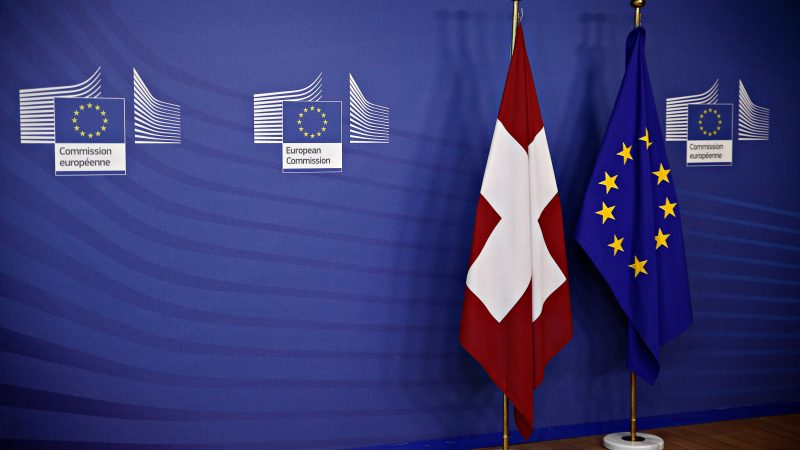
Yet if Noel and Liam could overcome their differences to reform Oasis, addressing the damage Brexit has done in a way that works for both sides must also be possible. It starts with learning from the updated agreements Switzerland signed with the EU last March. Switzerland is inside large parts of the single market in goods. It is out of the customs union and mostly out of the single market for services, but with mutual recognition of professional qualifications and membership of EU programmes. In return, it pays into EU levelling-up funds, agrees to a form of dynamic alignment to EU regulations, and accepts free movement of people with controls.
Become a friend of LabourList and join our community. Our friends support our vital non-factional work and get access to exclusive content and events.
A familiar refrain is that the EU doesn’t like the Swiss model. This is much less true after last year’s agreements, which put in place new governance based on an overall balance of rights and obligations. Adapting that precedent could offer the growth the UK currently lacks while acknowledging the areas where full re-entry to the single market could be difficult, such as in financial services. For the EU, this approach would make the UK a partner in building economic security, rather than an outsider always asking for favours.
The largest challenge with seeking a Swiss-style deal would be free movement. But in an open trading nation with an ageing population, a government that can’t make the case for labour mobility with its closest neighbours and biggest trading partner is a government without a model for economic growth. And Swiss ‘free’ movement comes with meaningful controls. EU citizens moving to Switzerland need to show the authorities they are employed or have sufficient funds not to rely on benefits, and must have health insurance. The Swiss government also has an emergency brake to suspend freedom of movement if it is causing ‘serious economic or social problems’.
This is a vision Labour will need to take to the country in our next manifesto for a clear democratic mandate. But we should start talking about it now, to show both the public and the EU that we have an ambitious plan that is more than just a British wish list, and which matches the scale of the challenges we all face.
Subscribe here to our daily newsletter roundup of Labour news, analysis and comment– and follow us on TikTok, Bluesky, WhatsApp, X and Facebook. You can also write to our editor to share your thoughts on our stories and share your own. The best letters are published every Sunday.
In January 2020, a certain Nigel Farage told Swiss radio that their country had been a source of inspiration for Brexit, and that Switzerland had reached agreements with the EU while maintaining its ‘sovereignty and independence’. Ambitious pro-Europeans should remind all those who want to make progress that, if even Liam and Noel can once again sing the same song at the same time, we too can roll with it.
This article features in a new edited collection from the Fabian Society and Labour Movement for Europe ‘Pressing Reset – Our future with the EU‘
-
- SHARE: If you have anything to share that we should be looking into or publishing about this story – or any other topic involving Labour– contact us (strictly anonymously if you wish) at [email protected].
- SUBSCRIBE: Sign up to LabourList’s morning email here for the best briefing on everything Labour, every weekday morning.
- BECOME A FRIEND: If you enjoyed this, why not consider becoming a Friend of LabourList? Help sustain our journalism, and of course Friends do get benefits…
- PARTNER: If you or your organisation might be interested in partnering with us on sponsored events or projects, email [email protected].
- ADVERTISE: If your organisation would like to advertise or run sponsored pieces on LabourList‘s daily newsletter or website, contact our exclusive ad partners Total Politics at [email protected].



More from LabourList
Gorton and Denton, Iran and election season – Ann Black’s NEC report
Gary Smith re-elected as GMB general secretary unopposed
‘The politics of the Gambling Levy money’