

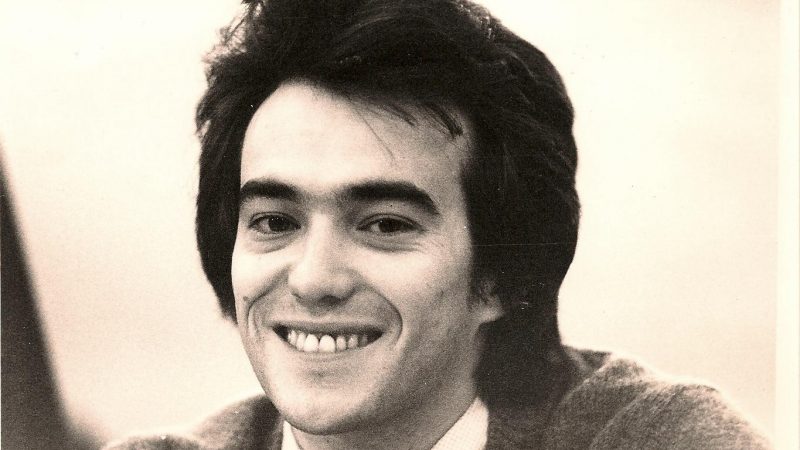

There have been some lovely tributes to Phil Woolas since his untimely death a few weeks ago, from proper friends and comrades who knew him from his days at Manchester University onwards, and from people who knew him from NUS, the Labour and trade union movement, Manchester United, and Parliament. And some by obituarists who plainly did not know him at all.
One of his oldest political friends, John Mann, wrote about the phenomenal number of people who counted Phil as a friend. In a milieu of duplicity and shifting loyalties, this is a rare currency. But something missing from the write-ups, whether warmly knowledgeable or woefully misinformed, was Phil’s’ role in the shaping of the Labour Party in the mid-1980s.
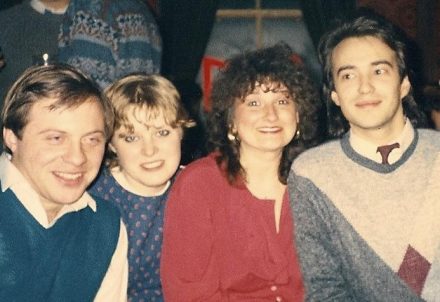
A generation of Labour activists, emerging from the utter rout of 1983, made a collective decision to never, ever repeat the debacle. The leader chosen for the task was Neil Kinnock, whose rightful reputation for soaring oratory masked the relentless hours spent away from the podium in endless NEC meetings, Org Subs, and shadow cabinets, removing the barnacles from the bottom of the boat, and steering Labour by inches towards electoral credibility.
He was supported in this task by many making the same political voyage, from the safe harbour of Bennite sloganising, towards the choppier waters of Labour modernising. Phil was one of the capable, charismatic young leaders who jumped onboard. He understood that Labour could appeal to a new generation, but not on a prospectus of impossible promises. He, along with others, had the courage to take on the Militant Tendency within the moribund Labour Party Young Socialists (LPYS). This was no easy task up against the somewhat long-in-the-tooth ‘young socialists’ armed with the religious certainties of Marxism-Leninism and nowhere else to be.
In 1986, John Mann and Phil Woolas co-authored a pamphlet Labour and Youth: the Missing Generation for the Fabian Society. It contained some sensible proposals, subsequently largely enacted. It argued that Labour should not patronise young people, nor assume they were all revolutionaries, or even interested in politics at all. Its analysis of Labour’s youth sections stated that ‘our starting point is thus simply to say that a relevant, mass Labour youth section and its domination by a Trotskyist organisation are mutually incompatible’.
The authors pointed out that the Tendency tacticians took Lenin’s aphorism ‘better fewer, but better’ to heart, driving away young people from the LPYS if they showed any dangerously independent thought or misplaced liking for Roy Hattersley. A small, ideologically homogeneous grouplet (delivering a seat on the Labour NEC) was preferable than a large, democratic body filled with curious Fabians and querulous social democrats.
Phil and John’s epiphany was that ‘attending a summer camp to learn the teachings of dead Russians has never attracted the vast majority of young people and never will’. It is perhaps worth reminding ourselves that there were plenty of people in the Labour Party who did not concur with this self-evident truth. Some of them were called Jeremy Corbyn and Diane Abbott.
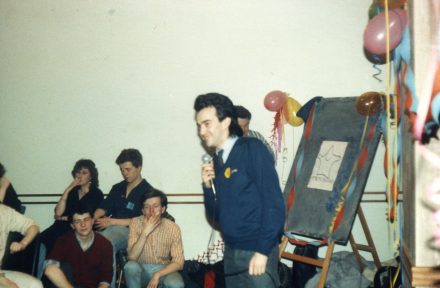
Inside NUS, he recognised that the FE sector was where the promise and possibilities were, not the red bricks or Oxbridge. Within the National Organisation of Labour Students (NOLS), Phil crafted a student politics which was realistic and radical. This was the politics of anti-apartheid, the GLC, the miners’ strike, Red Wedge, and anti-Thatcherism. There was nothing anaemic about this, yet it was anchored in electoralism not fantasies about students joining workers on the barricades. Students marched to the polling stations in 1987. It is perhaps testament to the durability of this approach that so many of Phil’s contemporaries are still active in politics, even serving as Ministers, whilst his antagonists are not. Trotskyism chews people up and spits them out, and most student revolutionaries end up as stockbrokers or worse, newspaper columnists.
The shock of 1992 persuaded the next generation to take Labour to the next level. A new Leader, a new Clause IV, a New Labour party. Part of the New Labour myth-making was that Blair’s leadership win in 1994 was a pivotal moment, like El Alamein, before which there was only defeat, and after which only victories. This is a neat myth but fails utterly to acknowledge the role in the 1997 landslide of the Kinnockites (in their many guises) such as Phil Woolas. Neil Kinnock took Labour from an existential crisis to the edge of success. But he didn’t do it alone; it was Phil’s generation, often missing from the commentaries, that took us to a new dawn.
Become a friend of LabourList and join our community. This Monday, Friends can even ask Neil himself a question about the ‘Kinnockites!’ Our friends support our vital non-factional work and get access to exclusive content and events.
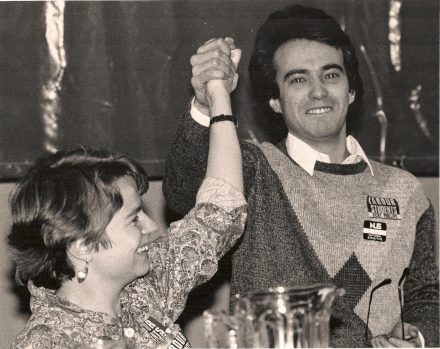
The rest, as they say, is history. Phil was a great by-election candidate, hard-working MP, and an effective minister. In 2010, he was robbed of victory by judges obstructing the democratic will of the people. Had his narrow victory that year stood, he would have been an MP as Labour chose a new Leader, probably tipping things towards the other Miliband brother and thus changing history inexorably. No Ed, no Jeremy, no Brexit referendum, no Reform UK. It’s a cute ‘what if’.
Subscribe here to our daily newsletter roundup of Labour news, analysis and comment– and follow us on TikTok, Bluesky, WhatsApp, X and Facebook. You can also write to our editor to share your thoughts on our stories and share your own. The best letters are published every Sunday.
At the conclusion of their Fabian pamphlet, Woolas and Mann declared for a youth politics which would see ‘young people involved and encouraged, not driven away by factional in-fighting’. They declared that ‘Socialism can be bright, enjoyable, and relevant’.
Amen to that.
-
- SHARE: If you have anything to share that we should be looking into or publishing about this story – or any other topic involving Labour– contact us (strictly anonymously if you wish) at [email protected].
- SUBSCRIBE: Sign up to LabourList’s morning email here for the best briefing on everything Labour, every weekday morning.
- BECOME A FRIEND: If you enjoyed this, why not consider becoming a Friend of LabourList? Help sustain our journalism, and of course Friends do get benefits…
- PARTNER: If you or your organisation might be interested in partnering with us on sponsored events or projects, email [email protected].
- ADVERTISE: If your organisation would like to advertise or run sponsored pieces on LabourList‘s daily newsletter or website, contact our exclusive ad partners Total Politics at [email protected].



More from LabourList
‘We need to fix potholes and Holyrood’: an interview with Daniel Johnson MSP
Labour NEC elections: Full list of CLP rep contenders
‘Don’t do it as a protest vote’: Can Labour survive a Green wave in Cambridge?