

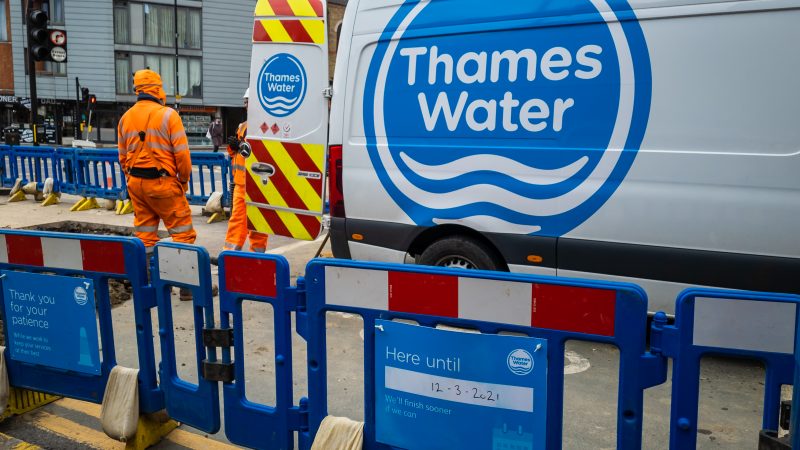

Starmer spoke last week about “public ownership in the public interest” for British Steel and the King’s Speech introduced new legislation for it to be fully nationalised. But the Prime Minister is ignoring another piece of critical national infrastructure that supports the economy – the water company responsible for serving 16 million people that stopped meeting its licence conditions back in July 2024.
The government’s ongoing attempt to dodge the Thames Water issue instead of grasping the nettle looks increasingly untenable. 87% of Reform voters want public ownership of water. Greens want public ownership of water. It is one of the few policies that brings these two groups together. Thames Water households themselves believe the recent bill increases are unreasonable, the company should be in public ownership and that it would be reasonable for customers to stop paying their bills.
No wonder that not just the Tribune Group and Socialism26 but also Labour Growth Group and ThinkLabour are all united that the current situation cannot continue and something must be done – with the latter recommending that “Thames Water is forced into administration with bondholders losing their money”.
READ MORE: ‘Those who aspire to lead Labour must be clear about the party’s responsibilities to working people’
Thames Water was bailed out by its so-called “customers” in February 2025. The deal with Ofwat was supposed to be wrapped up by October last year. The latest deal from the creditors (who now have control of the company) proposes sewage outside of legal limits until 2030, at which point they will be allowed to sell it. All for the privilege of letting US hedge funds make a profit (the CEO of Elliott Management, one of the main creditor groups is also a Trump megadonor) while America’s own water is 87% run in public ownership. Ofwat and the government say that the shareholders – who have written down their shares – are still the “Ultimate Controller” with accountability for the company but this is a farce. No one is taking responsibility.
Thames Water is emblematic.
It’s about the cost of living – Thames Water bills increased by nearly a third while the company made a profit of over £400 million in the six months to September last year.
It’s about sewage in our rivers which people are up in arms about, especially since the Dirty Business docudrama on Channel 4.
It’s about patriotism – foreign investors are being prioritised over the British public.
It’s also about honesty – the government will break its election promise if it sets a new precedent for illegal pollution until 2030 through this deal. New water legislation will be irrelevant if Thames Water has already dictated a new low across England.
Fundamentally, it’s about whose side the government is on.
Only permanent public ownership for Thames Water would send the necessary signal to households that the government is in their corner. How much will it cost to take Thames Water into special administration and transfer it into public hands? Very little to end this rip off which will otherwise mean that households pay a THIRD of their water bills on dividends and debt forever more.
Become a friend of LabourList and join our community. Our friends support our vital non-factional work and get access to exclusive content and events.
Here’s how it works. Compensation for shareholders would be close to zero as they have walked away. Thames Water’s £20 billion or so debt would get a haircut of at least 40% according to the government’s own estimate, reducing it to roughly £12 billion. The government would refinance this £12 billion as public sector debt, explaining to Thames Water households that this makes them better off as it cuts out the wasteful privatisation tax they are paying. The government would explain to the rest of the country that it has defended everyone against a few US hedge funds who would have set a precedent of increased sewage across England.
£12 of refinanced debt is a drop in the ocean compared to £2911 billion debt overall. Charlie Maynard MP recently explained on the New Statesman podcast that he had asked gilt investors how it would be received if Thames Water’s debts were nationalised – the consensus was that even £17 billion would be comparatively trivial. The bank bailouts of 2007-9 cost £137 billion and the pandemic cost £310 to £410 billion. When Network Rail took over Railtrack’s £7 billion debt, it caused no problem for the bond markets.
It’s also really important to emphasise that Thames Water is a profitable asset. Water bills pay for investment. The government would buy a profitable asset and it would receive a profitable asset on behalf of the British public. That is a strong story to tell.
The Blair government stood up for the public interest when Railtrack went bust and shareholders had to lump it when they received far less compensation than they hoped for. The government has already promised the biggest wave of insourcing in a generation. The Children’s Wellbeing and Schools Act enables a profit cap for private providers of services for vulnerable kids. Standing up for the national interest by taking control and ownership of services and assets where possible is consistent, coherent policy and the public believes it is right.
Andy Burnham’s popularity is hugely tied to his policy platform of introducing public control and ownership. The campaign we set up, Better Buses for Greater Manchester, lobbied Burnham to regulate the buses in the city region for the first time since Thatcher and the BeeNetwork has been a huge success, directly benefitting passengers across the region.
Not taking back Thames Water leaves the government increasingly exposed. Over 80 MPs and counting have said no so far to Thames Water’s latest dodgy deal. Labour can show its confidence in the party and in the role of the state by guaranteeing the decent supply of essential water and sewerage services for 16 million people. That cannot be done without taking back Thames Water.
Subscribe here to our daily newsletter roundup of Labour news, analysis and comment– and follow us on TikTok, Bluesky, WhatsApp, X and Facebook. You can also write to our editor to share your thoughts on our stories and share your own. The best letters are published every Sunday.
-
- SHARE: If you have anything to share that we should be looking into or publishing about this story – or any other topic involving Labour– contact us (strictly anonymously if you wish) at [email protected].
- SUBSCRIBE: Sign up to LabourList’s morning email here for the best briefing on everything Labour, every weekday morning.
- BECOME A FRIEND: If you enjoyed this, why not consider becoming a Friend of LabourList? Help sustain our journalism, and of course Friends do get benefits…
- PARTNER: If you or your organisation might be interested in partnering with us on sponsored events or projects, email [email protected].
- ADVERTISE: If your organisation would like to advertise or run sponsored pieces on LabourList‘s daily newsletter or website, contact our exclusive ad partners Total Politics at [email protected].



More from LabourList
Healey’s pre-Budget headache
‘Public water, local power’
SPONSORED: ‘Partnership is the key to making devolution deliver Northern growth and UK prosperity’