

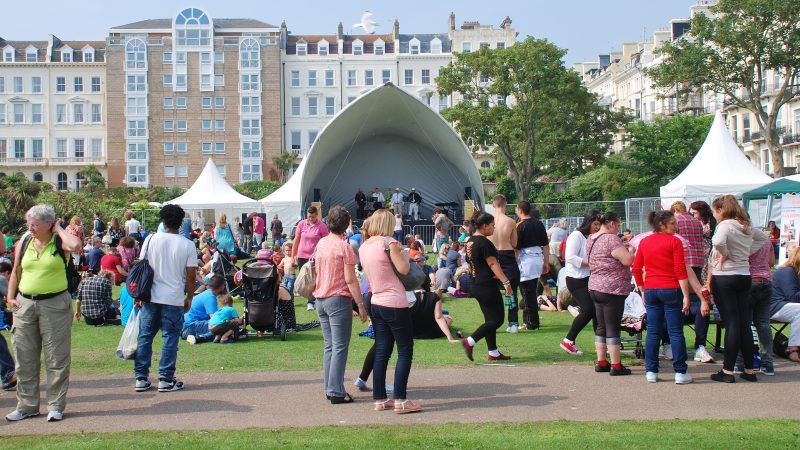

The government recently allowed pubs to stay open until 5am for England’s World Cup games, on the basis of ‘exceptional national significance’. Football alone is surely exceptionally and nationally significant, but this was partly about how important it is to watch the game together. We have fewer opportunities to come together, and less of a shared culture than we did forty years ago.
The left has been reaching for a new philosophy or a new moral framework, but the conditions of collectivism – our spaces, places, and habits – have been diminished.
In our pamphlet published today, ‘What is the left for?’, IPPR makes clear that liberal democratic capitalism has failed to give many people good lives. Communities across the country are more economically and socially insecure, more fragmented and more polarised. The left often talks about the type of politics it needs – a little more to the left or the right – but not enough about how social fragmentation links directly to our struggle to build it.
Thousands of youth clubs have shut over the last twenty years, and hundreds of community centres close every year. The places where we met each other as citizens and neighbours have been dismantled. These places were not just nice to have – they were places where people could learn to trust each other, change their mind, protest, and form new political spaces and movements. Our ability to reach each other and build something new has been curtailed.
READ MORE: ‘We need social club socialism’
Research shows that people across the UK use the language of corruption and care when they talk about politicians – especially working-class people. Sacha Hilhorst, Insa Lee Koch and Mike Savage’s work in deindustrialised areas of Corby, Mansfield and Oxford found that working-class people feel like politicians are corrupt and don’t care about them or actively for them. A participant in their study reported that some carers at a protest said: ‘The government don’t care about me, they don’t care about my children, they don’t care about our lives’. Another participant said ‘I think the whole system’s corrupt, if I’m honest’.
Across the country, we can see grievances, and the perception that people aren’t cared about or for, but no institutional life to support developing an alternative politics, or enduring solidarity. The far-right is taking advantage of legitimate grievances and the lack of social infrastructure; the left needs to make a different kind of collective politics possible.
Politicians must show people that they not only care about them, but for them. This means new infrastructure as well as spending. Austerity shrank what the state could do, but it also shrank what we imagine the state can do. The minimum wage didn’t just raise wages, it also changed what people expected and became protected common sense.
The NHS and state schools are not simply services, they’re progressive architecture. As they fade away or struggle on, we don’t just lose what they offer us in practical terms – we lose the tangible manifestations of progressive politics that constitute us as a collective. We need new architecture that builds a modern progressive common sense. This is the basis of what we’re calling reciprocism: a politics where the state does more for people and asks us to do more in return.
Become a friend of LabourList and join our community. Our friends support our vital non-factional work and get access to exclusive content and events.
This means having the political will to build lasting institutions that reflect progressive values – and that means rebuilding our social infrastructure, boldly and at scale. As Sacha Hilhorst argues, we need a new 21st century Miners’ Welfare Fund to pay for widespread new social infrastructure. In 1919 a Miners’ Welfare Fund was set up that provided communities with sports clubs, community halls, scholarships, and funding for research and support. A coal levy paid for that fund, and Hilhorst suggests an online sales tax, or a higher tax on warehouses or distribution centres could pay for a new fund.
We also need to build new online spaces as well as regulate them: how can you do collective politics in personalised online spaces? You can’t build solidarity or common knowledge if you don’t see what anyone else is seeing. And you struggle to build progressive coalitions on platforms that openly promote right-wing content. We need public broadcasters to explore the possibility of better online platforms.
This is what a politics of reciprocism would look like: a caring government and a government capable of building collectivism rather than tinkering at the edges of a society that has become more culturally individualistic. We need to prioritise building new institutions and infrastructure. And from this more secure foundation, we can ask more of each other, and build a deeper, mutual relationship between people and the state that promotes collectivism over individualism.
Subscribe here to our daily newsletter roundup of Labour news, analysis and comment– and follow us on TikTok, Bluesky, WhatsApp, X and Facebook. You can also write to our editor to share your thoughts on our stories and share your own. The best letters are published every Sunday.
-
- SHARE: If you have anything to share that we should be looking into or publishing about this story – or any other topic involving Labour– contact us (strictly anonymously if you wish) at [email protected].
- SUBSCRIBE: Sign up to LabourList’s morning email here for the best briefing on everything Labour, every weekday morning.
- BECOME A FRIEND: If you enjoyed this, why not consider becoming a Friend of LabourList? Help sustain our journalism, and of course Friends do get benefits…
- PARTNER: If you or your organisation might be interested in partnering with us on sponsored events or projects, email [email protected].
- ADVERTISE: If your organisation would like to advertise or run sponsored pieces on LabourList‘s daily newsletter or website, contact our exclusive ad partners Total Politics at [email protected].



More from LabourList
Rotten to the core? Reform demonstrate why party discipline is important
Paul Nowak column: ‘Britain needs a living standards Budget’
‘Brexit was never a closed matter – it’s time to put the national interest first’