

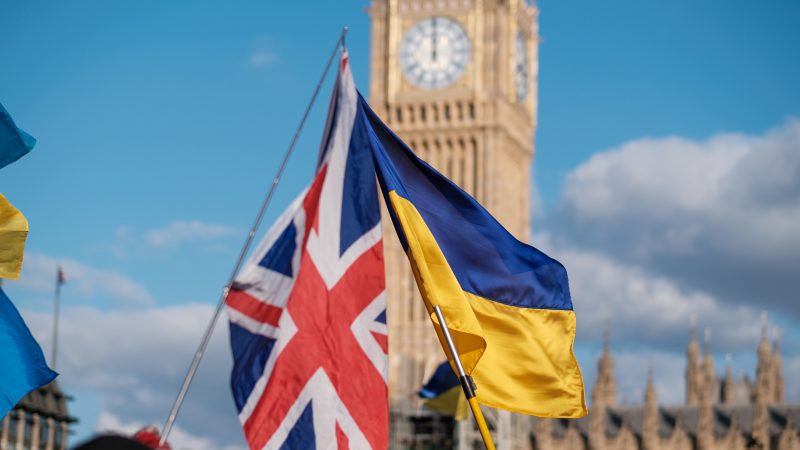

Under Sir Keir Starmer, Britain’s promise to stand with Ukraine stopped being a slogan and became a long-term policy. His 100-year partnership with Kyiv was backed by a commitment of at least £3 billion a year in military assistance until 2030/31 and for as long as needed. Alongside President Macron, Starmer built the Coalition of the Willing. He also opened the EU’s £78 billion Ukraine Support Loan to British defence firms, a reminder that Ukraine’s security can support British jobs and industry too.
Andy Burnham now faces a very different task, guarding that achievement against any weakening of support at home. At the end of 2025, 70% of Britons wanted Ukraine to win and cared that it did. But people don’t have to believe Putin for Russia’s strategy to be effective. Enough people need only to see politicians as dishonest, the media as untrustworthy and political engagement as pointless.
The recent Resilience & Reconstruction self-funded study, Disinformation, UK Democracy, and Attitudes toward Ukraine & Russia in the UK describes exactly how that happens. Researchers heard from 64 people ranging from mainstream news users to those immersed in conspiratorial or Russian-aligned media.
People described Britain as broken, unfair and unsafe: after years of economic pressure, many felt not so much left behind but walked away from by politicians and public institutions. As a result, they had made the “great retreat”, turning away from the national and towards family and friends, looking after family, paying bills and getting through the week. Although sympathy for Ukrainians remained, the time and emotional space to follow a long war did not. When services fail and those in power appear to play by different rules, support for Ukraine is easier to twist into a story about politicians caring more for people abroad than people at home.
READ MORE: ‘Is Streeting changing Manchesterism — or is Manchesterism changing Streeting?’
Those frustrations create the space for propaganda to operate in. Most propaganda seeps into arguments people already recognise, carried by a familiar commentator, a clipped video of someone they trust. “Ambient disinformation” describes the way Russian narratives blend with real British grievances until it becomes hard to tell one from the other. A friend or influencer who sounds authentic can beat a correction from an institution that has already lost public trust.
Voting intention changed the language: Labour supporters began with solidarity, social justice and the common good. Their fatigue came mainly from domestic pressure, not hostility to Ukraine. Conservatives spoke more about fairness, national interest and rules against aggression. Reform supporters switched off when Ukraine sounded like another elite instruction, while those drawn to other parties on the Left often began with anti-war and anti-NATO arguments. Labour does not need four different truths, but it does need more than one sermon.
People following mainstream media often knew the broad outline of Russia’s invasion but little of the conflict’s history, while others consuming Russian-aligned media knew more names, dates and detail, but all inside a false story in which Ukraine was artificial and Russia had merely been provoked. Few could place 2014 in the conflict. People who knew Ukrainians had firmer, more grounded views. Leave a hole in the public story and somebody else will fill it.
Labour needs to ensure that its Ukraine policy feels like the politics it promises at home — fair, accountable and rooted in people’s lives. Societal resilience grows when voters can see who pays, what has worked, where ministers went wrong and how Ukraine connects to Britain’s own security.
Start with fairness: the demand to “make Russia pay” connected across political divides in the research. Burnham should press allies to use frozen Russian state assets, and those of sanctioned oligarchs, for Ukraine within a clear legal framework. Every few months, ministers should show what British support has achieved – air defences delivered, power restored, war-crimes evidence secured, and British jobs created. Candour about costs and independent scrutiny would make it credible.
Become a friend of LabourList and join our community. Our friends support our vital non-factional work and get access to exclusive content and events.
Then take the argument out of Westminster. MPs, mayors, councillors and community leaders can bring Ukrainian residents and their wider communities together for conversations, especially where families have settled or defence investment is creating work. These conversations should allow people to disagree openly. Ministers should answer difficult questions, publish those they cannot and correct mistakes in public. Trust grows when government shows its workings.
Labour must also tell the story before somebody else rewrites it. Starmer’s A Safe, Informed Digital Nation and Local Media Action Plan give Burnham a head start. Schools, libraries and local journalists can explain Ukraine’s history and show how hostile claims reach British feeds. Twinning, cultural exchange and Ukrainians’ own voices can make the country real to people here. This stops Ukraine becoming a blank screen onto which any grievance can be projected.
Nor should ministers answer war-weariness with a lecture. The fate of the more than 20,000 Ukrainian children documented as deported or forcibly transferred by Russia resonated across every group in the research. The Labour government should make their safe return a visible priority, alongside the safety of children displaced or under bombardment. It should present war-crimes investigations, sanctions, reparations and credible security guarantees as the route to durable peace – not obstacles to it. That is stronger than treating Ukraine as a charity competing with the NHS or living standards: it joins solidarity to fairness and security while acknowledging trade-offs.
Starmer built the coalition abroad — Burnham must build confidence at home. A government that explains its choices, shares burdens fairly and gives local institutions a real part in the argument strengthens democracy itself. That is the distinctly Labour case for making democratic resilience the domestic half of our commitment to Ukraine.
Subscribe here to our daily newsletter roundup of Labour news, analysis and comment– and follow us on TikTok, Bluesky, WhatsApp, X and Facebook. You can also write to our editor to share your thoughts on our stories and share your own. The best letters are published every Sunday.
-
- SHARE: If you have anything to share that we should be looking into or publishing about this story – or any other topic involving Labour– contact us (strictly anonymously if you wish) at [email protected].
- SUBSCRIBE: Sign up to LabourList’s morning email here for the best briefing on everything Labour, every weekday morning.
- BECOME A FRIEND: If you enjoyed this, why not consider becoming a Friend of LabourList? Help sustain our journalism, and of course Friends do get benefits…
- PARTNER: If you or your organisation might be interested in partnering with us on sponsored events or projects, email [email protected].
- ADVERTISE: If your organisation would like to advertise or run sponsored pieces on LabourList‘s daily newsletter or website, contact our exclusive ad partners Total Politics at [email protected].



More from LabourList
Labour triumphs against Polanski, but the Green threat remains
Delivering in Government: your weekly round up of good news Labour stories
Labour members willing to accept Green defections, but not Tories or Reform – poll