

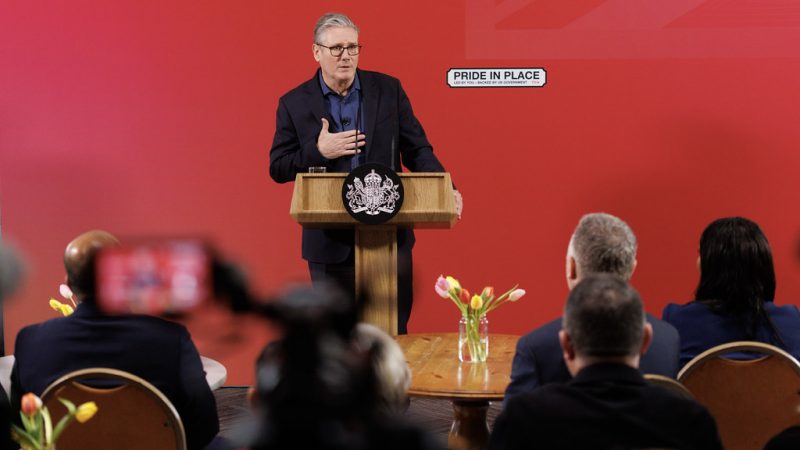

As I entered Parliament yesterday morning, I did so with the feeling of renewal. The return from recess was reminiscent of that feeling you got when you returned to school from the summer holidays. Another year older, with a touch more experience and a mild assumption you had earned your place in the mad social hierarchy of it all that little bit more.
What’s more you have a new teacher. A different person to lead your experience. Excited and nervous – how will this all play out?
What you do not go in anticipating though, is that your previous teacher decides to make the first day back about themselves and resign from their job very publicly – pulling almost all of the attention back onto the past, while you were hoping today would be a day to think about the future.
READ MORE: Labour Party Conference 2026: Full LabourList events programme, revealed
But then, Keir Starmer is not a teacher at a secondary school and I am not a pupil. He is a soon-to-be former politician, whose reign at the top had come to an abrupt end just before the summer holidays began. As a man who had dedicated his life to public service, it seems he has concluded he is of better service to the nation he loves focusing on wider international and domestic issues from outside of the office of a backbench constituency Member of Parliament.
Given the successes we often credit Starmer for delivering, alongside the fact his time at the top was cut short – it is understandable he has come to this conclusion. Having had a taste of leadership on the global stage and appearing generally well liked as he set to re-establish the UK’s relationship with other global leaders, it would be fair for Starmer to believe he still has something to offer in geo-politics. Speculation that he would like the top job at NATO continues – though after souring a relationship with Trump over Iran, this may, realistically, be more complex than the former PM may wish.
But as the former leader ends his time in Parliament, we must all recognise the Labour Party still has much to be grateful to him for.
No one can take away from Starmer the work done to deliver the landslide election win in 2024. While some may suggest this was as much to do with the Tories downfall, this narrative is a huge oversight to the way Labour was viewed by the general public in 2019 and the journey a leader had to take the Party on to bring it to a place it could be considered a viable option electorally in just five years.
That was no simple task. Without Starmer’s success, we would not have the Renters Rights Act or the Employment Rights Act. We would not necessarily have several global trade deals he seemed instrumental in delivering. Nor would the current leader find himself with a majority that also allows him to push through his political agenda, and carry on delivering on the manifesto commitments Labour members campaigned for.
Become a friend of LabourList and join our community. Our friends support our vital non-factional work and get access to exclusive content and events.
Starmer’s leadership, whether you liked him or not, helped to deliver some genuinely good things for the country. He should be recognised for that.
However, these positives do not exist in isolation. From freebie-gate to winter fuel, the damaging attempt at welfare reforms to the hiring of Peter Mandelson as US Ambassador – Starmer’s time as PM was not one without serious issues. Perhaps the most serious of all was the clear sign from the electorate across England, Scotland and Wales this May, that the nation had lost faith in the man leading the country. At that point, it was right that his time leading came to an end.
In years to come, Starmer will still be a name in the history books. It feels strange to think that one day, a school pupil may actually return from their summer holidays to find themselves in their first history class of that year, studying the period of political history we are currently living through.
How they will assess Keir Starmer’s time as Labour leader and Prime Minister may be different from our current understanding. With time comes the emotional detachment that can allow for a shift in perspective and, perhaps, a more fully rounded view.
For now though, we can recognise the positives his leadership brought, that we should be grateful for those – but also where things went wrong and why ultimately his time in politics has come to an appropriate end.
Subscribe here to our daily newsletter roundup of Labour news, analysis and comment– and follow us on TikTok, Bluesky, WhatsApp, X and Facebook. You can also write to our editor to share your thoughts on our stories and share your own. The best letters are published every Sunday.
-
- SHARE: If you have anything to share that we should be looking into or publishing about this story – or any other topic involving Labour– contact us (strictly anonymously if you wish) at [email protected].
- SUBSCRIBE: Sign up to LabourList’s morning email here for the best briefing on everything Labour, every weekday morning.
- BECOME A FRIEND: If you enjoyed this, why not consider becoming a Friend of LabourList? Help sustain our journalism, and of course Friends do get benefits…
- PARTNER: If you or your organisation might be interested in partnering with us on sponsored events or projects, email [email protected].
- ADVERTISE: If your organisation would like to advertise or run sponsored pieces on LabourList‘s daily newsletter or website, contact our exclusive ad partners Total Politics at [email protected].



More from LabourList
‘Why Iceland’s EU referendum matters to British progressives’
‘Beyond recruitment: a new fostering plan that offers real hope’
Reform’s rotten culture is exposed