


Andy Burnham has admitted to agonising over voting for the Iraq war, and that he would not cast that vote again. It is an unusual admission for a Prime Minister. That he was persuaded, on someone else’s evidence, to authorise lethal force, and that he was wrong.
He now faces a decision that turns on precisely that question. Who decides to kill, and who answers for it afterwards?
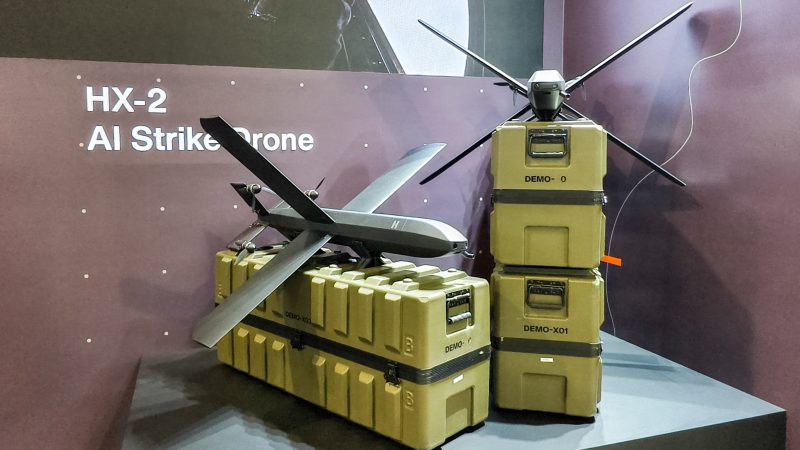
In November, at the Review Conference of the Convention on Certain Conventional Weapons, states decide whether to open negotiations on a treaty governing autonomous weapons, systems that use sensors and software to select and attack targets without a human approving each strike. Seventy-six states back those negotiations. Seventy are parties to the Convention, a majority of its membership. Britain is not among them.
READ MORE: Labour Party Conference 2026: Full LabourList events programme, revealed
This ought to be straightforward for a party whose MPs have spent September talking about almost nothing else. Last week the Joint Committee on Human Rights called for a dedicated AI Bill, a statutory regulator and outright prohibitions on the most harmful uses of the technology. Alex Sobel introduced an Artificial Superintelligence Bill. Peers, including Lord Hunt, are pressing for emergency powers to switch off dangerous models, and more than seventy MPs and peers, John McDonnell among them, have asked the Prime Minister to use Britain’s G20 presidency to build a coalition against AI superintelligence. After meeting Mark Carney last week, Downing Street acknowledged that existing frameworks “may not remain sufficient as AI capabilities advance.”
Almost none of it covers weapons. The Government’s own AI legislation, trailed in May’s King’s Speech, is built around sandboxes and growth. The single place where an AI system’s error is irreversible, where it ends a life, is the place our emerging framework does not touch.
Accountability remains at the heart of the problem. The Stop Killer Robots Campaign has been campaigning for an international treaty on autonomous weaponry since 2013 and asking the difficult questions around autonomous weapons systems (AWS). Questions such as who is responsible when an autonomous system misidentifies a target and kills a family? The commander who switched it on, the engineer who trained it, the manufacturer who sold it? International humanitarian law requires judgements about distinction and proportionality that no algorithm can reliably make, because those judgements are contextual, moral and human. Machine-speed targeting leaves little room for de-escalation, and the proliferation of cheap autonomous drones have already left the hands of professional armies.
Parliament has said much of this. The Lords committee on AI in Weapon Systems reported in 2023, calling for human control over the use of lethal force. Three years on, most of its recommendations remain unfulfilled.
Labour has a strong record of finishing this kind of business. Blair’s government signed the Ottawa Treaty within months of taking office and passed the Landmines Act in 1998. Brown intervened personally in 2008 to give up Britain’s remaining cluster munitions. Both times the objections were the ones raised now for autonomous weapons. Militarily indispensable, impossible to verify, someone else will build them anyway. Both times a Labour government decided some weapons are not worth what they cost us, and both times Britain’s decision moved others.
Two counter-arguments deserve answering. The first is that treaties are fraying. Lithuania left the cluster munitions convention last year, and five European states have moved to quit the landmines treaty since Russia’s invasion. That is an argument for acting now. Norms are hardest to establish once a weapon is in widespread use. We are still, just, ahead of that point.
The second is the United States. Trump has rejected calls to slow AI development, citing the race with China. Washington and Moscow have both resisted progress at the UN talks that closed this month. But Britain leading has never meant Britain waiting. What it means is building the majority that makes holdouts look isolated.
So, three things. Back a mandate for negotiations in November. Write meaningful human control over lethal force into British defence policy and procurement, rather than leaving it to doctrine. And make sure the AI Bill this Government brings forward covers the military uses of AI, not only the commercial ones.
The Prime Minister has said he knows what it is to authorise force and get it wrong. The lesson of that is not that human judgement is unreliable. It is that responsibility has to sit somewhere a person can carry it.
Subscribe here to our daily newsletter roundup of Labour news, analysis and comment– and follow us on TikTok, Bluesky, WhatsApp, X and Facebook. You can also write to our editor to share your thoughts on our stories and share your own. The best letters are published every Sunday.
-
- SHARE: If you have anything to share that we should be looking into or publishing about this story – or any other topic involving Labour– contact us (strictly anonymously if you wish) at [email protected].
- SUBSCRIBE: Sign up to LabourList’s morning email here for the best briefing on everything Labour, every weekday morning.
- BECOME A FRIEND: If you enjoyed this, why not consider becoming a Friend of LabourList? Help sustain our journalism, and of course Friends do get benefits…
- PARTNER: If you or your organisation might be interested in partnering with us on sponsored events or projects, email [email protected].
- ADVERTISE: If your organisation would like to advertise or run sponsored pieces on LabourList‘s daily newsletter or website, contact our exclusive ad partners Total Politics at [email protected].



More from LabourList
‘Why Iceland’s EU referendum matters to British progressives’
‘Beyond recruitment: a new fostering plan that offers real hope’
Reform’s rotten culture is exposed