

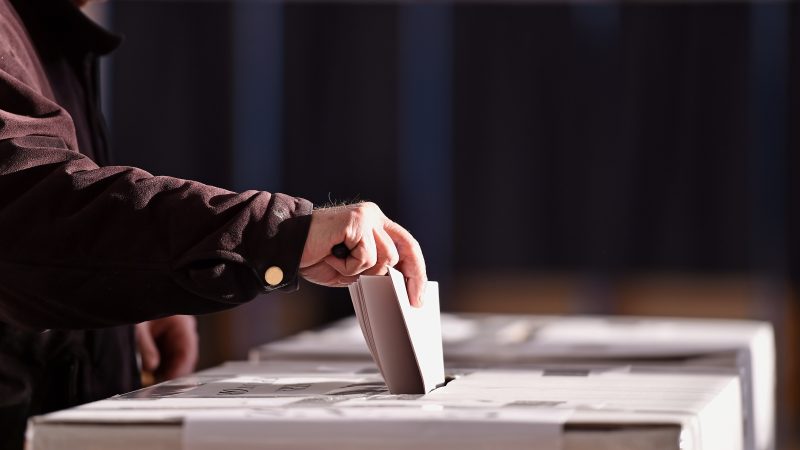

“I want to underpin our plan for Britain with a new politics”, the Prime Minister said in his conference speech before announcing a new commission on electoral reform and stating that changing the electoral system will feature in Labour’s next manifesto.
This is welcome and testament to the hard work of those who have campaigned for a commission, including the Labour for a New Democracy campaign group and MPs who pushed the government with a proposed amendment to the Representation of the People Bill last month. It also reflects Burnham’s own support for electoral reform, as well as cross-party support from the Greens and Liberal Democrats.
While there have been notable unsuccessful attempts to reform the Westminster voting system previously, the case for decisive action now could not be clearer. The 2024 general election starkly demonstrated the effects of Britain’s first-past-the-post (FPTP) model. Labour won nearly two-thirds of Commons seats with barely more than one-third of the national vote. Meanwhile, Reform UK and the Green Party together secured around one-fifth of the vote but only nine seats.
READ MORE: Louise Haigh sets out plans to reform government – her speech in full
But fortunes could just as easily shift the other way under FPTP. Since the last election, our politics has become increasingly multi-party. While FPTP has traditionally been defended for producing stable majority governments and limiting the representation of political extremes, party fragmentation challenges this case. Burnham himself warned of the danger of “open[ing] the door of Number 10 to a divisive government on less than 30 per cent of the vote”.
Yet while the effects of electoral reform could be profound – it may radically alter our party system, parliamentary majorities will become much rarer, and it will necessitate a more collaborative and consensual politics – the country’s democratic challenges go much deeper than the voting system alone.
Political trust is at rock-bottom levels. Voter turnout in elections is low and deeply unequal – the 2024 general election saw the lowest turnout since the introduction of universal suffrage. Meanwhile, the growing role of big money and mega-donors raises questions about whose influence carries the greatest weight in our politics.
The government’s Representation of the People Bill contains reforms that seek to address some of these issues, including introducing votes at 16, a commitment to introduce automatic voter registration, and tighter rules on overseas political donations. But questions remain about the overall impact these measures will have when it comes to reversing declining and unequal political participation.
Moreover, while FPTP interacts with inequalities in participation with geography largely determining voters’ electoral influence – indeed, comparative research has found turnout to be lower in majoritarian electoral systems than in more proportional ones – changing the voting system alone will not be enough to reform our politics.
The government should therefore be more ambitious about the scale of the commission. Rather than limiting it to electoral reform, it should establish a wider Commission on Democratic Reform, tasked with examining how we can renew the electoral process and democratic participation more broadly.
Become a friend of LabourList and join our community. Our friends support our vital non-factional work and get access to exclusive content and events.
Alongside the electoral system, that could include examining compulsory voting. International evidence suggests this measure significantly increases turnout and can reduce turnout differences between demographic groups, strengthening the voice of groups currently underrepresented in politics. Notably, there is growing interest in this idea within parts of the Labour Party.
Another reform the commission could consider is making general election day a national public holiday. This could reduce practical barriers to voting while strengthening social norms around participation. Research suggests that an election-day holiday could increase participation among lower-income and ethnic-minority voters in particular. It would also be popular amongst the public.
Franchise reform could also be examined. Current arrangements combine citizenship, nationality and residence in ways that produce different entitlements across elections. British citizens living overseas retain general election voting rights indefinitely. While Irish and qualifying Commonwealth nationals can vote in general elections another estimated 4.4 million adults legally resident in the UK are unable to vote.
There is also a clear need for further action to take big money out of our politics. While this would be outside the scope of a commission focused specifically on electoral processes and participation, the government should commit to a more substantial review of the rules around political donations, including introducing donations caps, and consider the long-term future of political financing, including assessing the case for increased public funding of political parties.
Broadening the commission’s remit – establishing it as a Commission for Democratic Reform – would turn a vital but relatively narrow debate about electoral reform into a bigger conversation about our elections and fairer, more equal, democratic participation. It would create an opportunity to build cross-party and public consensus around a package of democratic reforms that parties could take into the next general election, laying the foundations for substantial democratic renewal in the next parliament.
Subscribe here to our daily newsletter roundup of Labour news, analysis and comment– and follow us on TikTok, Bluesky, WhatsApp, X and Facebook. You can also write to our editor to share your thoughts on our stories and share your own. The best letters are published every Sunday.
-
- SHARE: If you have anything to share that we should be looking into or publishing about this story – or any other topic involving Labour– contact us (strictly anonymously if you wish) at [email protected].
- SUBSCRIBE: Sign up to LabourList’s morning email here for the best briefing on everything Labour, every weekday morning.
- BECOME A FRIEND: If you enjoyed this, why not consider becoming a Friend of LabourList? Help sustain our journalism, and of course Friends do get benefits…
- PARTNER: If you or your organisation might be interested in partnering with us on sponsored events or projects, email [email protected].
- ADVERTISE: If your organisation would like to advertise or run sponsored pieces on LabourList‘s daily newsletter or website, contact our exclusive ad partners Total Politics at [email protected].



More from LabourList
Reform’s grievance Budget wishlist shows just how out of touch their party is
‘Delivering growth in every postcode relies on good logistics’
‘In a budget of winners and losers, Labour must not let schools come last’