

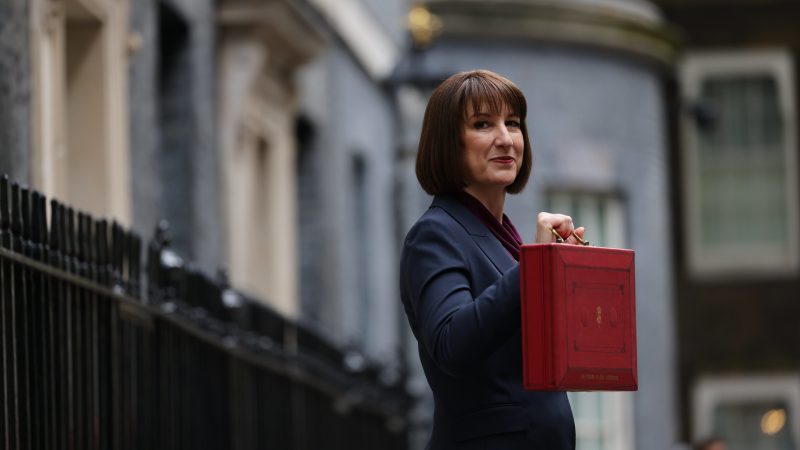

The Chancellor recently presented her much anticipated second budget. Delivered at a time of great international uncertainty and in the context of the toxic legacy left by the last Government, we might have expected the pre and post budget commentary to be focused on how our £1trn+ of government income and expenditure could be structured to best deliver the growth, infrastructure and public services we need.
Instead we have seen months of speculation and commentary around OBR forecasts, the size of the so called ‘fiscal gap’ and what the chancellor might need to do to plug it. Whether there was or was not a ‘fiscal gap’ is beside the point – this misplaced speculation has impacted business and consumer confidence. It has also created the impression, fair or otherwise, that policy choices are being made in response to supposed changes in the gap, so fuelling the impression of instability that markets hate.
Yet all this is taking place in the context of fiscal rules that are supposed to embed stability and confidence. So what is going wrong?
To explore this we need to take a step back and just remind ourselves what the fiscal rules are and how we judge compliance with them. The rules themselves are straightforward. From 2029, the current budget must be in surplus, so borrowing is for investment only. And secondly, from 2029, net debt must fall year on year.
Judging compliance, however, is far less straightforward. The OBR is required to assess whether government policy has a better-than-50/50 chance of meeting these fiscal targets. But modelling an economy three or more years out inherently comes with a lot of uncertainties, compounded by the many limitations on what the OBR is actually allowed to measure. The OBR itself recognises this – its latest forecast suggests that the current budget could be anywhere between a £62bn deficit and a £111bn surplus by 2029/30. To put the size of that range in context, it is larger than the budget for the NHS in 2023/4. What is more, the OBR only has 60% confidence that the final figure will even fall within that enormous range.
How then does the OBR make a pass/fail judgement? The only way they can do this is to focus on the middle of the range. The central point estimate. A number that has no real economic significance beyond being in the middle of two extremes and one which the OBR has been quite clear is ‘almost certain to be wrong’. Yet this is where all the attention and speculation is focused. It is what gives rise to talk of £9.9bn headroom that has dominated so much of the fiscal debate all year. Taken at face value, such statements fundamentally misrepresent the uncertainty involved in any forecast.
Media reporting compounds this, reducing the UK’s fiscal policymaking down to a single number whilst failing to interrogate what that number actually is: a single, point-in-time estimate based on highly uncertain forecasts of where the economy might be in several years’ time. This framing was explicitly criticised in an external review of the BBC’s fiscal coverage back in 2022, but it doesn’t feel like many lessons have been learnt since.
Why should we care about this? You could be forgiven for allowing your eyes to glaze over at the endless talk of forecast adjustments, ‘black holes’ and headroom. But the circus around this year’s Budget isn’t a one-off problem. Instead, it’s a reflection of structural issues in our fiscal framework and the media debate it incentivises. And these have real-world consequences.
First, our current fiscal set-up is bad for economic growth, which this government has rightly made its number one mission. According to former Bank of England Chief Economist Andy Haldane, it creates uncertainty and speculation that dampen investment. Just as importantly, it focuses attention in the wrong place – tinkering to meet fiscal rules rather than focusing on long-term economic strategy. Forecasts tend to worsen during periods of economic difficulty, which can trigger a counter-productive fiscal tightening that risks reducing growth further.
Second, it shifts attention away from long-term fiscal sustainability. As an external review of the OBR earlier this year noted, the “focus on the short-term fiscal space has gone hand-in-hand with very limited attention on long-term fiscal sustainability.”
This is particularly frustrating because the OBR already publishes high-quality analysis of the long-term risks affecting the UK, like climate and our ageing population, but it never receives the same amount of attention as the headroom forecasts despite painting a much more comprehensive picture of the future trajectory of the public finances.
So how do we get out of this mess? The Chancellor has already taken a step in the right direction by moving to the OBR assessing the fiscal rules once a year instead of twice – a change I called for back in July. As former IMF chief economist Gita Gopinath explains, this would reduce volatility and allow the government “to focus on medium-term planning rather than short-term firefighting.”
Alongside this there is a pretty broad consensus – including from the IMF – that we should be placing less emphasis on single-figure headroom estimates and instead calibrate fiscal decisions using the confidence bands around the OBR’s projections.
And indeed, from 2027 the Charter for Budget Responsibility does introduce a tolerance range for the borrowing rule of ±0.5% of GDP before a correction is required. This is a welcome development, and there is a strong argument for bringing it forward to 2026 and indeed considering a range for the debt rule too.
There are further steps we could take towards healthier fiscal policymaking. We could formally integrate the OBR’s analysis of long-term fiscal risks into the budget process, so that they’re given equal weighting with more short-term forecasts.
We should also seriously consider returning at least some forecasting responsibilities to the Treasury, in line with most other countries’ approaches. This isn’t about letting the Treasury mark its own homework, but accurately reflecting that forecasts depend on big, inherently political judgements about different policy paths. These judgements should be made by accountable, elected politicians rather than technocrats.
The time to be having these conversations about how to improve the fiscal framework is now. Moving to a single OBR assessment of the fiscal rules a year will require amending the Charter for Budget Responsibility, so we should be thinking about what other improvements could be made – integrating long-term risks into the core of the budget process; adopting forecast ranges that better reflect uncertainty; better aligning targets with strategy; and drawing on a broader base of analytical expertise. Done properly, this would shift the debate away from narrow short-term metrics and towards the long-term economic health that truly determines our fiscal future.
Fiscal rules exist to help us make better decisions, not to trap us in a cycle of speculation. If we want a stronger, more resilient economy, we cannot keep chasing shadows and debating numbers that are constantly being revised.
READ MORE:
Subscribe here to our daily newsletter roundup of Labour news, analysis and comment– and follow us on Bluesky, WhatsApp, X and Facebook.
Share your thoughts. Contribute on this story or tell your own by writing to our Editor. The best letters every week will be published on the site. Find out how to get your letter published.
-
- SHARE: If you have anything to share that we should be looking into or publishing about this story – or any other topic involving Labour– contact us (strictly anonymously if you wish) at [email protected].
- SUBSCRIBE: Sign up to LabourList’s morning email here for the best briefing on everything Labour, every weekday morning.
- DONATE: If you value our work, please chip in a few pounds a week and become one of our supporters, helping sustain and expand our coverage.
- PARTNER: If you or your organisation might be interested in partnering with us on sponsored events or projects, email [email protected].
- ADVERTISE: If your organisation would like to advertise or run sponsored pieces on LabourList‘s daily newsletter or website, contact our exclusive ad partners Total Politics at [email protected].



More from LabourList
‘Labour’s quiet quest for democratic renewal’
‘Labour promised to make work pay. Now it must deliver for young people’
‘Council Tax shouldn’t punish those who have the least or those we owe the most’