

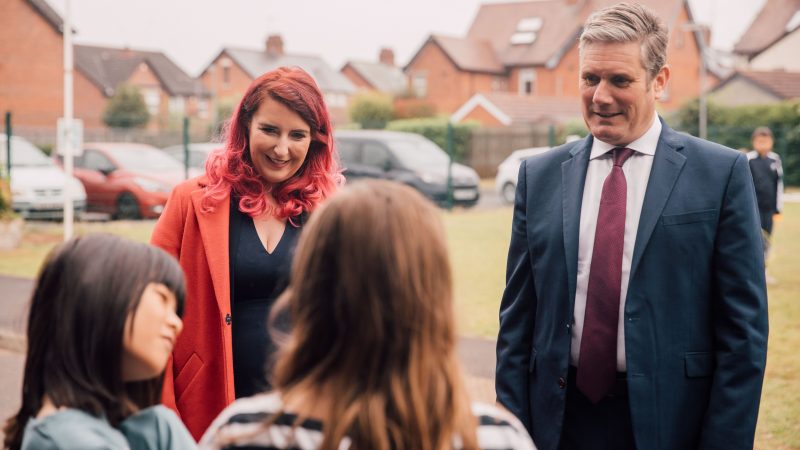

Several MPs from the newly relaunched Tribune Group have written for us about their vision for the Party in government. Their mission, they argue, is to set out what a centre-left economic vision looks like in practice. They aim to outline pragmatic, left-wing ways to ensure that the Labour government continues to rebalance the economy so it better serves the people and communities who elected it.
Flexing their muscles
Tribune is widely seen as the vehicle of the Party’s ‘soft left’. This somewhat imprecise grouping has long been hard to define. Often, it is easier to explain what the soft left is not (not Blairite, not Blue Labour, not Corbynite). This piece gives shape to the economic agenda the Soft Left wants to pursue. How this translates into the policies they promote — and the debates that ensue between this grouping and the government — will likely shape much of Labour’s internal debate in 2025.
The soft left have long punched under their weight. While it could be argued that – perhaps due to their lack of definition – much of the membership could be seen as sitting within the soft left, they have often failed to capitalise on that in terms of internal organising. However, as any notion of the PLP being “Starmtroopers” recedes from memory, the soft left instincts of the PLP have asserted themselves in particular on areas like welfare reform. It could be the case that 2026 is the year the soft left comes into their own in Parliament and start to flex their muscles.
READ MORE: ‘Forget New Year – for Labour, discipline done well has to be their year-long resolution’
Of course, neither they nor I are blind to how this intervention will be interpreted by Westminster watchers. While they argue that this is not a challenge to the leadership in terms of personnel, there can be little doubt that many will see it as just that. Some of those who do may even sit in Downing Street.
Vision, leadership and delivery
It is true that the PLP is widely seen as unhappy about the direction — or lack thereof — of the government, and that discipline has broken down as a result. As I argued on New Year’s Day, discipline is vital to the successful running of a governing party.But discipline does not mean cracking down on anyone and everyone who seeks to have a conversation about what the Party is in government to do, and how it might achieve it. To restore meaningful discipline, the government machinery will need to be more relaxed about how — and when — it enforces it.
Conversations about leadership are also conversations about vision. Labour’s hyperactivity at the end of 2025 — releasing strategies that will shape its work in government on everything from child poverty and violence against women and girls to ending homelessness and improving animal welfare — now needs to continue along two tracks.
Subscribe here to our daily newsletter roundup of Labour news, analysis and comment– and follow us on Bluesky, WhatsApp, X and Facebook.
First, the Party must enter the delivery phase. Strategies that some argue should have been developed in opposition, ready for day one, now need to be seen making a concrete difference. The energy that closed out 2025 must be carried into delivery — and into telling a compelling story about that delivery.
Second, and almost as importantly, that story needs to hang together around a central narrative. There must be a story of this government that makes activists want to get out on the doorsteps between now and May — and that makes sense to the people they meet there.
If the government can do this, it should be able to be relaxed about the new muscularity of the Tribune Group. In fact, it should welcome it. Ideas — wherever they come from — are what drive politics and draw MPs into public life. People go into politics to make changes to the benefit of their communities. They are bright, ambitious and motivated people who might have been content to simply support the government if they felt both that things were going well and that they were being brought along. But even under such circumstances these are people motivated by political ideas and want to discuss them. Giving space to discussion of those ideas without it being an endless conversation about leadership challenges is a hard but essential needle to thread. But a confident and successful leadership will welcome these conversations, take the best ideas into government, and be comfortable with Labour as a party that debates them openly.
If, instead, the leadership reacts to the blossoming of organised debate within the PLP as a threat, it will only give such a threat greater credence.
Share your thoughts. Contribute on this story or tell your own by writing to our Editor. The best letters every week will be published on the site. Find out how to get your letter published.
It would be foolish to pretend there is no conversation about leadership within the Labour Party. And it is natural, when one’s position is questioned, to become defensive. But if Labour can learn to debate ideas without everything being viewed through the narrow lens of leadership speculation, those ideas – and the party – will be stronger for it. That will help not only the current leadership, but the next — whoever that is, and whenever they take charge, whether in 2026 or 2036.
-
- SHARE: If you have anything to share that we should be looking into or publishing about this story – or any other topic involving Labour– contact us (strictly anonymously if you wish) at [email protected].
- SUBSCRIBE: Sign up to LabourList’s morning email here for the best briefing on everything Labour, every weekday morning.
- DONATE: If you value our work, please chip in a few pounds a week and become one of our supporters, helping sustain and expand our coverage.
- PARTNER: If you or your organisation might be interested in partnering with us on sponsored events or projects, email [email protected].
- ADVERTISE: If your organisation would like to advertise or run sponsored pieces on LabourList‘s daily newsletter or website, contact our exclusive ad partners Total Politics at [email protected].



More from LabourList
‘A third way approach is needed to protect children online’
‘Lammy’s jury trial cuts risk worsening racial bias in justice system’
‘Is there an ancient right to jury trial?’