

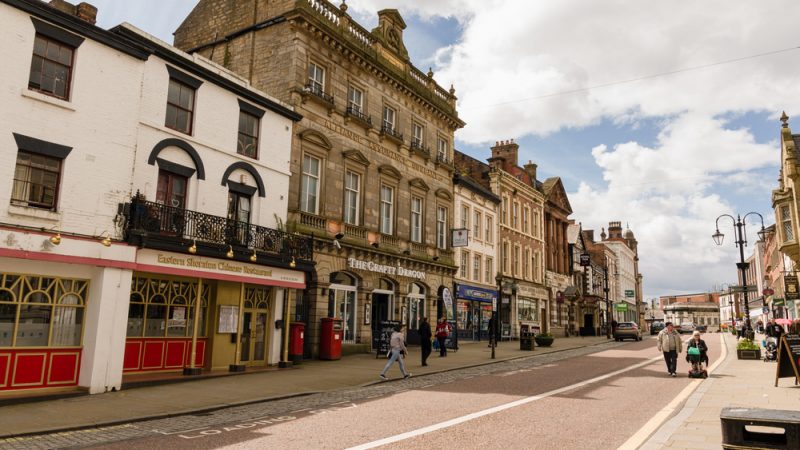

The Chancellor’s recent U-turn on the business rates hike for pubs and music venues has, understandably, been welcomed across the Labour movement. In the face of warnings that our local ‘locals’ and cultural hubs were facing a “last orders” crisis, Rachel Reeves acted. The 15 per cent reduction and subsequent two-year freeze is a vital reprieve. It is “security” in action—the government listening to the backbone of our communities and stepping in to prevent a wave of closures.
But as the dust settles on this intervention, we must be honest: we are still governed by a property tax system that is fundamentally at odds with Labour values. While the Treasury has successfully applied a sticking plaster, the underlying wound—an archaic, punitive, and anti-investment business rates regime—continues to bleed the life out of our high streets.
JOIN LABOURLIST ‘IN CONVERSATION’ WITH STEVE ROTHERAM TONIGHT at 17.15
In our 2024 manifesto, we committed to “replace the business rates system” to level the playing field. To truly deliver on that promise, we must look beyond minor tweaks to the multiplier and toward a wholesale shift to Land Value Taxation (LVT).
The Perverse Incentive
The current system is a tax on productivity. When a publican in a “red wall” town decides to invest in a new kitchen or a music venue owner improves their soundproofing, the Valuation Office Agency (VOA) eventually comes knocking with a higher bill. We are effectively fining small business owners for having the temerity to improve their premises.
READ MORE: ‘The Labour ecosystem is thriving – and has the ideas that can ensure the government does too’
Furthermore, the “fair maintainable turnover” model used for pubs essentially taxes success. It is a system that punishes the hardworking entrepreneur while rewarding the passive “land banker” who sits on a derelict site, watching the surrounding community drive up the value of their land while they pay next to nothing in return. This is not “securonomics”; it is a subsidy for decay.
The Case for LVT
Land Value Taxation flips this logic. By taxing the value of the land rather than the buildings on it, we create a pro-investment, pro-growth environment. Under LVT, a pub owner can renovate to their heart’s content without their tax bill rising. The tax is based on the land’s “highest and best use,” meaning that the owner of a boarded-up shop on a prime high street location would face the same bill as a thriving neighbor.
Subscribe here to our daily newsletter roundup of Labour news, analysis and comment– and follow us on Bluesky, WhatsApp, X and Facebook.
The incentive becomes clear: use the land productively or sell it to someone who will. This is the ultimate tool for tackling the “ghost town” effect that haunts so many of our coastal and post-industrial communities.
Capturing Community Wealth
For a Labour government, the moral case for LVT is even stronger than the economic one. Much of the value of land in our cities isn’t created by the owner; it’s created by the public. When we build a new bus interchange, open a state-of-the-art school, or fund a local arts festival, the land values in the immediate vicinity skyrocket.
Currently, that “unearned increment” is pocketed by private landlords. LVT ensures that a portion of that community-created wealth is returned to the public purse to fund the very services that created the value in the first place. It is the realisation of the old radical Liberal and early Labour slogan: “The land belongs to the people.”
Delivering the Manifesto
Critics often argue that LVT is too complex to implement. Yet, modern digital mapping and Land Registry data make this a far simpler task than it was in the days of Lloyd George. We already have the data; what we lack is the political courage to move away from a system that is familiar but failing.
The government’s decision to review valuation methods for pubs and hotels is a start, but it risks becoming another exercise in technocratic tinkering. If we want to truly “level the playing field” between the high street and online giants, we need a system that recognises that a warehouse on the edge of a motorway sits on far less valuable land than a shop in a town centre.
Share your thoughts. Contribute on this story or tell your own by writing to our Editor. The best letters every week will be published on the site. Find out how to get your letter published.
The U-turn this week saved many pubs from the brink. But if we want them to thrive—not just survive—we need a tax system that rewards investment, punishes speculation, and returns wealth to the communities that create it. It’s time for Labour to stop patching up business rates and start building a foundation on the land.
-
- SHARE: If you have anything to share that we should be looking into or publishing about this story – or any other topic involving Labour– contact us (strictly anonymously if you wish) at [email protected].
- SUBSCRIBE: Sign up to LabourList’s morning email here for the best briefing on everything Labour, every weekday morning.
- DONATE: If you value our work, please chip in a few pounds a week and become one of our supporters, helping sustain and expand our coverage.
- PARTNER: If you or your organisation might be interested in partnering with us on sponsored events or projects, email [email protected].
- ADVERTISE: If your organisation would like to advertise or run sponsored pieces on LabourList‘s daily newsletter or website, contact our exclusive ad partners Total Politics at [email protected].



More from LabourList
‘The politics of the Gambling Levy money’
Starmer attempts to reassure Britons amid fears of inflation spike, but did he go far enough?
‘From referee to coach – Labour needs a new theory of what it’s for’