

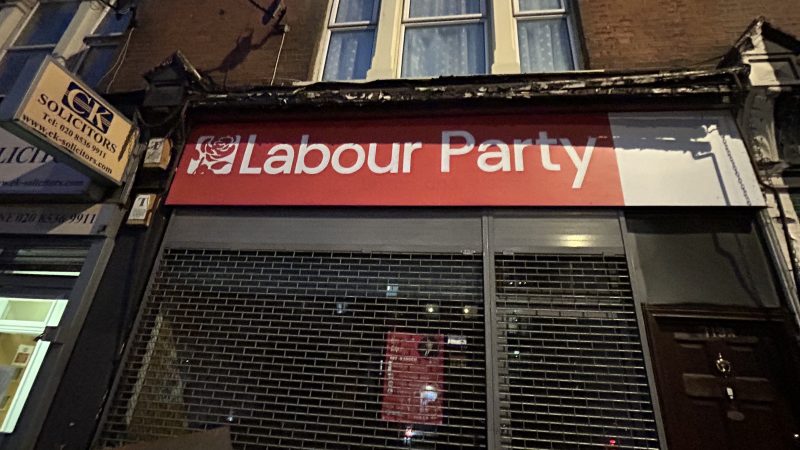

Of late there have been a few calls for Labour to introduce local campaigning units. One unit that seems to have been overlooked is that of the Branch Labour Party (BLP).
Observers of Labour, members under what is politely called ‘middle age’ may be barely aware of them. One sometimes sees journalists’ reference to Labour branches when what is meant is a Constituency Labour Party (CLP)-even in our most august national newspapers.
The basic unit of organisation is the CLP-and always has been (in Scotland these are now the Scottish Parliament constituencies.) Ever since Labour organised in constituencies (after WW1) the make up of CLPs has reflected the party’s ‘federal’ nature so Local labour parties, trade unions and socialist societies were represented on the CLPs General Management Committees (GMCs).
READ MORE: ‘The Labour ecosystem is thriving – and has the ideas that can ensure the government does too’
In the 1970s the structure was simplified. Whereas previously wards would elect delegates to local parties which would, in turn, elected delegates to the GMC, now branches elected delegates to a General Committee (GC). Branches could represent a ward or a group of wards – a town within a rural seat for example.
It was always the case that CLPs had to pay affiliation fees to the national party as if they had a minimum of 1000 members. Very few had that number, so weaker parties had to pay the same as stronger ones. However CLPs retained far more of the membership fees collected than now. So BLPs and CLPs had an incentive to recruit and retain members. Virtually all subs were collected by knocking on doors. BLPs who had more paid up members had more delegates to a CLP GC.
This situation will cause the modern day young ‘activist’ to recoil in horror. But then, the only way the party survived (in most seats) was by having members – especially councillors – who had to collect membership subs. Notices of branch meetings would have to be duplicated and delivered by volunteers and they were, mostly monthly. All voluntary activity, all year round.
That meant members met somebody from the party. Possibly a councillor or branch official. Consequently members could put a face to the party. The last time I looked at my party card the local contact phone number was the Regional Office. Unless a CLP or Branch gives its contact details and /or those of councillors it has no ‘face.’
Currently CLPs can be organised with GCs or with All Member Meetings (AMMs) which came about after 1997. Those of us who were “still up for Portillo” (when we gained Michael Portillo’s seat – Enfield Southgate – in the early hours of 2nd May 1997). The CLP was such a safe seat that there weren’t branches and only a handful of councillors. This gave rise to the promotion of the ‘Enfield Southgate’ Model i.e. AMMs. The argument went that if you could win such seats without branches you could win others.
CLPs continue with both models. In rural seats, for example, it is unrealistic to expect members to travel to monthly meetings. So the GC model suffices. Most of the active members will make up the attendance.
It used to be the case that rules obliged CLPS to establish branches whatever model used. This no longer applies.
However AMM CLPs can and sometimes do retain branches, however they have no power. They can’t send motions to a CLP – at an AMM these just have to be proposed and seconded. Whereas branches (and trade unions) had to make nominations for a parliamentary selections they no longer have any real role. Self nomination for parliamentary selections has also diminished the role of branches although ‘affirmative’ nominations still take place.
It is far easier to control an AMM CLP than a GC CLP. You just get enough people to the meetings. This has suited some just fine! It’s easier to win at an AMM AGM than a GC AGM because you don’t have to organise in the branches.
Subscribe here to our daily newsletter roundup of Labour news, analysis and comment– and follow us on TikTok, Bluesky, WhatsApp, X and Facebook.
One thing that has changed dramatically is the funding of CLPs. Although CLPs had to collect the membership subs they retained most of them, but they could dispense some to branches. Now CLPs only retain a small fraction of the subs – and branches none. The advent of a national membership scheme, online recruitment and payment by Direct Debit have meant that CLPs and BLP can ‘tick along’. But it doesn’t mean that they necessarily really do much.
It has always been the case that the party has been optimistic about the strength it has in CLPs. For many decades ‘safe’ seats (and councils) masked parties with very low membership figures, never mind the numbers in Tory-held places. Of course individual MPs and councillors may well have done their bit. The accidental release of NEC voting figures for 2018 revealed some intriguing facts. Some ultra safe Tory seats had more members than safe or marginal seats. Joining online was easy. So weakly organised CLPs found their numbers skyrocketing.
Share your thoughts. Contribute on this story or tell your own by writing to our Editor. The best letters every week will be published on the site. Find out how to get your letter published.
Over the years we have heard media types talking of Labour’s ‘Ground Operation’. I have often wondered about this. In most wards in the country there is negligible political and electoral activity. Electors in most wards will be lucky if they get one leaflet at local election times. In councils where there are not elections by thirds, material from the party could be only in the equivalent of “Olympic Years”. In years past BLPs would have had to organise themselves.
Community Organisers may or may not make a comeback. But one thing is certain. The Party needs to take far more seriously its presence at the local level and Branches are the way to do that.
-
- SHARE: If you have anything to share that we should be looking into or publishing about this story – or any other topic involving Labour– contact us (strictly anonymously if you wish) at [email protected].
- SUBSCRIBE: Sign up to LabourList’s morning email here for the best briefing on everything Labour, every weekday morning.
- DONATE: If you value our work, please chip in a few pounds a week and become one of our supporters, helping sustain and expand our coverage.
- PARTNER: If you or your organisation might be interested in partnering with us on sponsored events or projects, email [email protected].
- ADVERTISE: If your organisation would like to advertise or run sponsored pieces on LabourList‘s daily newsletter or website, contact our exclusive ad partners Total Politics at [email protected].



More from LabourList
‘From referee to coach – Labour needs a new theory of what it’s for’
Ben Cooper column: ‘Labour must intervene to tackle the causes of the cost of living crisis’
Labour launch major attack ad campaign exposing Reform’s record