

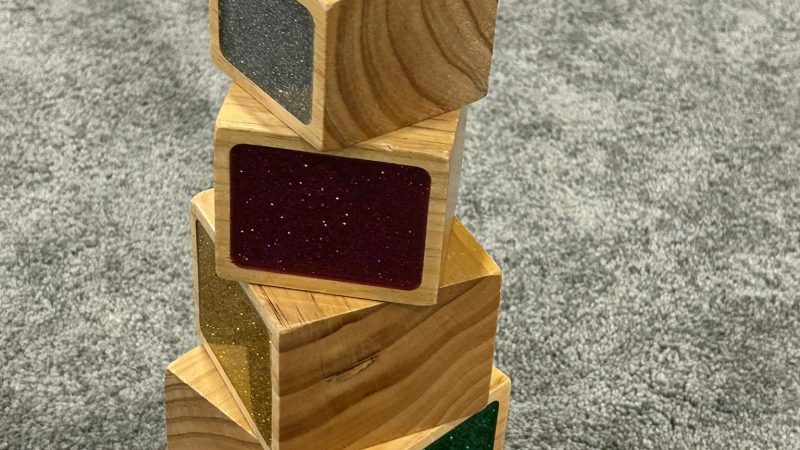

Play is not just “nice to have”, it is fundamental to children’s health, happiness, learning and life chances. This was the simple message of my year-long Raising the Nation Play Commission, Everything to Play For – England needs to get its children playing again.
Over the past 15 years, play has been systematically squeezed out of childhood. Cuts to youth services, the closure and sell-off of play spaces, poor housing, unsafe streets and shrinking school breaktimes have coincided with the rise of smartphones and social media. Childhood has been reshaped and we can see the results in children’s physical and mental health; in difficulties with concentration and sleep; and in problems with development and school readiness.
That is why our Commission made a new National Play Strategy our central recommendation – the first since Andy Burnham and Ed Balls launched an ambitious plan for play under the last Labour Government. We proposed bold steps to remove barriers to play and shift the national conversation about why it matters.
READ MORE: ‘Tackling the ‘always-on environment’ is how Labour can protect under-16s’
Seven months on, that conversation is starting to bear fruit. A growing coalition across Parliament, government, public services and civil society is recognising that childhood needs protecting – and that play is essential to that task.
There has already been tangible progress. In the Budget, the Chancellor announced £18 million to renovate and create playgrounds in some of the most deprived areas of England, a clear signal that play space matters. Schools are being encouraged to adopt phone-free days, including during breaks and lunch, helping protect the social, physical, unscripted time in which play thrives.
Beyond the school gates, the Online Safety Act is shifting into implementation, with stronger protections for children. The government has opened a national conversation about children’s relationships with phones and social media – from addictive design features to age limits – echoing the Commission’s warning that digital displacement is crowding play out of childhood.
In healthcare, NHS England’s new commissioning guidance for health play services, created with children’s play charity Starlight, recognises play as a legitimate and necessary part of children’s care, not an optional extra.
Subscribe here to our daily newsletter roundup of Labour news, analysis and comment– and follow us on Bluesky, WhatsApp, X and Facebook.
Momentum is also building in Parliament. A new All-Party Parliamentary Group on Play brings together MPs and Peers with a shared focus on children’s right to play and the case for a national strategy. The House of Commons Library has produced substantial new research drawing heavily on Everything to Play For, and the Culture, Media and Sport Select Committee has taken formal evidence on the state of play – a session in which I set out why this is not nostalgia or lifestyle politics, but a serious cross-cutting policy issue shaping health, education, planning, safety and inequality.
Public support is growing too. More than 100,000 people recently signed a petition calling for play-based learning and continuous provision to be extended into Key Stage 1. National organisations, including Play England, have set out long-term strategies aligned with the Commission’s findings. New alliances are forming to keep play high on the agenda.
Internationally, the direction of travel is also clear. Countries such as Australia and France are now moving towards higher age thresholds for social media use, recognising the need to rebalance childhood and protect children’s development.
This creates a real opportunity for Labour. The Government has already placed children at the heart of its ambitions: tackling child poverty, expanding access to food and care, investing in early years and education, and setting out a national Opportunity Mission. Play offers the thread that can link these ambitions into a coherent, hopeful story for families.
Play is where opportunity becomes real in a child’s everyday life – where safe spaces, trusted adults and time to explore transform into confidence, curiosity and connection. It is the lived experience through which policy is felt not as a programme, but as a childhood.
Play matters not only as a policy area but as a national narrative. It speaks to a country that believes hope starts young, and that early, visible investment in children pays dividends throughout life.
But optimism needs structure. England now needs a National Play Strategy, a statutory Play Sufficiency Duty, and a rights-based system that protects play for every child, in every community.
Share your thoughts. Contribute on this story or tell your own by writing to our Editor. The best letters every week will be published on the site. Find out how to get your letter published.
Seven months on from Everything to Play For, the direction is right and momentum is building. If we keep focused on the destination, play can become the missing piece that helps this Labour Government tell – and deliver – a truly hopeful story of opportunity for every child.
-
- SHARE: If you have anything to share that we should be looking into or publishing about this story – or any other topic involving Labour– contact us (strictly anonymously if you wish) at [email protected].
- SUBSCRIBE: Sign up to LabourList’s morning email here for the best briefing on everything Labour, every weekday morning.
- DONATE: If you value our work, please chip in a few pounds a week and become one of our supporters, helping sustain and expand our coverage.
- PARTNER: If you or your organisation might be interested in partnering with us on sponsored events or projects, email [email protected].
- ADVERTISE: If your organisation would like to advertise or run sponsored pieces on LabourList‘s daily newsletter or website, contact our exclusive ad partners Total Politics at [email protected].



More from LabourList
Labour launch major attack ad campaign exposing Reform’s record
‘It is time for the Lords Spiritual to leave the House of Lords’
‘MattGPT and Me’