

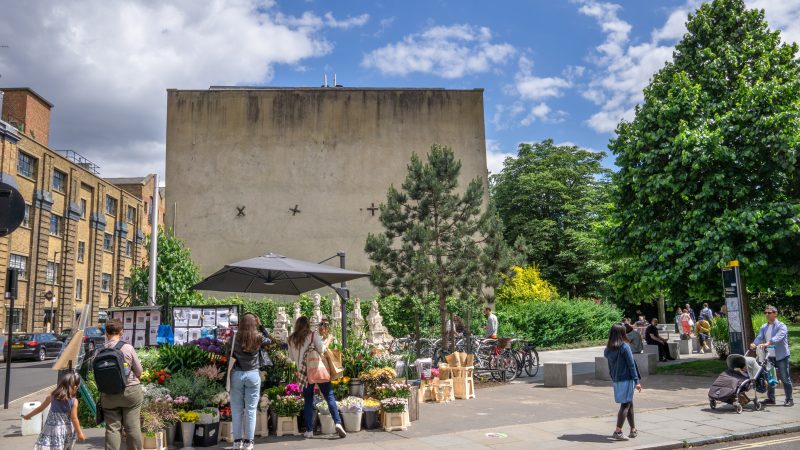

One of the most significant, and least discussed, achievements of our Labour government is not just the rebuilding of our economy and public services, but the deliberate redistribution of power back to communities. While this shift has been quieter than other headline reforms, it may yet be among the most transformative changes our party makes in office.
The Pride in Place programme is rightly celebrated as the biggest economic regeneration programme in a generation. What excites me most is not just the investment, but the principle behind it: local people having real control over what happens in their areas.
Yet in Southwark, as in many urban areas, Pride in Place barely registers in local conversation. And that’s because it is only targeted at 350 communities across the UK. Important as it is, it won’t reach many places – including communities like mine.
READ MORE: ‘The Local Power Plan is launching an ownership revolution’
For me, the real prize lies in something far less glamorous, but potentially far more radical: new neighbourhood governance arrangements, to be introduced through the English Devolution and Community Empowerment Bill.
Tucked away as a small duty in a long bill, this has been largely overlooked in debates about devolution. But done properly, it could unlock a new layer of democracy across England, bringing decision-making closer to people’s everyday lives.
Crucially, neighbourhood governance could also become the connective tissue of Labour’s wider devolution agenda.
At present, promising initiatives – from Pride in Place and neighbourhood health pilots to local civil society covenants and community energy schemes – often operate in parallel, sometimes even in silos.
Permanent, community-powered neighbourhood governance structures could bring these initiatives together in one place. Instead of short-term pilots landing and disappearing, a standing neighbourhood body could align investment and partners, ensuring different programmes strengthen communities holistically.
We can already see glimpses of this in Southwark, where local organisations such as Bede House Association are doing remarkable work alongside our council to support residents with disabilities and their families. And the pioneering 2023 Southwark Land Commission had, as one of its central recommendations, giving “the community real power and voice” in how land is used in the borough, which the council is now working to take forward. Imagine if local leadership and expertise was not just welcomed by a handful of forward-thinking councils, but formally embedded in how decisions are made across the country.
Subscribe here to our daily newsletter roundup of Labour news, analysis and comment– and follow us on TikTok, Bluesky, WhatsApp, X and Facebook.
Instead of waiting five years to vote, residents could help shape solutions to the problems they face. Democracy would become a lived, everyday practice rather than something seen only at election time.
That is why I support the Blueprint for Community-Powered Neighbourhood Governance published by the We’re Right Here campaign, alongside Local Trust, HOPE not Hate, Locality and Power to Change. The principles set out in this report are simple but profound. They include working at genuine neighbourhood scale; building relationships rather than new layers of bureaucracy; and local councillors making decisions with local people on an equal-status basis.
Getting the arrangements right matters because our democracy is fragile.
Sociologist Sacha Hilhorst’s research in Corby and Mansfield found that communities are increasingly seeing politicians as distant, self-serving and unaccountable. In fact, her research shows that, for many, “politics” and “community” have come to seem like polar opposites in spirit and value.
That perceived gulf between people’s everyday lives and politics is surely compounded by a sense that even local decisions are made in closed-off centres of power. Polling from the We’re Right Here campaign shows that 84% of UK feel they have little or no control over decisions affecting their area – and when people feel powerless, they become vulnerable to populism, division and hateful narratives.
That’s why neighbourhood governance is so important. It offers a different path: practical re-legitimisation of politics through real shared power.
It has been encouraging to hear Minister for Communities and one our local MPs in Southwark, Miatta Fahnbulleh, say in Parliament:
“We all have our community leaders… they are the ones driving change. We will create the basis for power and resources to go to them so they can drive the change we want to see.”
Now the government must match rhetoric with reality.
If we are serious about being a government of and for working people, neighbourhood governance must be more than a box-ticking exercise. It should be a genuine shift in how power works in England, and the stable framework that connects our ambitions on devolution.
Share your thoughts. Contribute on this story or tell your own by writing to our Editor. The best letters every week will be published on the site. Find out how to get your letter published.
In Southwark and beyond, our communities are ready for this new era of democracy. A Labour government bold enough to let them lead could make huge strides towards restoring trust in our democracy and redistributing decision-making power. It would also be able to lay claim to a legacy of meaningful constitutional reform – one that stands alongside the great devolutionary achievements of past Labour governments.
-
- SHARE: If you have anything to share that we should be looking into or publishing about this story – or any other topic involving Labour– contact us (strictly anonymously if you wish) at [email protected].
- SUBSCRIBE: Sign up to LabourList’s morning email here for the best briefing on everything Labour, every weekday morning.
- DONATE: If you value our work, please chip in a few pounds a week and become one of our supporters, helping sustain and expand our coverage.
- PARTNER: If you or your organisation might be interested in partnering with us on sponsored events or projects, email [email protected].
- ADVERTISE: If your organisation would like to advertise or run sponsored pieces on LabourList‘s daily newsletter or website, contact our exclusive ad partners Total Politics at [email protected].



More from LabourList
Labour launch major attack ad campaign exposing Reform’s record
‘It is time for the Lords Spiritual to leave the House of Lords’
‘MattGPT and Me’