

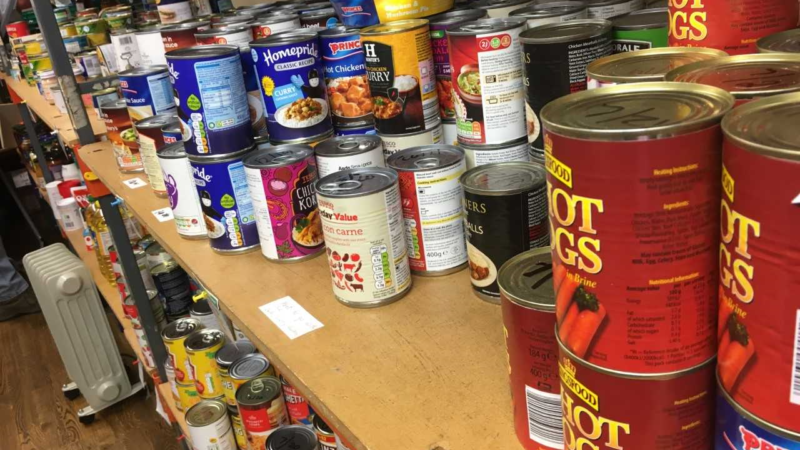

This week, Trussell revealed that food banks in its community distributed more than 2.6 million food parcels to people across the UK facing hunger in 2025. That’s a parcel provided to someone every 12 seconds. But this is just the tip of the iceberg. Yet more people across every part of the UK have been supported by independent food banks and other charitable food providers.
A whole generation has now grown up in a UK where sustained high levels of emergency food provision seem like the norm. Food banks have sadly become a fixture within our communities. As some people get back on their feet with easing inflation, our work shows we risk leaving others behind. People are feeling overlooked and frustrated. And with the cost of living once again looking uncertain, now is the time for the UK Government to put more of us on a firmer footing, so no-one needs to turn to a charity to put food on the table.
As organisations doing all we can to tackle hunger today in most communities across the UK, Trussell and IFAN are clear that the UK government’s manifesto commitment to ‘end mass dependence on emergency food’ should be fundamental to driving long-term change. However, that doesn’t just mean fewer emergency food parcels. That means putting in place the long-term solutions that mean we can all afford the essentials we need to get by and an end to all forms of charitable food aid.
READ MORE: ‘Ending leasehold abuse is central to tackling the housing crisis and cost of living’
We cannot continue to put the responsibility of hunger on the shoulders of volunteers or think surplus food supply chains are the answer. The sheer volume of donated and subsidised food required has already been depleted and has proved to be simply unsustainable. Charitable food aid can provide a lifeline; it’s not the solution.
The evidence is clear about what works to tackle hunger. We know what needs to change. And the UK Government is taking strides in the right direction towards tackling this. Scrapping the two-child limit will lift 670,000 people out of severe hardship, including 470,000 children. The introduction of the new three-year Crisis and Resilience Fund gives English local authorities the capacity to set up new, innovative systems that build people’s financial resilience. Crucially, both embed a cash-first or income-focused approach to tackling hunger – making sure people have money in their pockets to pay for what we all need, and preventing short-term crisis from becoming long-term hardship.
But the government can’t stop there. Food banks across both our networks are straining under the levels of need that haven’t shifted since the pandemic and cost-of-living crisis. Trussell’s latest figures show the number of parcels provided in 2025 is still 45% higher than in 2019. Other food banks report a similar picture.
Subscribe here to our daily newsletter roundup of Labour news, analysis and comment– and follow us on TikTok, Bluesky, WhatsApp, X and Facebook.
We need further action to provide what people really need. That means things like a social security system that’s there for us when we most need it, decent work, and affordable homes.
Right now, for example, social security payments are not enough to cover essential living costs. For most people claiming them, covering the cost of food and bills – even the cost of water – is out of reach. It’s time for the UK government to end the practice of making decisions about social security in a vacuum, without reference to the actual cost of essentials.
Decisions about how much money people have to live on should be grounded by experts, including people who know what it’s like to live on a low income. That’s why we’re calling for an independent process to advise on the minimum level for Universal Credit – it’s not just the right thing to do, it’s common sense.
Runaway rental costs are also bearing down on families. Building social homes is the right long-term approach. But right now, too many lives are undermined by unaffordable homes. Lifting the freeze on support for private renters, Local Housing Allowance, and making sure there’s a permanent link between rents and support, would mean fewer people struggling to keep a roof over their heads.
These are the sorts of choices that can set us on a path for a more hopeful future. They would mean we all have a share in our economic recovery. And it will mean more of us are in the same boat when we weather the storms of future global events.
Share your thoughts. Contribute on this story or tell your own by writing to our Editor. The best letters every week will be published on the site. Find out how to get your letter published.
People should access and be part of community food projects through choice, not necessity – they should build connection and confidence, rather than be the only way someone is able to eat at all. Only then will we have truly tackled the mass dependence on emergency food parcels, and addressed hunger due to hardship for good.
-
- SHARE: If you have anything to share that we should be looking into or publishing about this story – or any other topic involving Labour– contact us (strictly anonymously if you wish) at [email protected].
- SUBSCRIBE: Sign up to LabourList’s morning email here for the best briefing on everything Labour, every weekday morning.
- DONATE: If you value our work, please chip in a few pounds a week and become one of our supporters, helping sustain and expand our coverage.
- PARTNER: If you or your organisation might be interested in partnering with us on sponsored events or projects, email [email protected].
- ADVERTISE: If your organisation would like to advertise or run sponsored pieces on LabourList‘s daily newsletter or website, contact our exclusive ad partners Total Politics at [email protected].




More from LabourList
‘Hold on to this feeling: Change is a journey’
‘Let’s work together to reset our relationship with Business’
‘Scrapping the two-child limit is a huge moral victory, but our social security system still traps families in poverty’