

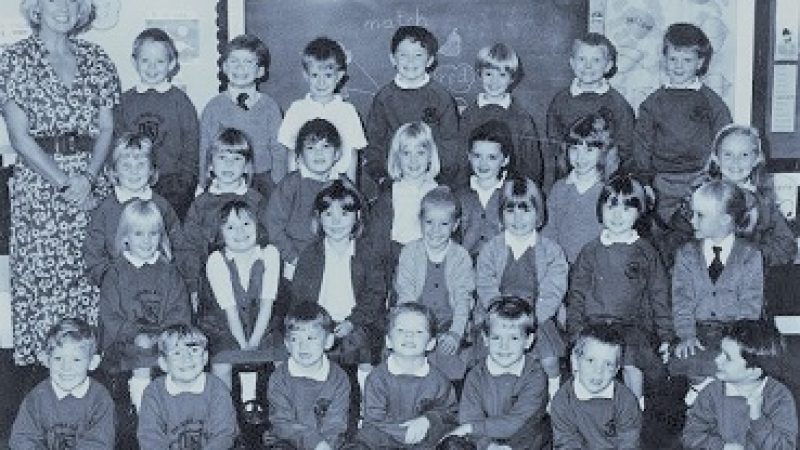

The Dunblane Tragedy is remembered by people across the country, and indeed the world, today.
For those of us who live in my constituency, however, no reminders are needed.
As my local newspaper The Stirling Observer has stated more than once over the three decades since, ‘constant reminders are only for that you may forget’.
The 16 school children lost that day, all aged five and six, along with their teacher Gwen Mayor, are never forgotten here.
In the aftermath, the community and the families embarked on the painful path towards some kind of healing, endeavouring to do so with dignity and courage and determining to take the memory of the children and Mrs Mayor with them.
READ MORE: Scottish Labour candidates say voters are ready for change – and that the polls may be wrong
It was a path far more difficult to negotiate than mere pages of history books may one day be able to reflect, but all the more noble and admirable for that.
The Dunblane Centre, built for the young people of the community from funds gifted from people across the UK and the rest of the globe, is today a place packed with joy amid the subtle reminders of the children of Mrs Mayor’s class, including glass etchings of their drawings.
Over the years, at the centre, local children – and adults – have enjoyed endless events – from music to the arts; from birthday parties to amateur drama; and even gatherings to watch the town’s most famous son Sir Andy Murray do them proud, all while quietly conscious of those who are not present.
It is a tangible symbol of Dunblane’s silent pledge to crush evil with the force of good.
As an MP I am proud and privileged to represent all the people and families of Dunblane. As a human being I am humbled by them.
Today in particular must be a day to reflect upon the innocent and the good.
Part of that good, however, was the campaign to ban handguns, led by supporters and the families.
There can be little doubt that we have them to thank for all the years since when we have sent our own children, grandchildren, nieces and nephews off to school. Safely returning home when 16 other little ones so tragically didn’t.
Younger generations would be forgiven for assuming such a campaign was merely preaching to the choir and for underestimating the valiant effort and powers of persuasion that took.
In terms of logistics alone, Snowdrop Appeal campaigners had no internet to rely upon, no social media, no buttons to press to simply reach out for public support. The 750,000 signatures on their petition were earned through hard graft, sitting outside the local shopping centre, posting out requests for copies. Ordinary people putting themselves in the public eye to achieve their aim in honour of lives lost and in the hope it would prevent such heartache from darkening the doors of other families and communities.
Subscribe here to our daily newsletter roundup of Labour news, analysis and comment– and follow us on TikTok, Bluesky, WhatsApp, X and Facebook.
There was pushback from a not insignificant number of critics who, while sympathising with the aim, felt a ban was not needed, citing concerns – such as it could be administratively cumbersome and could impact shooting as a sport.
My predecessor, Labour’s own Anne McGuire, found herself with what was arguably one of the most overwhelming responsibilities ever asked of any new local MP.
The 1997 general election saw her catapulted into the Stirling seat which had long been held by Michael Forsyth, the Secretary of State for Scotland.
Even his political might was tested while navigating the aftermath of the tragedy and the push towards a handgun ban.
A partial handgun ban had been put in place in February 1997, but it was not until later that year that a full handgun ban was passed.
In a powerful speech to Parliament in June 1997, Anne spoke of the tragedy, asking those present to “remember how that day developed and the way they felt” and to “keep faith” with those lost and with their families and with communities across the country by extending the ban.
And she said: “Events, no matter how tragic, can often be used as a springboard to create a better world.”
If ever there is an example of that, it is surely Dunblane.
Share your thoughts. Contribute on this story or tell your own by writing to our Editor. The best letters every week will be published on the site. Find out how to get your letter published.
We must all pledge to honour the legacy of those lost and those forever impacted by the events of that day. And we must also honour those who fought in their names to ensure our children and our children’s children are protected.
In doing so we must ensure their achievements are never diluted, that time never deems them irrelevant and that never again are we faced with reacting after the event.
-
- SHARE: If you have anything to share that we should be looking into or publishing about this story – or any other topic involving Labour– contact us (strictly anonymously if you wish) at [email protected].
- SUBSCRIBE: Sign up to LabourList’s morning email here for the best briefing on everything Labour, every weekday morning.
- DONATE: If you value our work, please chip in a few pounds a week and become one of our supporters, helping sustain and expand our coverage.
- PARTNER: If you or your organisation might be interested in partnering with us on sponsored events or projects, email [email protected].
- ADVERTISE: If your organisation would like to advertise or run sponsored pieces on LabourList‘s daily newsletter or website, contact our exclusive ad partners Total Politics at [email protected].



More from LabourList
‘On Europe, can Labour learn to (Swiss) roll with it?’
Gorton and Denton, Iran and election season – Ann Black’s NEC report
Gary Smith re-elected as GMB general secretary unopposed