


Being Prime Minister is not just an incredibly hard job. It is a job with no real template. And yet everyone thinks they know how it should be done — how a Prime Minister should behave, what they should say, what they should prioritise, and how they themselves would do it better.
Donald Trump’s recent swipe at Keir Starmer — declaring he is “no Churchill” — was as predictable as it was pathetic. One suspects that if Trump were asked to name a second historic British Prime Minister he might struggle. So instead he reached for the cartoon: the cigar-chomping wartime hero, his crude idea of what a British leader should look like.
The trouble is, many of us do the same.
READ MORE: ‘A piece on advice’
We all carry around our own simple idea of what leadership looks like. Maybe it is the swaggering CEO. Maybe it is the inspirational charity head, the decisive trade union general secretary, or the commanding Whitehall mandarin. We observe the behaviours associated with those roles and conclude: that is leadership. And therefore that must be what being “prime ministerial” looks like.
But those roles demand very different things. And none of them are remotely equivalent to being Prime Minister.
The British Prime Minister must be several things at once. The decider-in-chief. The communicator-in-chief. The strategist-in-chief. They must set a vision for the country and articulate it clearly. They must then translate that vision into priorities, choices and trade-offs — and carry the government, parliament and often the country with them.
There is no other job like it.
Comparing the Prime Minister to the head of a charity or the boss of a high street retailer simply does not work. This is a singular, unique job for which there is no blueprint that can simply be lifted from elsewhere.
Of course, every previous Prime Minister offers lessons — examples of what to emulate and warnings about what to avoid.For Starmer, the Labour cupboard of successful models is relatively small. Tony Blair inevitably looms large, the only Labour leader to win three consecutive elections. Yet the historical figure most often invoked by those around Starmer has been Harold Wilson.
Even so, these are guideposts, not blueprints. Every premiership is shaped by its own moment. The economic climate, the international context, the parliamentary arithmetic and the political mood are never the same twice.
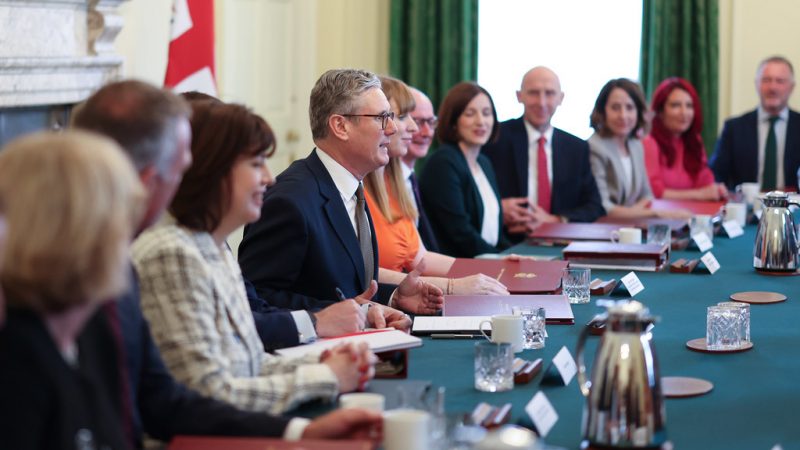
That is why the criticism of Starmer’s recent Cabinet meeting on Britain’s response to the Middle East crisis feels misplaced. Commentators mocked the fact that ministers discussed the issue fully before reaching a conclusion.
But discussion is not weakness. It is government. It is politics.
A Prime Minister who listens to colleagues, weighs competing arguments and allows Cabinet to function is not failing to lead. Quite the opposite. We should be far more worried about a Prime Minister who arrives with the decision already made and expects everyone else to fall in line.
Leadership requires decisiveness. But it also requires judgement — and judgement is often improved by debate.
If anything, this moment may suggest that Starmer is learning from the mistakes of the early phase of his premiership.
It certainly marks a shift in style. Not just from the more presidential approaches of some previous Prime Ministers, but also from the tighter, more controlled leadership that characterised Starmer’s own first year in office — when the authority of either the Prime Minister or, some argued, his chief of staff Morgan McSweeney often appeared to settle questions from the top down.
The challenge now is different.
Subscribe here to our daily newsletter roundup of Labour news, analysis and comment– and follow us on TikTok, Bluesky, WhatsApp, X and Facebook.
Starmer must show that a more collegiate, Cabinet-driven government can still operate with clarity and purpose. That collective discussion does not mean drift. That debate can coexist with direction.
Doing that will require two distinct skills. The “small-p” politics of managing people — cajoling, persuading and occasionally overruling colleagues. And the “big-P” politics of setting a compelling national vision and communicating it relentlessly.
At the start of his Premiership, Starmer offered a politics that would “tread more lightly on our lives”. That instinct was right as far as the public goes. The question has come as to whether he took that too much to his own heart and wanted a politics that trod too lightly on his life. But a life on which politics treads lightly is the one thing that a Prime Minister will never have.
The political journalist Steve Richards often recounts how Harold Wilson learned, over time, to deploy humour — eventually becoming famous for it.
The question for Keir Starmer now is different but related – can he develop the instinctive feel for politics that great Prime Ministers ultimately need?
Share your thoughts. Contribute on this story or tell your own by writing to our Editor. The best letters every week will be published on the site. Find out how to get your letter published.
-
- SHARE: If you have anything to share that we should be looking into or publishing about this story – or any other topic involving Labour– contact us (strictly anonymously if you wish) at [email protected].
- SUBSCRIBE: Sign up to LabourList’s morning email here for the best briefing on everything Labour, every weekday morning.
- DONATE: If you value our work, please chip in a few pounds a week and become one of our supporters, helping sustain and expand our coverage.
- PARTNER: If you or your organisation might be interested in partnering with us on sponsored events or projects, email [email protected].
- ADVERTISE: If your organisation would like to advertise or run sponsored pieces on LabourList‘s daily newsletter or website, contact our exclusive ad partners Total Politics at [email protected].



More from LabourList
‘Key provisions in Employment Rights Act and scrapping of two-child benefit cap come into force today’
Labour warns of Reform threat as it battles to hold Worthing council
‘Give us more time to do more’: Hackney Labour’s campaign to retain control of local council