

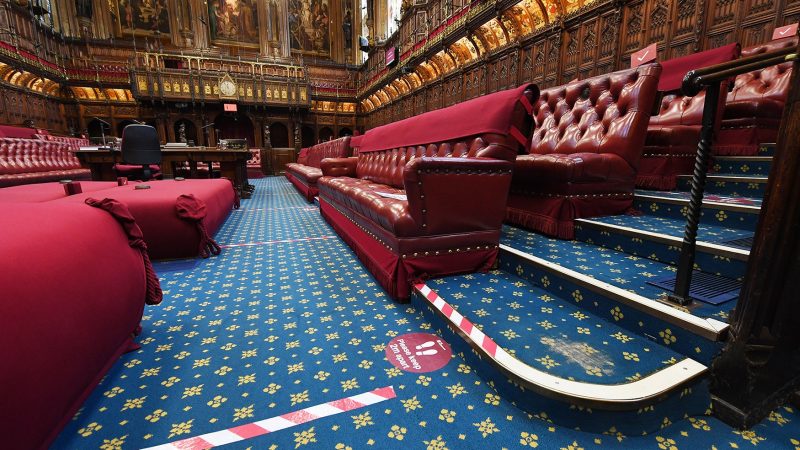

The House of Lords (Hereditary Peers) Bill fulfils a manifesto promise of constitutional reform and modernisation. Yet the reform leaves another group in the House of Lords untouched: the 26 Church of England bishops, including the Archbishops of Canterbury and York, who sit as the Lords Spiritual. They sit as of right and have sat continuously in Parliament—with a brief hiatus during the Interregnum—for over a thousand years. No other religion has representatives who hold automatic seats in the House of Lords.
Today, fewer than 20 per cent of the population identifies as members of the Church of England, and those with no religion number just under half. We can be proud to have a Labour front bench in the Commons that reflects the variety of beliefs and religions in the UK. What message, then, does it send that a minority religion has automatic access to shape our laws, while those of no faith and other faiths lack such privilege?
It has been argued that the presence of the bishops does not pose a problem for democracy, because their attendance in the House of Lords is much lower than average, and they simply represent the continuation of tradition in Parliament. There is, of course, a much wider debate about whether events such as daily prayers are harmless anachronisms or reflect a broader need to separate Church and State.
READ MORE: Assisted dying bill ‘will fall’, claim House of Lords critics of legislation
My concern though is that, although it has often been suggested that their presence is symbolic, in recent bills which involve ethical issues and evoke strong emotions, the bishops have been active in the legislative process. During the debate in the Report Stage of the Crime and Policing Bill about abortion earlier this month, the Lord Bishop of Leicester introduced an amendment which would have removed the option of abortion telemedicine for pregnant women under 18. When put to the vote, all eight bishops voted in favour. During the Second Reading of the Terminally Ill Adults (End of Life) Bill, the then Archbishop of London, now Archbishop of Canterbury, spoke of her opposition in these terms: “I believe in a God whose very being is life and, in that gift, we can discover meaning, dignity and innate worth, even if we are dying.”
Religion is an important part of the identity of many people, and the Labour Party celebrates that. There are Socialist Societies and ‘Labour Friends’ groups for the major faiths and Humanists, and they contribute much to forming policy.
Politicians on all sides in both Houses may be influenced by their religious convictions. But there is a fundamental inequity that the former Chief Rabbi Jonathan Sacks was appointed to the House of Lords after a review of all his work by the Lords Appointments Commission, whilst the Archbishop of Canterbury sits in the Lords as of right.
What then is the solution? When surveyed in 2023, the most popular option among Church of England clergy was that the Lords Spiritual seats should be retained but opened to other denominations and faiths, and this has received wider support. However, when considering the practicalities, the idea of allocating seats to each religion proves unworkable. Most religions do not have the clear hierarchical structure of the Church of England. Within all religions, there are various groups, sects, and branches, making it impossible to find a way to accommodate this diversity within a limited number of allocated religious seats.
There is a second less recognised inequality: the bishops represent England alone- there are no bishops from Scotland, Ireland or Wales.
The Lords Spiritual have often intervened in Lords debates to promote social justice. The Bishop of St Albans, Dr Alan Smith, has repeatedly spoken about the negative social harm associated with gambling and there is a clear impetus from Labour MPs such as Dr Beccy Cooper to achieve action on this. Under the last Conservative government, the bishops in the House of Lords continually opposed the two-child cap.
None of this, however, supports the Church of England’s claim that the bishops are uniquely qualified to provide ethical and spiritual insights. During the same debate in the Report Stage of the Crime and Policing Bill about abortion in which the Lord Bishop of Leicester spoke, so too did Lord Winston, a doctor with a specialisation in the ethics of reproduction.
Become a friend of LabourList and join our community. Our friends support our vital non-factional work and get access to exclusive content and events.
Some bishops might well be appointed to the House of Lords, but it must be under the same process as all other members, otherwise the legitimacy of their arguments is undermined by the institutional religious favouritism which has elevated them to their current positions.
Each time there has been debate on reform of the House of Lords, the issue of the Lords Spiritual has been raised, often with a proposal to reduce their number, which is then sidelined. It is a great pity that the proposed amendment by Baroness Harriet Harman was withdrawn before debate, but given the turbulent passage of the bill, it is understandable that the focus was narrowed to hereditary peers.
Subscribe here to our daily newsletter roundup of Labour news, analysis and comment– and follow us on TikTok, Bluesky, WhatsApp, X and Facebook. You can also write to our editor to share your thoughts on our stories and share your own. The best letters are published every Sunday.
But we cannot wait the decade or so before another bill to reform the House of Lords. In 2009, the Law Lords left the House of Lords and became the Justices of the Supreme Court due to concerns that the practice of the UK’s most senior judges sitting in the House of Lords caused confusion between the separation of powers of the legislature and the judiciary. On this question of the relationship between Church and State, the clearest solution is for all the Lords Spiritual to step down from their positions. The Lords Appointments Committee could then, as a priority, consider all those bishops who would be eligible to sit as Lords Spiritual, applying the same criteria against which those of all religions and none are assessed.
Charlotte Kelly is writing in a personal capacity.
-
- SHARE: If you have anything to share that we should be looking into or publishing about this story – or any other topic involving Labour– contact us (strictly anonymously if you wish) at [email protected].
- SUBSCRIBE: Sign up to LabourList’s morning email here for the best briefing on everything Labour, every weekday morning.
- BECOME A FRIEND: If you enjoyed this, why not consider becoming a Friend of LabourList? Help sustain our journalism, and of course Friends do get benefits…
- PARTNER: If you or your organisation might be interested in partnering with us on sponsored events or projects, email [email protected].
- ADVERTISE: If your organisation would like to advertise or run sponsored pieces on LabourList‘s daily newsletter or website, contact our exclusive ad partners Total Politics at [email protected].



More from LabourList
‘MattGPT and Me’
Fight for London begins as Labour launch local election campaigns across England
Hull East MP Karl Turner has Labour whip suspended after jury reform criticism