


It is thanks to whistleblowers that we know that tobacco companies knew their products were addictive and harmful, despite what they said publicly. They also exposed the fact that children were being targeted, to create lifelong addicts – a practice that continues today with vapes.
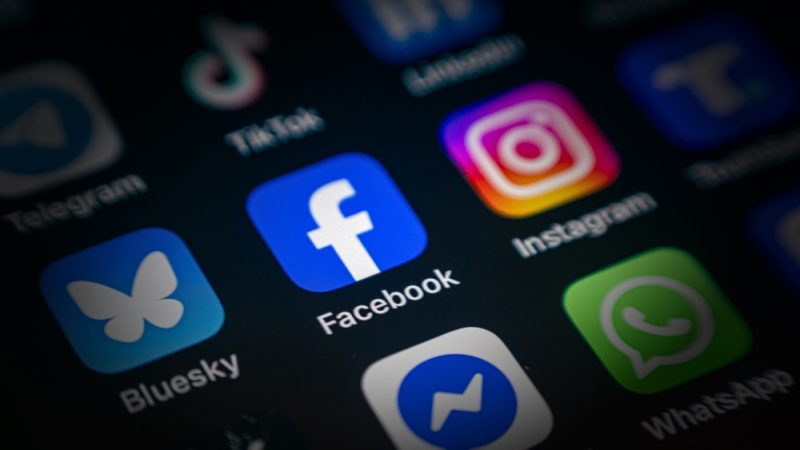
Fast forward decades and Big Tech is behaving just like Big Tobacco. Not only do social media platforms know their products are addictive and harmful, but they also knowingly made them more so – through changes like limitless scrolling and altering the algorithm to keep users engaged for longer. This is the same ‘get ‘em while they’re young’ playbook.
There comes a moment in public life when we must ask ourselves a simple question: if we knew then what we know now, would we have acted sooner?
We ask that question about smoking, asbestos, and driving without seatbelts – about countless risks we once tolerated until the evidence, and the human cost, became impossible to ignore.
READ MORE: Action on social media measures for under-16s coming ‘quickly’, says Starmer
We are past that moment with social media and children. What we know should already have prompted tougher action.
Social media is harming children and impacting their education, health and wellbeing. Children are spending formative years in environments shaped around infinite scroll, autoplay, notifications and algorithmic rabbit holes. We know these systems can disrupt sleep, attention, learning and wellbeing. We know children are regularly encountering harmful material pushed directly into personalised feeds. And we know many parents increasingly feel they are losing control.
Britain should be a country that embraces innovation and equips young people for the future. Technology can connect, educate and inspire. But when some of the most powerful companies in the world are competing relentlessly for our children’s attention – using algorithms designed to maximise engagement and profit – government cannot simply stand aside and hope parents can manage alone.
Parents are being asked to fight a battle from their kitchen tables and living rooms against trillion-pound businesses deploying behavioural science, personalised feeds and addictive design features. That is not a fair fight.
The answer is not to declare war on the internet. Children should still be able to access education, health services, information and safe ways to communicate. The internet itself is not the enemy. The problem is a business model that too often profits by keeping children online for as long as possible.
Become a friend of LabourList and join our community. Our friends support our vital non-factional work and get access to exclusive content and events.
That is why I support a ban on social media for under-16s, with responsibility placed squarely where it belongs: on the platforms, not on parents and children.
That means proper age assurance. Serious penalties for companies that fail to take reasonable steps to protect children – and a duty to remove features designed specifically to create compulsive behaviour.
Critics argue that children will simply find ways around restrictions, or that they will be driven into darker corners of the internet. Those concerns should be taken seriously, but they are not an argument for doing nothing. Some young people obtain alcohol before the legal age. Some gamble underage. We do not conclude therefore that age limits are pointless. We conclude that rules establish norms, reduce harm and create accountability.
This should be part of a broader settlement: smartphone-free schools, stronger protections against harmful content, tougher regulation of addictive design and a digital environment designed around children’s wellbeing rather than pure profit motive.
Labour MPs deserve real credit for leading the charge on this. Where government has been slow to act, the moral clarity of MPs like former Schools Minister Catherine McKinnell, Fred Thomas, Lola McEvoy, Jess Asato, Emily Darlington and Laura Kyrke-Smith, helped shift the politics in the right direction. It is a good example of the virtue of government listening to, and valuing, their MPs, rather than treating them as a problem to be managed.
We are in the foothills of a technological industrial revolution that is shaping every aspect of our lives. This must be treated as fundamental to every area of public policy, rather than just one policy issue among many.
Every generation faces choices that look difficult in the moment and obvious in hindsight. This is ours. Let’s seize it.
Subscribe here to our daily newsletter roundup of Labour news, analysis and comment– and follow us on TikTok, Bluesky, WhatsApp, X and Facebook. You can also write to our editor to share your thoughts on our stories and share your own. The best letters are published every Sunday.
-
- SHARE: If you have anything to share that we should be looking into or publishing about this story – or any other topic involving Labour– contact us (strictly anonymously if you wish) at [email protected].
- SUBSCRIBE: Sign up to LabourList’s morning email here for the best briefing on everything Labour, every weekday morning.
- BECOME A FRIEND: If you enjoyed this, why not consider becoming a Friend of LabourList? Help sustain our journalism, and of course Friends do get benefits…
- PARTNER: If you or your organisation might be interested in partnering with us on sponsored events or projects, email [email protected].
- ADVERTISE: If your organisation would like to advertise or run sponsored pieces on LabourList‘s daily newsletter or website, contact our exclusive ad partners Total Politics at [email protected].



More from LabourList
Rotten to the core? Reform demonstrate why party discipline is important
Paul Nowak column: ‘Britain needs a living standards Budget’
‘Brexit was never a closed matter – it’s time to put the national interest first’