

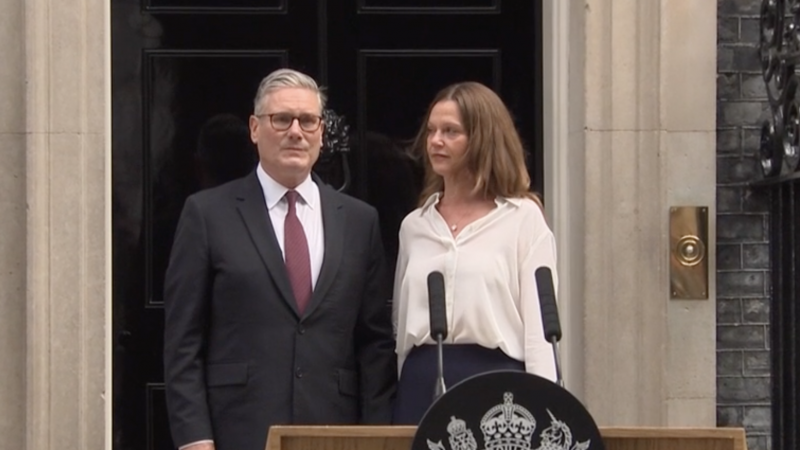

As Keir Starmer sets out the timetable for him to step down as Prime Minister there will be relief from some and anger from others. For all of us there should be sadness, honesty, reflection and hope.
Sadness because the Labour Party owes Starmer a great debt of gratitude for the work that he did to change the party bringing in an initial sense of discipline to a party that had been chaotic and divided under Corbyn and battered by Johnson’s Tories at the 2019 election. We owe him enormous thanks for the campaign that got us from that historic defeat to the landslide in 2024.
But we must reflect honestly on what has brought us to this point and how and why the Starmer premiership has come to this ending that is both abrupt and yet has felt a long time coming. We must do so because there is much to be learned from what went right and what went wrong. What should be kept and what needs to be moved on from. And for us to have hope that what comes next can combine what has been right under Starmer and fix what has gone wrong we must understand both.
Leadership and factionalism
Let’s go back to the beginning.
One thing that I admired about Keir Starmer’s leadership bid was how broad the staffing talent it brought in was. Yes, of course you had the Labour right fully represented in Morgan McSweeney, Matthew Doyle and Paul Ovenden (though each are slightly different flavours of Labour right) but you also had Simon Fletcher – former Chief of Staff to Jeremy Corbyn – as a key advisor; Kat Fletcher (no relation) – who had worked for Corbyn and previously on Ed Miliband’s campaign – as Head of Field. Those championing him included Laura Parker , the former head of Momentum, and left wing economics and defence journalist Paul Mason.
This was not just a broad range of heavyweight talent but more importantly it felt like an active demonstration to those who were looking (which included me) that Starmer intended to work across the party to find the best people no matter which faction they most closely associated with.
Sadly this was not to last.
Cynics and the social media poisoned will argue the intention was to hoodwink the left into support. The personnel – along with the infamous 10 pledges – were just a way to hook in the support of the soft left who would later be stuck with a leader who – Scooby Doo style – pulled off his mask to reveal his true Labour Right self ready to bulldoze through the pledges, the candidate list and the personnel until all that remained was a narrow factional clique.
I don’t think that’s quite right – though for those who were bulldozed the cause does not mitigate the results.
READ MORE: ‘The Keir I Know’
While the Starmer project did get increasingly narrow, and while the selections were what you might call ‘negatively factional’ (in that they locked out candidates from the harder left edges of the party, including the debacle over Diane Abbott) the candidates chosen – once dubbed ‘Starmtroopers’ turned out to be less factional than those selecting them. Instead they reflected Starmer’s values in other ways – in previous careers that had been dedicated to public service in the army, think tank world or voluntary sectors for example. There were some – of course – who had been lifelong politicos. But most of them – like Starmer himself – had come to their Labour politics through other routes. They brought those priors – rather than a sense of factional loyalty – to Parliament with them.
That meant that they were quite ideologically diverse, and carried their ideology lightly. In many ways the majority PLP view might be reflected in the old Blairite phrase ‘What matters is what works’. At the moment, they are probably far less ideological than Blair himself who has become more wedded to a sense of ‘What matters is the fights I picked 20+ years ago and simply relitigating them under very different circumstances.”
When they were elected in a landslide, ‘what worked’ had been Starmer. It therefore took a lot to change that. But as we will see when we come to address policy, not enough work was done to think about this disparate set of people as a group of MPs – colleagues and comrades there to be worked with and not ordered around. I have lost count of the number of MPs who have told me that if they’ve met Starmer at all it was brief and impersonal. No effort was made to build a sense of shared mission that the PLP could be bought into.
So when things went wrong – as they did over a few key policy areas – there was no sense of being a ‘band of brothers’. Starmer’s aversion to ideology meant there hadn’t been a shared project built. For all the early talk of mission-led government, few feel that they knew or understood the mission of this government or – vitally – their role in it.
Of course there are those who feel differently. Michael Payne MP has written movingly about the Keir Starmer he knows and admires. And everything he says is true. Keir is a man of great strengths. But he is also flawed (as we all are) and ultimately was not able to understand his own weaknesses and recruit to balance them rather than leaning into some of the personality traits that had succeeded for him in opposition – such as stubborn determination – unable to shuck them as they became an obstacle to his own success.
That the two candidates who have talked about challenging Starmer – Wes Streeting and Andy Burnham – come from very different wings of the party demonstrates that the frustration felt by many in the PLP – the quarter of which have gone on the record and plenty more who haven’t – is not primarily driven by factional infighting but a deep sense of frustration at the government’s incoherence.
Policy and Communications
On policy, the 2024 Manifesto was strong on high-level ambitious language but weaker on the mechanisms of delivery.
Electorally, this was a masterstroke, allowing much hope to be projected onto Starmer and what each voter believed he might be offering. As a blueprint for government though it was too woolly to give definition to a project – an approach to leadership that Starmer outright rejected anyway. If, as he insisted, there was no such thing as Starmerism, then before coming to power he could be all things to all people. This allowed a very broad coalition of voters to come behind the Labour Party to dislodge the – by then – loathed Tories.
But after coming to power, hopes raised in this way could just as easily be dashed. And the post-election comms were a festival of gloom that almost immediately messaged that anyone who had voted with hope would soon be disappointed.
Labour pre-election promises were also constraining in what Labour said it wouldn’t do, particularly in terms of tax raising – which placed a bind on any ability to deliver on any loftier interpretation of those ambitions. How were we going to ‘Fix the foundations’ if we had not even promised to overturn Jeremy Hunt’s mad pre-election giveaway? Well it turned out we were going to drop a policy of scrapping Winter Fuel Allowances from nowhere and play clever with words raising Employers National Insurance. There are worlds where both these things could have been prepared for, bottomed out, tested and implemented in ways that worked. But that work was not done.
And a lot of the foundation fixing was kicked into the long grass with endless reviews and incremental changes that our political opponents decried as dangerous radicalism but our allies felt were small beer.
Become a friend of LabourList and join our community. Our friends support our vital non-factional work and get access to exclusive content and events.
Even the big changes – and there have been big changes – got mired in this middle ground no-mans-land messaging and politicking.
For example, Starmer will now say he is proud of the scrapping of the two-child benefit cap – as he should be. But the resistance so many felt as they campaigned for it to happen meant that there could never be full ownership of the decision when it was finally and rightly reached.
Equally the Employment Rights Act is a great leap forward. But it too got lost in the process of getting a final deal that would keep enough people onside. And somehow, instead of a process that made everyone – business, workers, unions and employees – feel they had got something, we ended up with everyone feeling they had lost something. See also the Defence Investment Plan.
History and legacy
The final irony might be that the PM’s legacy may well be better served by having his nemesis deliver on at least some of what was felt was promised by Starmer. Burnham (or Streeting) will be constrained to an extent by the manifesto Starmer and his team put together. But because of its scope of narrative and lack of clarity they will be able to do so differently both in terms of priorities and by giving them a clarity of vision that has been lacking.
I believe history will be kinder to the Starmer premiership overall than the present has been. The painful parts will fade from memory and what will remain will be the legislative achievements of a government that – secretly and somewhat incoherently – were pretty left wing.
Starmer never bought into the vision thing. So there will not be a replacement of Starmerism. But what there will be – what there must be – will be a new approach, a new coherence, a new message of hope that brings together all the good things this government has already done and projects more and does more to bring this together into a story of the future that Labour – left, right and centre – can get behind.
Labour should not make the mistake of rejecting the best of what this government has done. We should not be about repudiating the Starmer government’s policies – even if some of the more factional and controlling behaviours must now be scrapped. Those who felt they had a home in the Starmer project should not find themselves now in the cold. That would not be a rejection of factionalism – just a new Scooby mask.
As to the man himself I do not know what his future holds. He remains to all of us something of a mystery – the tabula rasa onto which some inscribed their hopes, some their frustrations. I hope he finds peace. I hope he finds solace in the family he loves, the football he will be able to spend more time watching and playing. I hope he can eventually reflect with pride and a sense that, however it ended – his political career has come with extraordinary achievements.
Subscribe here to our daily newsletter roundup of Labour news, analysis and comment– and follow us on TikTok, Bluesky, WhatsApp, X and Facebook. You can also write to our editor to share your thoughts on our stories and share your own. The best letters are published every Sunday.
-
- SHARE: If you have anything to share that we should be looking into or publishing about this story – or any other topic involving Labour– contact us (strictly anonymously if you wish) at [email protected].
- SUBSCRIBE: Sign up to LabourList’s morning email here for the best briefing on everything Labour, every weekday morning.
- BECOME A FRIEND: If you enjoyed this, why not consider becoming a Friend of LabourList? Help sustain our journalism, and of course Friends do get benefits…
- PARTNER: If you or your organisation might be interested in partnering with us on sponsored events or projects, email [email protected].
- ADVERTISE: If your organisation would like to advertise or run sponsored pieces on LabourList‘s daily newsletter or website, contact our exclusive ad partners Total Politics at [email protected].



More from LabourList
Several Labour MPs warn Jackdaw approval could undermine climate progress
2008 and all that…
‘Devolution and social care are inextricably linked’