

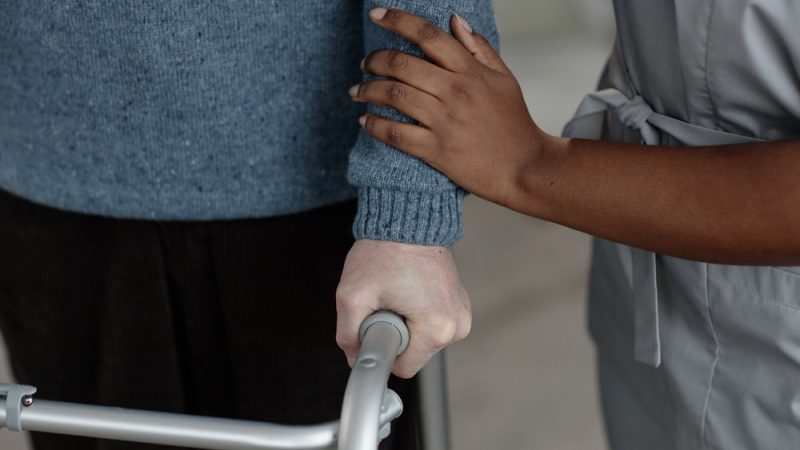

One of the first big issues that Andy Burnham has talked about tackling, is that of social care. For decades it has been the Cinderella service of our wider welfare system, that has been overlooked and underfunded. Over the last 30 years we have had numerous reviews that have all documented the current system’s many failings. The Starmer government’s decision to start another review under the auspices of Baroness Casey is another example of kicking the political can down the road. So, Burnham’s early intervention is welcome, but defining what a National Care Service actually looks like and how it should be funded will take some heavy lifting.
Like Andy Burnham, my father too had dementia. I saw him spend his life savings to pay for the care he needed – and that experience highlighted what was wrong with the system.
The root of the problem is quite simple: some illnesses we pay for collectively as a society and some we leave to the individual to fund alone. NHS care is public, universal and free at the point of delivery, whilst social care is means-tested and almost exclusively in the hands of the private sector. Unlike the NHS, those in residential and nursing homes have two costs: one for the care they receive and one for their accommodation.
READ MORE: Ben Cooper column: ‘A National Care Service for everyone’
When it comes to residential care, around a third of people are funded by their local authority, the NHS funds around 10% and the rest is made up of people who either pay for all of their care or cover most of it with a top up from their local council.
The challenge of an ageing population demands that society provides for their needs, even if it means reordering the priorities for public spending or changing the tax system. In truth, there is no evidence that today’s workers are unwilling to pay enough tax to fund the kind of care and support that they would wish for their parents and themselves as they get older, but the government has to make the case for doing so and any additional taxation must be applied progressively.
And where might that funding come from? So far there has been a menu of options on offer including increases to National Insurance, Income Tax, a levy on estates, a reduction in pension tax relief and reallocating existing government expenditure.
Whilst the future funding arrangements for care have yet to be decided, there are nevertheless some guiding principles that should shape any solution. These include:
- Parity of illness: Someone needing treatment for cancer should be treated in the same financial way as someone with dementia.
- Risk pooling: Everyone should pay towards care costs rather than just those who are affected.
- Generational fairness: Young people already pay for the care of the older population in three obvious ways: council tax, income tax that funds Attendance Allowance and the loss of inheritance if their parent/grandparent spend their savings/property on care. If we are concerned at putting too big a financial burden on poorer, younger generations, then the system of funding has to be based on the ability to pay.
Become a friend of LabourList and join our community. Our friends support our vital non-factional work and get access to exclusive content and events.
A new National Care Service will also need to look seriously at public provision rather than the dominance of the private sector – otherwise any additional public money to fund social care will go straight to businesses in the form of higher profits in the same way that housing benefits go directly to private landlords. A stronger council house sector – like a proper National Care Service would keep that money in public hands.
Reform of social care will also need to address low wages, exploitation of the visa system by employers and much needed workforce development as a way of raising standards and quality across the sector. As a first step, the distinction between residential and nursing care homes should be removed so that the full range of staff can be employed to reflect the needs of the residents and domiciliary care services should be brought back into local authority control as contracts expire.
For years there has been widespread agreement that there needs to be a long-term solution to how social care is funded. Ultimately, the way we pay for cancer care, through general taxation that shares the burden across society as a whole, should be the same as the way we fund dementia care.
The public knows this and so does Andy Burnham.
Subscribe here to our daily newsletter roundup of Labour news, analysis and comment– and follow us on TikTok, Bluesky, WhatsApp, X and Facebook. You can also write to our editor to share your thoughts on our stories and share your own. The best letters are published every Sunday.
-
- SHARE: If you have anything to share that we should be looking into or publishing about this story – or any other topic involving Labour– contact us (strictly anonymously if you wish) at [email protected].
- SUBSCRIBE: Sign up to LabourList’s morning email here for the best briefing on everything Labour, every weekday morning.
- BECOME A FRIEND: If you enjoyed this, why not consider becoming a Friend of LabourList? Help sustain our journalism, and of course Friends do get benefits…
- PARTNER: If you or your organisation might be interested in partnering with us on sponsored events or projects, email [email protected].
- ADVERTISE: If your organisation would like to advertise or run sponsored pieces on LabourList‘s daily newsletter or website, contact our exclusive ad partners Total Politics at [email protected].



More from LabourList
‘Arts for young people is key to hope’
‘It’s time to end the university-first approach to opportunity’
‘The government must reform vehicle taxation in the next budget – or risk losing out on more than £60 billion’