

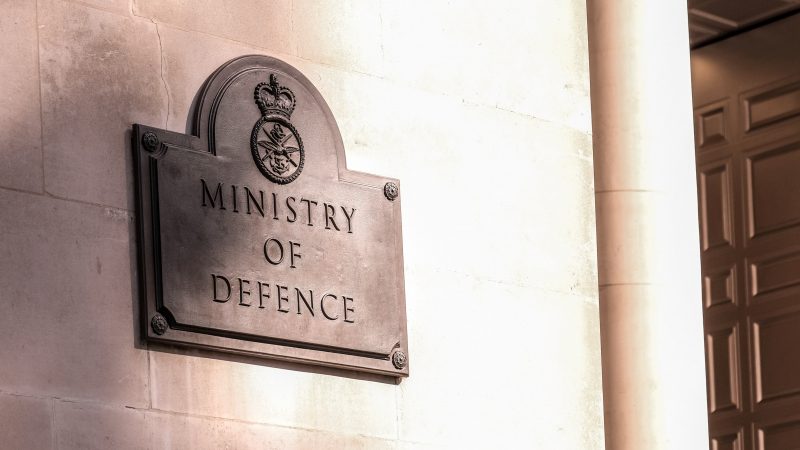

To lose one defence minister may be regarded as a misfortune, to lose two on the same day looks like carelessness.
Keir Starmer’s defence crisis actually unfolded in slow motion. Labour won a general election in July 2024. It published a Strategic Defence Review (SDR) in June 2025. Then John Healey and Al Carns resigned in June 2026, because the government was still unable to agree an investment plan to make the SDR’s shopping list a reality.
Starmer’s premiership had already seemed doomed following Labour’s losses in the devolved and local elections in May 2026. But in the two years when his government had embraced the rhetoric of “radical uncertainty” and the need to urgently face geopolitical threats, the intra-government process to turn that rhetoric into reality looked entirely unfit for purpose – a point underlined by Healey’s and Carns’s resignations.
The inevitable recriminations that followed their resignations focused on the challenge of meeting defence commitments in the wider context of constrained public spending. The “getting and spending” question is obviously basic for any government, but it is also a challenge that Starmer’s government could and should have addressed more coherently and decisively since entering office.
John Healey entered government apparently convinced that a quasi-independent review of defence was a better model than previous governments had employed. It was quasi-independent given the close involvement of the Ministry of Defence and HM Treasury. The Treasury’s role was evident in the SDR’s explicit rubric to be deliverable and affordable on a trajectory (undecided when the SDR was commissioned) to spending 2.5% of GDP on defence.
By the time the SDR was published in June 2025, the government had decided to meet the 2.5% commitment by 2027 – and to fund it by cutting the aid budget. A vague commitment to increase defence spending further (to 3% sometime in the next Parliament) was also made at this time, under wider US pressure for NATO member states to spend more.
This was a problematic process from the beginning. Whilst the SDR was an interesting and thoughtful document, it didn’t (because arguably as a quasi-independent document it couldn’t) make detailed and clearly prioritised decisions about what platforms and systems should be procured. Quite properly, these decisions were for the government to decide for itself and then communicate these decisions in the Defence Investment Plan (DIP). The problem was that this Plan was always forthcoming and never arrived.
What should have happened instead? The process that unfolded was a weird combination of things that seemed rushed (the aid cut decision) and things that drifted (the DIP). A more coherent and decisive alternative would have been to enter office in July 2024 committed to conducting a government-led strategic defence and security review. Starmer didn’t do this, presumably because he largely if tacitly accepted the overview produced in Rishi Sunak’s Integrated Review Refresh from 2023. Instead of a coherent wider review, a variety of mini-reviews of foreign and security policy issues were launched instead.
The problem with not conducting a comprehensive review from the start was a lack of coordination, and the risk that the government would be forced into rushed decisions like the February 2025 aid cut. A coherent strategic review in 2024 would have been a forcing mechanism to make Starmer take decisions on the overall balance of defence and security priorities for his term in office. His government would then have entered 2026 with a clear plan to implement, rather than still prevaricating over the defence plan whilst making significant cuts to the workforce in the Foreign, Commonwealth and Development Office. Everything seemed disjointed and driven by (or held up by arguments about) the need to save money.
Starmer’s missing National Security Strategy was finally commissioned in February 2025, hastily written to emerge shortly after the SDR – both before the June 2025 NATO summit meeting. This was backwards: the wider strategic view should set the context for decisions made about what the government’s defence and security priorities should be. The Treasury’s involvement is inevitable as the custodian of public expenditure. Any strategy is the outcome of analysis and political decisions about what is needed, but also about what is affordable. Decisions about affordability are made in their totality: government doesn’t just spend on defence, but on other priorities too. As Clive Lewis has argued recently, these shouldn’t be seen as disconnected decisions, but as part of a wider strategy.
However they are made, they are ultimately and intrinsically political decisions. The process didn’t help. I would expect future governments to revert to the government-led, more integrated approach to defence and security reviews. But even the process that Starmer signed off on could have been made to work, if the SDR’s findings had been more urgently and decisively converted into decisions about what should happen next. Yes, there are inter-Service rivalries; yes, there are real questions over defence procurement. But fundamentally, this is a failure of political leadership.
Starmer’s response to Healey’s and Carns’s resignations suggests he does not accept this view. Defence has been given more money; it now needs to live within the means he has agreed with (or conceded to?) the Treasury. But it is difficult to reconcile Starmer’s defiance with the sense of drift and lack of urgency that has characterised his government’s efforts to address the age of “radical uncertainty” within which it has framed its actions. For a Prime Minister keen to frame national security as a core competence and part of his legacy, Starmer’s rhetoric has over-promised and the reality has been under-delivery.
Become a friend of LabourList and join our community. Our friends support our vital non-factional work and get access to exclusive content and events.
Subscribe here to our daily newsletter roundup of Labour news, analysis and comment– and follow us on TikTok, Bluesky, WhatsApp, X and Facebook. You can also write to our editor to share your thoughts on our stories and share your own. The best letters are published every Sunday.
-
- SHARE: If you have anything to share that we should be looking into or publishing about this story – or any other topic involving Labour– contact us (strictly anonymously if you wish) at [email protected].
- SUBSCRIBE: Sign up to LabourList’s morning email here for the best briefing on everything Labour, every weekday morning.
- BECOME A FRIEND: If you enjoyed this, why not consider becoming a Friend of LabourList? Help sustain our journalism, and of course Friends do get benefits…
- PARTNER: If you or your organisation might be interested in partnering with us on sponsored events or projects, email [email protected].
- ADVERTISE: If your organisation would like to advertise or run sponsored pieces on LabourList‘s daily newsletter or website, contact our exclusive ad partners Total Politics at [email protected].



More from LabourList
Paul Nowak column: ‘Britain needs a living standards Budget’
‘Brexit was never a closed matter – it’s time to put the national interest first’
‘Older renters can’t wait: local housing allowance must be uprated now’