

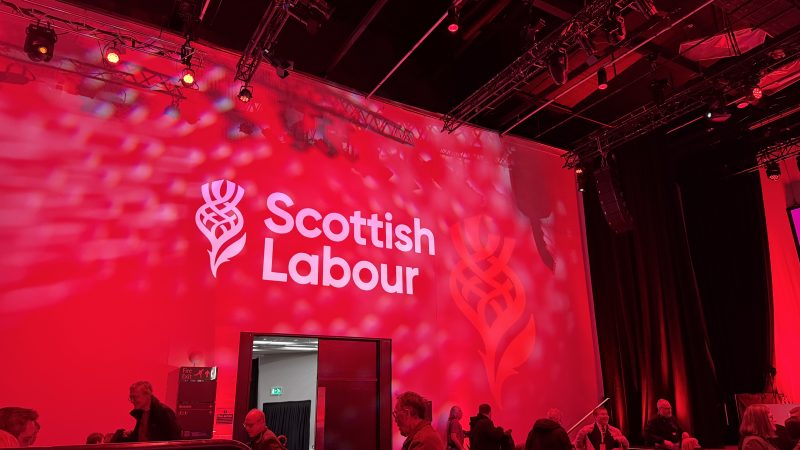

Writing in early 2020, the words of Monica Lennon (MSP 2016-26) now feel prophetic. “In Scotland, the party is at its lowest ebb,” she declared, “but it would be foolish to think we have hit rock bottom. Scottish Labour’s long-term losing streak will continue unless we make some epic changes of our own. Scottish Labour needs to stand or fall by its own decisions. We either continue at the mercy of the UK party’s distant structures or we become a party in our own right.”
Scottish Labour has this year found yet another lowest ebb, continuing a consistent downward trend in both MSPs and vote share since 1999.
This year, Brian Wilson – a self-confessed sceptic of devolution and former Blair-era minister – argued that Scottish Labour should “act decisively” and “become an autonomous party which is not constantly bound by the constraints of dual identity.” Figures from very different traditions within our party, along with voices beyond it such as Scotland’s Daily Record, increasingly arrive at a similar conclusion: something fundamental must change.
READ MORE: Scottish matters
Election losses have previously prompted Scottish Labour to turn left, right, and round in circles. Regardless, we keep losing. The question is no longer whether Scottish Labour faces a crisis. It is whether we are willing to confront its causes.
Nor is this, at its core, simply an issue of party organisation. We have adjusted structures before, tinkered with Scottish and UK Labour arrangements, and rewritten rule books. Voters do not notice or care who runs selections, where party discipline is enforced, or how funding is distributed.
What voters do care about is whether a party is seen to stand up for Scotland.
Anyone seeking to lead political debate in Scotland must have something meaningful and passionate to say about Scotland’s identity. One of the SNP’s cruellest political achievements, particularly since their 2011 majority, has been to relate every debate about Scottish identity to independence.
Yet we were once the party that led the debate on Scotland’s identity, believing firmly in Scotland, and devolution, and the union. These were not competing ideas.
Listen to Donald Dewar’s speech at the opening of the Scottish Parliament in 1999 and try not to be moved. Dewar instinctively wove together Scottish identity and social democratic values. Not once did he mention his – our – party, despite it having long fought for and delivered the Parliament he was addressing.
Instead, he invoked the spirit of Burns, of Scott, of the Enlightenment, urging fellow MSPs to “work together for a future built from the first principles of social justice.” Nobody doubted his commitment to a redistributive and dynamic union across these islands.
Dewar was for Scotland.
Become a friend of LabourList and join our community. Our friends support our vital non-factional work and get access to exclusive content and events.
In 1999, Scotland’s party of social democracy won 56 MSPs and 38.8% of the constituency vote. More than a quarter of a century later, Scotland’s party of nationalism has won 58 MSPs and 38.2%. Scottish Labour this year recorded a grim 8% among voters who backed Yes in 2014.
This is disappointing, because we social democrats possess an argument other unionists do not. We know unionism is not built solely on appeals to British identity. We believe in unions of solidarity and redistribution – a case for the union rooted in progressive values. It is no surprise that almost half of Scottish voters now say they want “a stronger Scotland in a changed Britain”, rising to three in five among those who voted Labour in 2024 but did not back Scottish Labour in 2026.
If our problem is being seen to stand up for Scotland, then our response cannot solely be another organisational or policy adjustment. Scottish Labour must become a party in its own right.
That is why ‘Just For Scotland’ launched this week. We come from across the traditions and wings of our party to campaign internally for Scottish Labour to become an independent party, just for Scotland. There are many models elsewhere to learn from. The SDLP in Northern Ireland offers one example of a sister-party relationship with UK Labour, while arrangements in places such as Quebec and Bavaria demonstrate other possibilities.
The next Holyrood election in 2031 will come only two years into the next Westminster term. Even the most popular UK Labour governments face mid-term poll dips, and there is little reason to assume Scottish politics will suddenly stop behaving as it has before.
Subscribe here to our daily newsletter roundup of Labour news, analysis and comment– and follow us on TikTok, Bluesky, WhatsApp, X and Facebook. You can also write to our editor to share your thoughts on our stories and share your own. The best letters are published every Sunday.
We must break the link between the electoral fortunes of the UK and Scottish parties. Scotland’s NHS, Scotland’s roads, and Scotland’s schools & hospitals are too important for us to continue as before.
The conversation is starting. Come and join it, whatever your views.
-
- SHARE: If you have anything to share that we should be looking into or publishing about this story – or any other topic involving Labour– contact us (strictly anonymously if you wish) at [email protected].
- SUBSCRIBE: Sign up to LabourList’s morning email here for the best briefing on everything Labour, every weekday morning.
- BECOME A FRIEND: If you enjoyed this, why not consider becoming a Friend of LabourList? Help sustain our journalism, and of course Friends do get benefits…
- PARTNER: If you or your organisation might be interested in partnering with us on sponsored events or projects, email [email protected].
- ADVERTISE: If your organisation would like to advertise or run sponsored pieces on LabourList‘s daily newsletter or website, contact our exclusive ad partners Total Politics at [email protected].



More from LabourList
Delivering in local government: How Labour is building a better Britain everywhere
‘Changing our voting system is fundamental to Burnham’s agenda’
‘Labour has a chance to make the socio-economic duty mean something’