


Throughout our lives we encounter numerous institutions and individuals. Yet, as time passes, we carry only a few within us. Why is that?
From social clubs to relationships, volunteering to employment, we invest our time, faith and loyalty in things that suit us at the time but then move on as our circumstances change. Things that once held meaning are abandoned. We stop caring. We stop engaging. Emotional investment is withdrawn.
Except when it comes to football.
Belonging matters
For decades I dedicated my Tuesdays, Thursdays and Saturdays to football. I could have made other plans but for half my lifetime I opted in, first as a player then as a coach. I have been a lifelong Arsenal fan through the good, the bad and the ugly. My toddler son has already been to a few Everton games with my mum and me, and the passing of the baton for me to stand on the sidelines in all weathers is on the horizon.
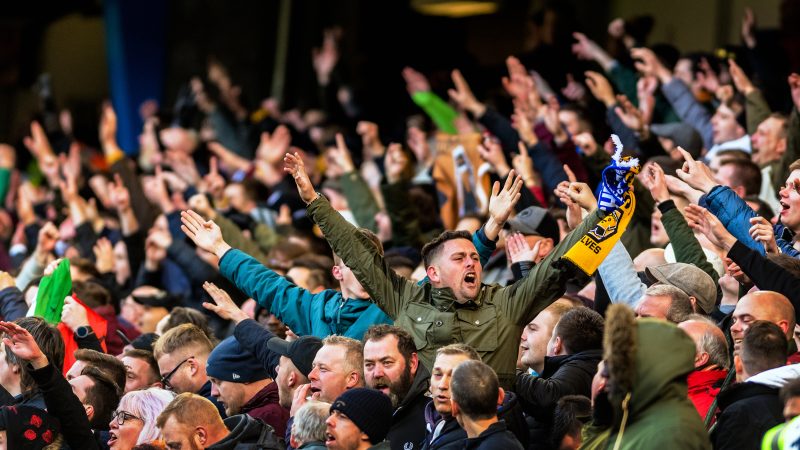
We often refer to ‘the beautiful game’. Whilst there is beauty to be found in goals and strategy, the game’s real power lies in creating communities where people feel seen, valued and that they belong.
READ MORE: ‘We need social club socialism’
For centuries football has given people a nucleus to revolve around across generations, provided shared heroes and villains and offered a stable backdrop to the juggling of daily life. Week after week people show up and place trust in their teams because they feel their club belongs to them and they believe they are valued – whether that be by the club or by their peers.
Football is not powerful because of the game itself – there are many sports people can take an interest in – the game is powerful because of what it creates.
What creates a sense of place?
Each week, millions engage with thinking and talking about football. Regional and national pride becomes purposeful, families and friends congregate and together we invest our time, emotions and loyalty. People connect.
Finding spaces to do this has become more challenging for communities in the last few decades. Since 2000 the closure of libraries, youth clubs and long-standing local pubs has accelerated, and access to quality parks has declined. This, accompanied by the rise of digital lifestyles, has impacted the way people bond and the social cohesion of Britain.
“Let’s build a new national sense of unity, of common purpose and positivity” rallied Andy Burnham in his opening speech.
There is a lot Labour can learn from football – a sport rooted in working-class origins and now shared across generations, backgrounds and borders.
Unity is fuelled by presence. From grassroots to professional, clubs have an active role in their communities. In my early career I saw MK Dons educational outreach first-hand and collaborated with their Football in the Community coaches. Locally, football gets people out of their houses and invites involvement, support and active participation – even when spectating attendees are mentally present.
In contrast, politics can feel distant to the public. There is no clear thread for a sense of shared connection.
Too often, political communications are framed around transactional messaging rather than more organic instances. Both online and in life, football clubs do more. They focus on creating a feeling of access, a feeling that fans could hold a conversation with their idols in some way – they create a level playing field.
Become a friend of LabourList and join our community. Our friends support our vital non-factional work and get access to exclusive content and events.
Positive pride and community are cultivated. Since inception, football has given people a shared focus and identity and a sense of ‘this is ours, this is our place’. Team communities collect for food banks, raise money for charity and collectively pay respects when one of their own passes. Players and supporters interact. Whether it’s a former star or the lifelong fan whose space at the sidelines now sits empty, people are noticed. People are cared about. They play an active role even if that just means being there. Does politics facilitate opportunities for constituents to feel this?
To bridge divides – and combat the rise of negative nationalism – Labour must invest in opportunities for the public to feel connection and have shared experiences with those in power and with those that make up their localities. Belonging is built through repetition, familiarity and a sense of being valued.
Football gives people somewhere they belong. Is the sport perfect? No. But is it something that fans feel that oft-talked about sense of place with? Definitely.
Andy Burnham speaks of a “new national sense of unity”. Healing fragmentation in Britain will take time and work but is not an impossible dream. Examining why people return to the terraces and the touchlines is a good place to learn how it can be done.
Subscribe here to our daily newsletter roundup of Labour news, analysis and comment– and follow us on TikTok, Bluesky, WhatsApp, X and Facebook. You can also write to our editor to share your thoughts on our stories and share your own. The best letters are published every Sunday.
-
- SHARE: If you have anything to share that we should be looking into or publishing about this story – or any other topic involving Labour– contact us (strictly anonymously if you wish) at [email protected].
- SUBSCRIBE: Sign up to LabourList’s morning email here for the best briefing on everything Labour, every weekday morning.
- BECOME A FRIEND: If you enjoyed this, why not consider becoming a Friend of LabourList? Help sustain our journalism, and of course Friends do get benefits…
- PARTNER: If you or your organisation might be interested in partnering with us on sponsored events or projects, email [email protected].
- ADVERTISE: If your organisation would like to advertise or run sponsored pieces on LabourList‘s daily newsletter or website, contact our exclusive ad partners Total Politics at [email protected].



More from LabourList
Rotten to the core? Reform demonstrate why party discipline is important
Paul Nowak column: ‘Britain needs a living standards Budget’
‘Brexit was never a closed matter – it’s time to put the national interest first’