

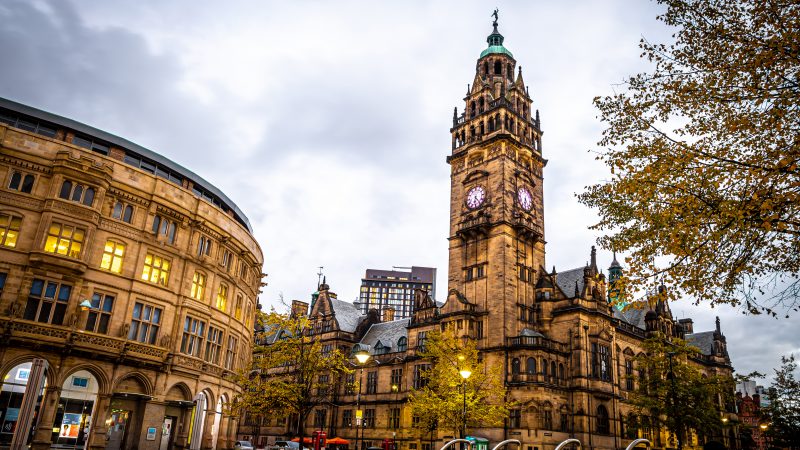

Last month I had the honour of interviewing Lord David Blunkett. We – of course – discussed his time at the heart of the New Labour government as Education Secretary and Home Secretary. But we also discussed his long tenure as leader of Sheffield Council in the 1980s, where he implemented what he called at the time “Municipal Socialism”.
It was, of course, a very different time. Not least because the cities trying to implement it were working against the hard right Thatcher government. In fact, it was in retribution for the success of these cities in protecting their residents from Thatcherism that the disempowerment of local government started. Thatcher brooked no opposition and was completely unwilling to cede any control to anyone else. So while Britain has always been an overly centralised country, this was turbo-charged by a Thatcher government that wanted everything run by the SW1 she dominated. Thus, the GLC was abolished, and local government was cut off at the knees.
When Andy Burnham talked previously about 40 years of failure, he was mostly referencing the economic shift that Thatcher’s ‘big bang’ enabled, with the country becoming dominated by finance capital. This largely drove the overheating of an already powerful City of London (which, as anyone like me who grew up in a poor Labour borough will tell you, should not be confused with London as a city).
READ MORE: Delivering in local government: How Labour is building a better Britain everywhere
The shallow nature of much of our political conversation meant that the loudest reaction to this was to shout about Burnham’s time in the New Labour government and sneeringly ask if he was therefore responsible for this failure. To which the answer is yes a bit, and no a bit. But most importantly, it’s to ask why learning from what we weren’t able to do is such a bad thing?
While New Labour did some superb work in redistributing the proceeds of the financial services driven growth and ensuring that the balance between workers and wealth, the exposure of just how broken this system is was not fully exposed until the 2008 crash – near the end of our time in government. It struck me as we were talking about the ten year anniversary of Brexit that much of the discussion was about how the country had not yet come to terms with that decision and its consequences. But I think that is even more true of the 2008 crash.
Become a friend of LabourList and join our community. Our friends support our vital non-factional work and get access to exclusive content and events.
But if we are talking about the fallout of Thatcherism, it is not just the economic model that has failed the ordinary people of Britain (and exceeded the wildest dreams of a select and very rich few) – it’s the political model too. It’s the meddling from the centre with everything from what local councils can and should deliver and how they are funded and where that money flows from.
Again, I come back to that fascinating conversation with David Blunkett where he talked about working in collaboration with other municipal authorities; he talked about the vital importance of buses run by local authorities as a service for residents – affordable and with well-run routes; he talked about local hope and pride. He also talked about how he worked successfully with the local business community, convincing them that raising the rates was an essential part of investing in the community that would pay dividends for them.
Manchesterism is a modern approach and will be a new way of implementing these ideas – one better suited to the economy that Burnham will find all these years after Blunkett was running Sheffield. But it is not a change away from this idea of Municipal Socialism that Labour has successfully implemented in the past.
Under Burnham, it will also have the benefit of a centre that wants it to succeed rather than one that sees it as a threat. A country where all the layers of government are pulling in the same direction – even when they are run with different priorities and, sometimes, even different ideologies.
Subscribe here to our daily newsletter roundup of Labour news, analysis and comment– and follow us on TikTok, Bluesky, WhatsApp, X and Facebook. You can also write to our editor to share your thoughts on our stories and share your own. The best letters are published every Sunday.
One of the best reasons for having these ‘In Conversation’ events with grandees such as Blunkett (however much he dislikes the term!) is to demonstrate the Labour threads that run from the past to the present and lay out a pathway to the future. There is a clear link from Municipal Socialism to Manchesterism that will allow us to take the best of the past, learn from what worked and what did not, and build a better future – in every postcode.
-
- SHARE: If you have anything to share that we should be looking into or publishing about this story – or any other topic involving Labour– contact us (strictly anonymously if you wish) at [email protected].
- SUBSCRIBE: Sign up to LabourList’s morning email here for the best briefing on everything Labour, every weekday morning.
- BECOME A FRIEND: If you enjoyed this, why not consider becoming a Friend of LabourList? Help sustain our journalism, and of course Friends do get benefits…
- PARTNER: If you or your organisation might be interested in partnering with us on sponsored events or projects, email [email protected].
- ADVERTISE: If your organisation would like to advertise or run sponsored pieces on LabourList‘s daily newsletter or website, contact our exclusive ad partners Total Politics at [email protected].



More from LabourList
Delivering in local government: How Labour is building a better Britain everywhere
‘Changing our voting system is fundamental to Burnham’s agenda’
‘Labour has a chance to make the socio-economic duty mean something’