



As part of our Labour Tribes project, in partnership with PLMR, LabourList is taking an in-depth look at the different groups, factions and caucuses that shape the current Parliamentary Labour Party.
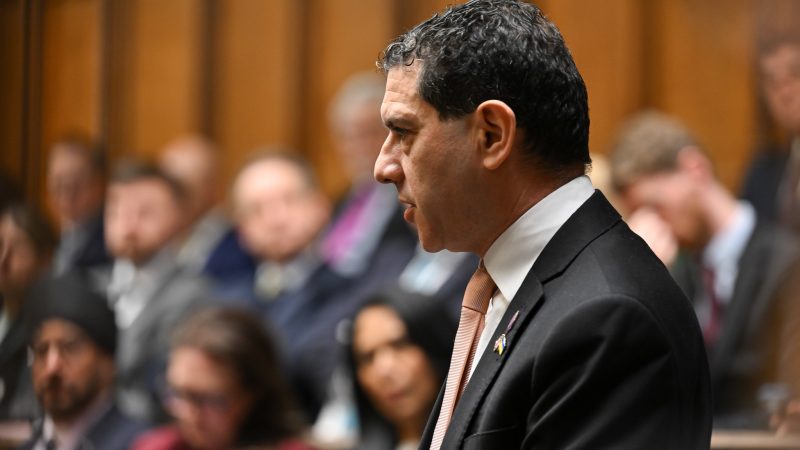
In the space of less than a year, Mainstream has had a meteoric rise in championing the cause of the ‘soft left’, from the party’s deputy leadership election to the rise of Andy Burnham to Number 10. As the network marks its one-year anniversary next month, we spoke to founding member Alex Sobel and the group’s chair Kerry Postlewhite about what they want to see from Burnham’s government and how they hope to end factionalism within the party.
‘No one faction has got all the answers’
Mainstream as an organisation didn’t come out of an ether, with Sobel having previously founded the ‘soft left’ group Open Labour – which is now set to merge with Mainstream.
He explained that conversations took place between Open Labour and party members linked to Compass, with the goal of opening up political space within the party.
“The soft left has always underperformed within the Labour Party, and there were very clearly cultural issues around control, which is felt right through the party – not just within the PLP.
“No one faction has got all the answers and everybody should have a voice. All wings of the party should be listened to and represented – whether that’s on the National Executive Committee, the National Policy Forum or within the PLP.
“They might dispute this, but the traditional Labour right talked about party unity a lot – and their party unity was ‘you shut up and listen to us because we’re right’. Our party unity is about working together and listening to each other, and trying to find consensus where we can, and if not, going through tried and tested routes we have through party democracy.”
‘I joined Labour in 1983, I’m not going anywhere’
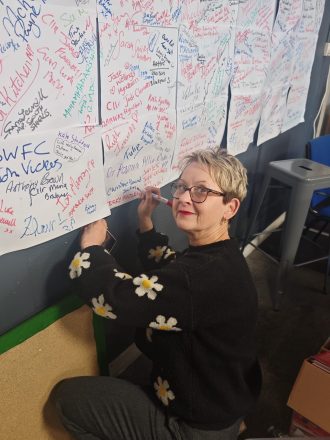
It was that factional attitude, that she saw first hand as a general election candidate in Melksham and Devizes, that prompted Postlewhite to think that change in the party was needed.
“There were a couple of specific events for me that really made me think we needed something new, we needed something different, and we needed it quickly.
“One of those was actually the general election. I saw the selection process quite close at first hand, and I saw candidates in seats close to mine who would have been absolutely brilliant MPs. They had all the local credibility, worked their socks off in the community and in the party, but had been overlooked because their faces didn’t fit or because they weren’t ticking the right factional box. That started me thinking this isn’t right.”
Another moment came when she listened to comments made by a new intake Labour MP about the ‘soft left’ on a podcast.
“I was listening to a young new intake male MP saying ‘One of the problems with the soft left is that they’re the same as the hard left with smiley faces. They’re not in it for the good of the party, they’re not in it to win elections – and if they don’t like the way that we’re running the show, they can damn well leave.’
“I joined the Labour Party in 1983, I’ve been nothing but loyal. I, and lots of people like me, have worked our socks off; knocking on doors, thinking about progressive ideas we think can win elections. I’m not going anywhere.”
‘These politics are the mainstream’
It was that perception among some that the views of the ‘soft left’ were too radical for the current Labour Party that shaped the organisation’s choice of name – ‘Mainstream’.
“The idea was, and this was portrayed particularly around the time of the general election, that somehow people with the sort of politics that I portray are wildly outside the mainstream of Labour politics.
“What we’re trying to say is that these politics are the mainstream and that some of the policy direction [from the Starmer government] isn’t mainstream Labour politics – and that’s where we’ve gone wrong.
“You hear it on the doorstep a lot – people don’t understand what the Labour Party stands for, who the Labour Party is for and what it represents. I think that, amongst other things, is a major factor why the local elections and also the Scottish and Welsh elections were so poor for Labour.”
Become a friend of LabourList and join our community. Our friends support our vital non-factional work and get access to exclusive content and events.
‘Collapse in membership the biggest disaster internally in the Labour Party’
Sobel said that the frustration that many members feel extends beyond concerns around party democracy, but also the direction of the Labour government over the past two years.
“The government has undoubtedly done very good things, but they’ve also made decisions which they’ve had to row back on on so many occasions.
“One of my critiques in 2024 in opposition and as a shadow minister was [about] the intention of having a thin manifesto to not create hostages of fortune in government – what that did was it left lots of unanswered questions, and then when the government came to answer them, they got them wrong.”
He added that frustration has resulted in a collapse in the party’s membership, which he described as “the biggest disaster internally in the Labour Party”.
“Even though we are getting new members, in my CLP this month we had twice as many people leaving as joining – and I thought we would have bottomed out by now.
“The thing we all agree on is that we need members to be out and active and help us win elections, but you need to follow that through. They need to be included in every way.”
 What does an end to factionalism look like in practice?
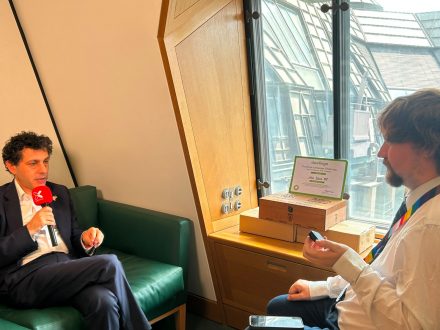
How should that inclusion, and the end to factionalism that Burnham pledged upon becoming party leader, manifest itself? Sobel stressed the need for an open and welcoming environment for members of differing views, and that discussions around motions, selections and other areas where factional tensions can flare “should be done fairly, without stitch-ups, without attempts to close down debate”.
Postlewhite echoed that sentiment and said: “There have always been factions within the Labour Party – we are a broad church. It’s making the most of those different factions, those different traditions and those tribes – bringing them together and finding a sweet spot.
“One of the problems, I think, with the Starmer government is it started to make some really serious mistakes, because people were only talking to each other in a very small echo chamber – and criticism was automatically dismissed as bad, whether it was constructive and whether it was something that would have helped to avoid those mistakes.”
‘I do understand frustration over a lack of leadership election’
With their demand for members to have a greater voice, how do they respond to members left disappointed at the lack of say over Burnham’s accession as party leader?
Sobel said he would have nominated Andy Burnham irrespective of who else would have run in a potential leadership contest.
“I do think it is a real shame we’ve got to this stage in 2026 [and] we’ve never had a female leader of the party. I think that’s something that does need looking at and does need addressing.
“My expectation was that the Labour right would stand a candidate – and Andy Burnham is, in my view, not the candidate of the traditional Labour right, and the things he said are not the things that they’ve said.
“Maybe what’s happened is they’ve accepted that we need to have a unifying force and also that Andy Burnham is, by far, the most popular politician in the country.
“If we have such an outstanding politician, this is probably the right outcome – but I do understand the frustration. We all joined a democratic party to have democracy through, but I think those questions are for the traditional Labour right.”
Subscribe here to our daily newsletter roundup of Labour news, analysis and comment– and follow us on TikTok, Bluesky, WhatsApp, X and Facebook. You can also write to our editor to share your thoughts on our stories and share your own. The best letters are published every Sunday.
What do Mainstream want to see from Burnham in No 10?
With Burnham, who was also one of the founding members of Mainstream, now in Downing Street, what would success look like from government for Sobel and Postlewhite come the next general election in three years’ time?
Sobel said: “I think power much closer to the people, that we have a reinvigorated industrial base, that people feel that they have some agency in their lives – and I think some of the culture war issues that the populist right are trying to push on us and misusing will subside.
“Those issues are brought up because people lack agency and so minority groups are blamed.”
For Postlewhite, radical economic change is an area she would like to see progress on by Burnham’s new government, as well as “rewiring democracy”.
“I think that we’d have shifted away from that neoliberal logic of privatisation and extraction, towards democratic ownership, so those services really are working in the interests of people rather than big business.
“One of the things Mainstream members have told us they really want to see big change in is the area of housing and the link to intergenerational solidarity – so that things radically change for young people in terms of affordability across the board.”
Another area Postlewhite highlighted was the need for reform of the taxation system to “effectively tax wealth rather than work”, as well as greater progress on the environmental agenda.
What next for Mainstream?
As Mainstream marks its first anniversary, what does the next year for the organisation look like?
Postlewhite explained that, alongside their NEC campaign, the group will be hosting a range of fringe events at party conference, while growing their membership, representation and impact across the party and government. She also said that plans are in the works to build a councillor network – as well as to move away from the group’s interim council to a fully elected council sometime soon.
The rise of Mainstream has coincided with a remarkable shift in Labour’s political landscape. A year on from its launch, it is no longer simply making the case that the soft left deserve a seat at Labour’s top table. With Burnham in Downing Street, its challenge now shifts from winning over supporters to helping shape the government’s direction. The question now is whether, as it enters its second year, the movement can turn its vision of a more inclusive, less factional party into a political reality.
-
- SHARE: If you have anything to share that we should be looking into or publishing about this story – or any other topic involving Labour– contact us (strictly anonymously if you wish) at [email protected].
- SUBSCRIBE: Sign up to LabourList’s morning email here for the best briefing on everything Labour, every weekday morning.
- BECOME A FRIEND: If you enjoyed this, why not consider becoming a Friend of LabourList? Help sustain our journalism, and of course Friends do get benefits…
- PARTNER: If you or your organisation might be interested in partnering with us on sponsored events or projects, email [email protected].
- ADVERTISE: If your organisation would like to advertise or run sponsored pieces on LabourList‘s daily newsletter or website, contact our exclusive ad partners Total Politics at [email protected].



More from LabourList
Hull East MP Karl Turner has Labour whip restored
Good growth in every postcode 21st October 2026
‘Labour must put culture at the heart of their youth mental health plan’