

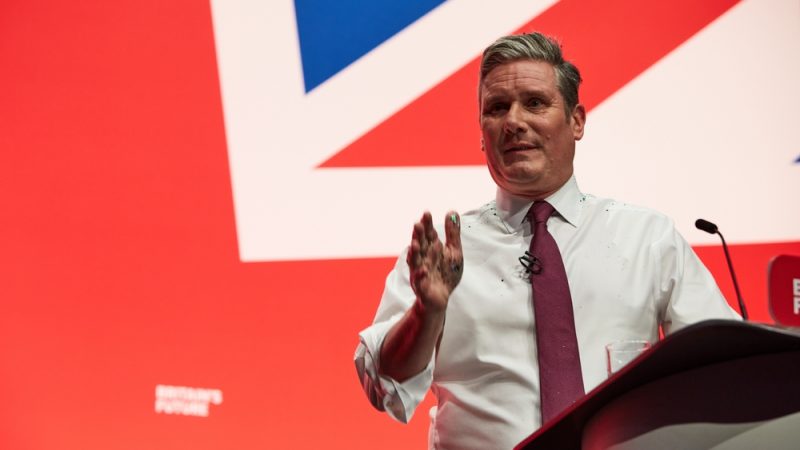

It was a busy final week before recess for the Labour government.
In Keir Starmer’s last days as prime minister, there were plenty of announcements from government departments to push his agenda forward.
Here are the seven most exciting breakthroughs and announcements this week that you can use, whether you’re on the doorstep, sparring on social media, or debating in the pub.
1. Renationalising British Steel
Labour has taken British Steel into public ownership.
The move will protect the roughly 33,000 jobs the Scunthorpe site supports directly, plus another 36,000 across the supply chain. Earlier in the week, MPs passed the Steel Industry (Nationalisation) Act, which gave the government the legal powers to nationalise British Steel.
This builds on the government’s Steel Strategy, launched in March and backed by up to £2.5 billion, which aims to see half of the steel used in Britain made in Britain.
2. Testing babies for spinal muscular atrophy
Labour is expanding life-saving genetic tests to every newborn in England.
SMA is a rare muscle-wasting disease that can leave babies unable to sit up, crawl, or walk, treatment is far more effective when started before symptoms appear.
From October, seven screening labs will begin testing babies using the existing heel-prick blood test, with another six labs following by October 2027.
The rollout follows years of campaigning, including by former Little Mix singer Jesy Nelson, whose twins have SMA. It’s backed by a £4.1 million evaluation study led by researchers at Oxford.
3. Giving care workers a voice
Labour is setting up a new body to negotiate pay and conditions for carers.
The Adult Social Care Negotiating Body will bring together unions and employers for the first time to agree pay, terms, and wider working conditions for the sector’s 1.5 million staff.
It’s backed by £500 million for the first settlement, with negotiations starting in April 2027 and the deal landing the following year.
Become a friend of LabourList and join our community. Our friends support our vital non-factional work and get access to exclusive content and events.
4. Supporting child trafficking victims
Labour is extending its programme of specialist guardians for trafficked children to cover every council in England.
Independent Child Trafficking Guardians speak up for children who have survived trafficking or modern slavery, helping them access healthcare, school places, and legal support.
The scheme has run in stages since 2014 and currently covers two-thirds of councils in England and Wales. An extra £25 million will bring it to the remaining 179 English councils, delivered by Barnardo’s over the next four years.
Guardians helped 10% more children in the year to March 2025, and the number of people referred to the national modern slavery system hit a record last year.
5. Regulating buy now, pay later
From this week, the FCA will oversee buy now, pay later purchases.
Providers such as Klarna, Clearpay, and PayPal must now run proper affordability checks before offering credit, give clear information about repayments, and direct struggling customers to debt advice instead of a debt collector.
Shoppers seeking a refund for faulty goods bought with BNPL will also get the same rights as if they would if they had paid on a credit card.
6. Clearer costs for leaseholders
Labour has confirmed new rules on leaseholder service charges.
Landlords will have to give leaseholders a clear annual report on their building’s condition and any major works planned, plus a standard service charge form setting out exactly what they’re paying for. If a dispute goes to court, leaseholders will no longer automatically foot their landlord’s legal bill, and can claim back their own costs instead.
The changes come into force from next year as part of the wider plan to end the feudal leasehold system, alongside a separate bill that will ban leasehold for new flats and cap ground rents at £250 a year.
7. Bigger fines for fly-tippers
Labour has increased penalties for fly-tipping and littering.
The maximum fine for fly-tipping rises from £1,000 to £5,000, and the top littering fine goes up 50% to £750. Councils will still set their own fines, so punishments can scale with how serious the offence is, but the new ceiling allows them to be harsher on the worst offenders.
It’s the latest step in the government’s Waste Crime Action Plan, which already includes a digital waste tracking system and the power to strip fly-tippers of their driving licence.
Subscribe here to our daily newsletter roundup of Labour news, analysis and comment– and follow us on TikTok, Bluesky, WhatsApp, X and Facebook. You can also write to our editor to share your thoughts on our stories and share your own. The best letters are published every Sunday.
-
- SHARE: If you have anything to share that we should be looking into or publishing about this story – or any other topic involving Labour– contact us (strictly anonymously if you wish) at [email protected].
- SUBSCRIBE: Sign up to LabourList’s morning email here for the best briefing on everything Labour, every weekday morning.
- BECOME A FRIEND: If you enjoyed this, why not consider becoming a Friend of LabourList? Help sustain our journalism, and of course Friends do get benefits…
- PARTNER: If you or your organisation might be interested in partnering with us on sponsored events or projects, email [email protected].
- ADVERTISE: If your organisation would like to advertise or run sponsored pieces on LabourList‘s daily newsletter or website, contact our exclusive ad partners Total Politics at [email protected].



More from LabourList
‘Playing it safe on Europe is the riskiest thing Labour can do’
‘Jack Charlton and Labour’s rural tradition’
Labour triumphs against Polanski, but the Green threat remains