

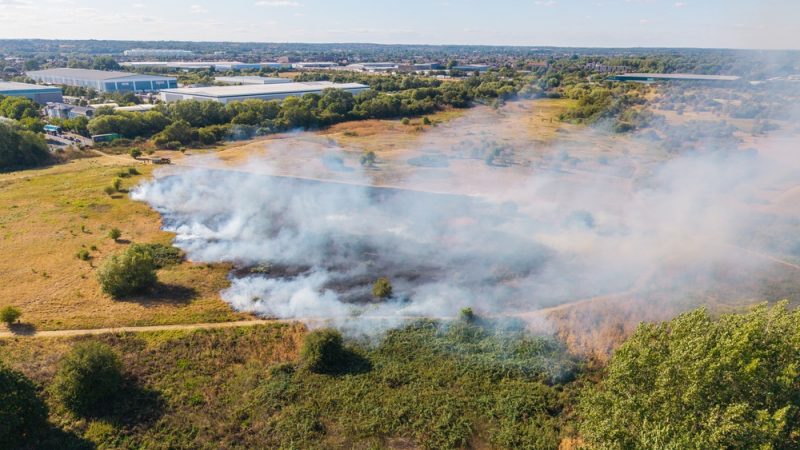

This summer has given us a stark glimpse of what climate change means for Britain.
Two-thirds of England has been in drought. Rivers have been reduced to a trickle. Wetlands and peatlands are drying out. Across the country, wildfires have torn through parched landscapes, destroying precious habitats and forcing people from their homes.
This all comes with a cruel irony. We have only recently emerged from one of the wettest winters on record and communities across Britain know the devastation flooding can leave behind.
Increasingly, Britain faces this rollercoaster: drought and heat through the summer, intense rainfall and flooding when the weather turns. Families and communities bear the consequences, but so do farms, businesses and public services.
We must tackle the cause. Reaching net zero is the only way to ultimately halt rising temperatures. Retreating from our responsibility to deliver it would condemn current and future generations to increasingly unmanageable climate extremes.
But it is now obvious that we are not adapting quickly enough. Richard Tice may see extreme heat as an opportunity to celebrate better English sparkling wine. But for farmers watching crops wither, firefighters battling wildfires and families living with the devastation left behind, this is no cause for celebration.
This government must protect communities from the consequences we can no longer avoid. As the Institute for Public Policy Research argues in its report “Adapt or Die”, this is a test of Labour’s competence: can government can keep people safe today and prevent the problem becoming worse tomorrow?
This will require real political leadership – and part of the answer is quite literally beneath our feet. The same ecosystems left withered by this summer can be among our strongest defences when the next extreme arrives.
READ MORE: ‘Working class communities deserve a bold climate plan from Labour’
Treating nature as critical infrastructure
Done properly and at sufficient scale, nature restoration is itself infrastructure creation: wetlands, healthy soils and trees can help store water when it is scarce, slow it when there is too much, cool communities during extreme heat and – contrary to some right-wing narratives – make landscapes more resilient to fire.
Andy Burnham has promised “good growth in every postcode”, and investing in nature can help deliver it. Research shows that sustained investment in nature recovery could generate £80 billion in new economic activity and create 80,000 skilled jobs over the next decade – many in the rural and coastal communities that have too often missed out. Conversely, continued degradation could cost the UK economy around 5% of GDP by 2030.
There is a social justice argument at the heart of this too. Access to green space improves physical health and mental wellbeing. Cooler neighbourhoods protect vulnerable people during heatwaves. Rivers less likely to burst their banks mean greater security for families and local businesses. These benefits matter most to those who are least able to protect themselves when disaster strikes.
And people cherish nature. When asked what makes them proudest of where they live, Britons across the political divide overwhelmingly point to their local parks, green spaces and nature. Protecting these places is a visible investment in the spaces that people call home.
READ MORE: ‘Why risk the ‘Burnham bounce’ on the oil and gas industry?’
Leadership from the top
Andy Burnham must now make nature fundamental to how it protects the country from floods, drought and extreme heat.
There are important foundations to build on. The revised Environmental Improvement Plan recognises the role of nature-based solutions in protecting communities. The new National Planning Policy Framework rightly puts adaptation much closer to the centre of planning, including through green infrastructure and nature-based solutions.
National government must set clear priorities and provide sustained investment. But Burnham’s devolution agenda is also an opportunity to embed resilience closer to the places it must protect. Strategic Authorities could be given a clear mandate and long-term funding to plan, coordinate and invest in nature recovery alongside housing, transport and energy – convening farmers, businesses, councils, conservation bodies and communities to deliver nature-based solutions across whole places and river catchments.
This summer has shown that people expect government to act in their interests before disaster strikes. By investing now in the landscapes that protect homes, livelihoods and essential infrastructure, Labour can show that it is willing to protect communities.
As El Niño intensifies into September, the next test may not be far away.
Become a friend of LabourList and join our community. Our friends support our vital non-factional work and get access to exclusive content and events.
Subscribe here to our daily newsletter roundup of Labour news, analysis and comment– and follow us on TikTok, Bluesky, WhatsApp, X and Facebook. You can also write to our editor to share your thoughts on our stories and share your own. The best letters are published every Sunday.
-
- SHARE: If you have anything to share that we should be looking into or publishing about this story – or any other topic involving Labour– contact us (strictly anonymously if you wish) at [email protected].
- SUBSCRIBE: Sign up to LabourList’s morning email here for the best briefing on everything Labour, every weekday morning.
- BECOME A FRIEND: If you enjoyed this, why not consider becoming a Friend of LabourList? Help sustain our journalism, and of course Friends do get benefits…
- PARTNER: If you or your organisation might be interested in partnering with us on sponsored events or projects, email [email protected].
- ADVERTISE: If your organisation would like to advertise or run sponsored pieces on LabourList‘s daily newsletter or website, contact our exclusive ad partners Total Politics at [email protected].



More from LabourList
Labour triumphs against Polanski, but the Green threat remains
Delivering in Government: your weekly round up of good news Labour stories
Labour members willing to accept Green defections, but not Tories or Reform – poll