

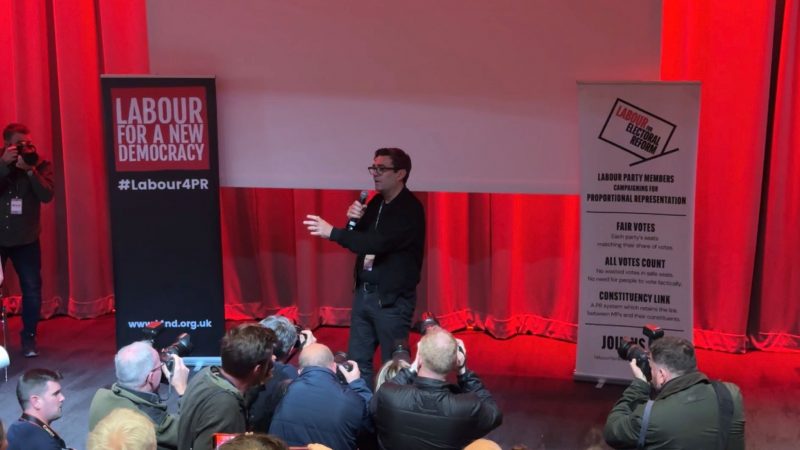

The war of words between Andy Burnham and the Labour Party continues as the Greater Manchester Mayor has claimed that Labour “never supported him” in his three successful election campaigns for the role.
A Labour MP responded that he should tell that to the thousands “who went knocking on doors and leafleting to get him elected.”Burnham is not going quietly into the good night as he remains vocally frustrated at being blocked by the NEC from being the candidate in Gorton and Denton. He is clearly angry at this latest decision and is using this moment of maximum anger to get plenty off his chest.
I am not going to re-litigate here the rights and wrongs of this particular decision. Instead, I wanted to explore the complaint about the lack of support which I think tells a wider story about the often fraught relationship between Labour’s high command, their regional outposts and those on the frontline.
READ MORE: ‘Burnham would?’
When I have talked to candidates over the years, this is one of the most frequent complaints I hear when it comes to their relationship with the Labour Party machine.
Many feel – as Burnham did – unsupported. It is a fact that candidates in places that Labour is either highly confident they will win or absolutely certain they will lose or never gain do not get the same level of resourcing as target seats. This makes perfect sense for an organisation that has limited money and resources but can feel particularly hard when you are the candidate seeking more support for your campaign.
It is where the choices are less stark – seats that might not be on the key target list but have particular circumstances that make those fighting them feel that they are winnable – that a lot of the friction comes in.
Sometimes these decisions are accused of being led not by hard headed resource management, but by factional bias. This accusation is levelled at all Labour regimes. Targeting of seats and resources is not new. I heard them from Labour moderate candidates under Corbyn and from Labour left candidates under Starmer. Factional management of candidate selection is a perennial issue no matter who is in charge.
JOIN LABOURLIST ‘IN CONVERSATION’ WITH STEVE ROTHERAM ON 3rd FEB
However, resourcing issues are different and a lot less easy to pin on internal politics. Head office do an extraordinary amount of work trying to work out just what is and isn’t a target seat and where their limited resources can and should be spent to the benefit of the whole party. That will inevitably mean saying “no” to candidates and CLPs far more often than they are able to say “yes”.
There will always be an uneven power dynamic between those who hold the purse strings and those who are asking for help (when you think about it, this is the very dynamic at the heart of what makes us all democratic socialists and social democrats). A candidate has a singular focus on their own seat, their own race, their own needs for money, support and resources which will never feel like enough.
Subscribe here to our daily newsletter roundup of Labour news, analysis and comment– and follow us on Bluesky, WhatsApp, X and Facebook.
Head office on the other hand have to manage hundreds of races up and down the country. It is their job to make hard headed decisions as to how they do that as effectively and efficiently as possible. There is much that can and should be done to ensure that local knowledge and input can be better incorporated into this decision making to ensure that it is made with the best possible information.
But ultimately, what is really needed is a better culture shift between all the players. CLPs and candidates should be allowed to have grown up conversations about what they really need and what they can really expect. Some of the staff’s limited time should be dedicated to facilitating this. It may feel frustrating but the pay offs in terms of energy, enthusiasm and culture would be worth the investment.
But the other side of that coin is those in non-target seats understanding that you can’t always get what you want. However, if we do all try, If we do all give it some time, we might just all get what we need.
Share your thoughts. Contribute on this story or tell your own by writing to our Editor. The best letters every week will be published on the site. Find out how to get your letter published.
-
- SHARE: If you have anything to share that we should be looking into or publishing about this story – or any other topic involving Labour– contact us (strictly anonymously if you wish) at [email protected].
- SUBSCRIBE: Sign up to LabourList’s morning email here for the best briefing on everything Labour, every weekday morning.
- DONATE: If you value our work, please chip in a few pounds a week and become one of our supporters, helping sustain and expand our coverage.
- PARTNER: If you or your organisation might be interested in partnering with us on sponsored events or projects, email [email protected].
- ADVERTISE: If your organisation would like to advertise or run sponsored pieces on LabourList‘s daily newsletter or website, contact our exclusive ad partners Total Politics at [email protected].



More from LabourList
‘The politics of the Gambling Levy money’
Starmer attempts to reassure Britons amid fears of inflation spike, but did he go far enough?
‘From referee to coach – Labour needs a new theory of what it’s for’