

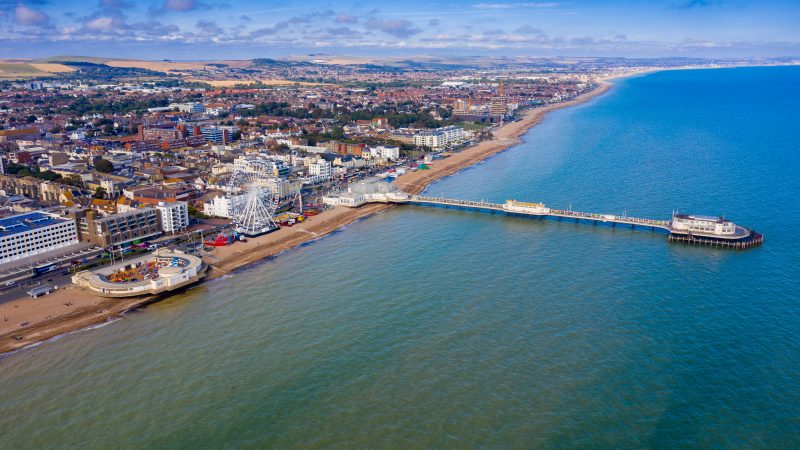

As an island nation is there anything more symbolic than the British coastal line?
Stretching over 19,000 miles, our coastline embodies the very essence of our national identity and what makes Britain truly special.
Yet now many of our fantastic coastal towns are seen as emblematic of Britain’s decline. Suffering from underinvestment – undervalued, unconsidered and unloved.
Under 14 years of Conservative rule, they had been treated as an afterthought.
Limited and rundown transport links, poor quality housing, health inequalities, seasonal economies and ageing populations have all compounded the impact of shrinking budgets; leaving councils unable to invest in affordable and social housing, healthcare, and education.
As a former council leader, I have seen public services stripped to the bone, despite those now long-forgotten Tory promises of “levelling up”. We must remember that these towns are not just remnants of the past – good for a day trip in the sunshine. They are communities with deep-rooted histories and futures worth fighting for. That is why I stood to be an MP for Worthing West.
The facts tell a worrying story. Government data shows that nine out of ten of the most deprived neighbourhoods in the country are coastal, with a crime rate 12 per cent higher than the norm, and residents 15 per cent more likely to die prematurely.
A 2023 report by the think tank Onward highlighted that neighbourhoods on the coast are a staggering 42 per cent “more likely to be in the worst decile for income deprivation than inland ones.” The average coastal household income was almost £3,000 lower than in non-coastal regions and that typical coastal workers earned around £1,600 less annually compared to their inland counterparts.
Labour’s economic stability under the Chancellor is beginning to bear fruit for working families. According to the Office for Budget Responsibility, households will be, on average, over £500 a year better off by the end of the Labour government’s term.
The current Chief Medical Officer for England, Sir Chris Whitty, wrote back in 2021 that “the health and well-being of these populations have been long neglected and overlooked” in his report on coastal towns.
This week’s latest data shows waiting lists down by more than 312,000 since Labour came into government, with an 86,000-drop last November alone. Plus the creation of 250 neighbourhood health centres planned, with 100 of these opening by 2030, and the essential New Hospitals Programme worth £15 billion of new investment to key NHS hospitals for refurbishment, we are beginning to address such systemic problems.
However, after last year’s council elections Reform are now representing and governing locally over 700,000 homes across ten English councils. All of these homes are projected to “face medium or higher flood risk by the middle of the century”.
While Reform continues to deny even the fact of climate change, Labour have begun to tackle this head on. With a record commitment of £10.5 billion into new flood defences and repairing existing assets to protect more people from the devastation of flooding and protect over 900,000 properties.
As we enter 2026, the 2024 general election starts to seem like a lifetime ago. Yet, Labour must remember its historic breakthroughs along England’s coast, capturing constituencies previously never held in areas such as Kent, Essex, Cornwall, Norfolk, Somerset, Dorset, the Isle of Wight and even West Sussex, where I was elected along with two other Labour candidates.
Polling from late last year from a leading economic think tank, the Good Growth Foundation, found that 58% of people who voted for Labour at the last general election agree that the way Britain treats its coastal communities “says a lot about who we are as a country”. While just as importantly 82% said it was “important for the government to adopt a long-term strategy to tackle the challenges facing coastal areas.”
Labour won on a promise of putting more power in such communities’ hands to revitalise their areas and I’m delighted to see Local Government Reorganisation becoming a reality.
Under the Prime Minister this Government has made a commitment that all policy decision-making should be rural-proofed, a move I warmly welcome as MP for the beautiful rural areas of Worthing West. But we should go further by extending this proofing to coastal communities, and by establishing a dedicated coastal ministerial portfolio to ensure their voices are consistently heard.
However, it remains critically important to remember that coastal towns are a remarkable national political weathervane.
Subscribe here to our daily newsletter roundup of Labour news, analysis and comment– and follow us on Bluesky, WhatsApp, X and Facebook.
Over the past forty years English coastal towns have backed all winning political parties. Margaret Thatcher dominated seats across the coast, peaking in 1987 with nearly three-quarters of all seaside seats. Yet only ten years later the public switched and backed Tony Blair, who managed to increase Labour’s vote share of those same seats by an astonishing 109%. In 2024 this government won a historic 69 coastal seats that changed hands, more than in 1997.
That’s why we now have a Coastal PLP of over 60 MPs working for these communities, supported by others key affiliates who understand the need to get this right, like the Fabian Society and Labour Coast and Country.
Coastal towns are not at the end of the line; they are at the start. The start of our border security, our environmental security, and our food security. This must be reflected in any government policy. Get this right and we will have a safer, more resilient nation – enabling growth and prosperity everywhere.
Share your thoughts. Contribute on this story or tell your own by writing to our Editor. The best letters every week will be published on the site. Find out how to get your letter published.
While Reform trades in nostalgia for a past that never truly existed, Labour looks to the future. But we can only secure a second term by ensuring that people feel hopeful about change that improves life in the here and now.
Our mission is a decade of a renewal, and only front and centre restoration and revitalisation of coastal towns will show Labour is unlocking this country’s potential and restoring its sense of pride.
-
- SHARE: If you have anything to share that we should be looking into or publishing about this story – or any other topic involving Labour– contact us (strictly anonymously if you wish) at [email protected].
- SUBSCRIBE: Sign up to LabourList’s morning email here for the best briefing on everything Labour, every weekday morning.
- DONATE: If you value our work, please chip in a few pounds a week and become one of our supporters, helping sustain and expand our coverage.
- PARTNER: If you or your organisation might be interested in partnering with us on sponsored events or projects, email [email protected].
- ADVERTISE: If your organisation would like to advertise or run sponsored pieces on LabourList‘s daily newsletter or website, contact our exclusive ad partners Total Politics at [email protected].



More from LabourList
‘The politics of the Gambling Levy money’
Starmer attempts to reassure Britons amid fears of inflation spike, but did he go far enough?
‘From referee to coach – Labour needs a new theory of what it’s for’