

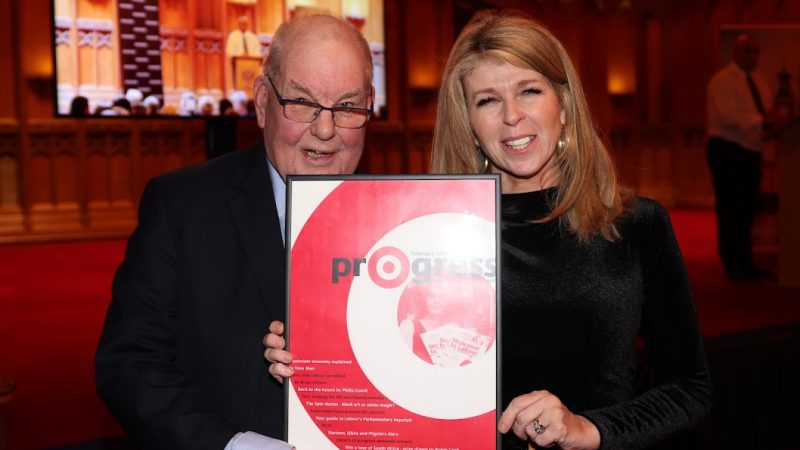

A fortnight ago, we marked thirty years of Progress, an organisation that has never existed for comfort or nostalgia, but for power with purpose.
We were joined by colleagues from government: Chancellor of the Exchequer Rachel Reeves, Health Secretary Wes Streeting, Education Secretary Bridget Phillipson, Work and Pensions Secretary Pat McFadden, Science, Innovation and Technology Secretary Liz Kendall, Housing, Communities and Local Government Secretary Steve Reed, Chief Whip Jonathan Reynolds, and the Prime Minister’s Chief of Staff Morgan McSweeney. As well as friends from across our movement including colleagues from LabourList, the Progressive Policy Institute in the United State and the McKell Institute in Australia. Progress has always believed that centre-left politics is strengthened by learning from and working with each other.
READ MORE: ‘Streeting sets out his stall’
Founded in 1996, Progress began because a group of individuals, Derek Draper, Paul Richards and Liam Byrne MP, were prepared to do the hard, often unfashionable work of making the case for a modern, reforming Labour Party. Derek, who we paid tribute to within our celebration and in all our work, believed politics should be bold, robust and unafraid of argument. His influence lives on in the confidence and seriousness of this organisation and the many other projects, he helped found inside of Labour, including this very site.
Progress was never a talking shop or a salon. In the pages of the very first magazine, you can find Philip Gould setting out the philosophy of modernisation alongside Hilary Coffman of Blair’s Press team on the mechanics of this fashionable new thing called ‘spinning’ and advice from Siobhain McDonagh – candidate for Mitcham and Morden – on making a functional CLP.
JOIN LABOURLIST ‘IN CONVERSATION’ WITH STEVE ROTHERAM ON 3rd FEB
Then, as now, it was about winning and then governing with purpose. This of course made the period between 2010 and 2024, very difficult at times for my forebears. At times it seemed that Labour Party was so far from winning and so divorced from its real purpose that it was hopeless.
But they did not quit. Moral clarity against the outrages the hard-left had allowed to fester in the party was required, alongside some soul-searching about what it meant to be a pragmatic progressive in the post New Labour era. Part of this process was thinking in new ways and experimenting with new ideas. In 2021, we became Progressive Britain and that work mattered immensely to our movement. But organisations must know when clarity matters more than breadth, so on our thirtieth anniversary, we announced that we would once again be known as Progress.
Not because of nostalgia. But intent and pride in the achievements of Labour in power, and our movement’s contribution towards this – under the governments of Tony Blair and Gordon Brown, and this government, led by Keir Starmer.
And it’s because so many people came through under the Progress banner. People are at the heart of Labour’s achievements and people have always been at the heart of Progress.
Over thirty years, thousands of Labour activists have taken part in Progress programmes. Hundreds have gone on to become MPs. And today, by my count, hundreds of Labour MPs are Progress alumni, alongside thousands of Senedd members, Scottish Parliament members, councillors and leaders across the country.
Subscribe here to our daily newsletter roundup of Labour news, analysis and comment– and follow us on Bluesky, WhatsApp, X and Facebook.
We put as much effort into developing people as we do into developing ideas, because without both, you do not win – and when Labour does not win, working people lose. There are some in our movement content with losing, or comfortable with coalitions and alliances. We are not. We have always fought for Labour majorities, and we must always fight for Labour majorities.
Our Political Weekend returns to Birmingham at the end of February. Started as ‘Hogwarts for SpAds’, Political Weekend (tickets are now on sale) allows us to bring together our movement’s rising stars with leading figures to help encourage the next generation of Wes Streeting and Rachel Reeves’ to get involved in politics. We allot bursary places to this event to ensure that talent can be developed and nurtured without the burden of cost.
Progress has always been a part of the Labour Party that seeks converts – confident enough to persuade, and open enough to embrace change. We celebrate the past. But more importantly, we recommit to the future of our party; to making the progressive case for power, to winning arguments – and elections. And to doing the hard work of governing well, and with purpose.
Progress is back – and the work goes on.
Share your thoughts. Contribute on this story or tell your own by writing to our Editor. The best letters every week will be published on the site. Find out how to get your letter published.
-
- SHARE: If you have anything to share that we should be looking into or publishing about this story – or any other topic involving Labour– contact us (strictly anonymously if you wish) at [email protected].
- SUBSCRIBE: Sign up to LabourList’s morning email here for the best briefing on everything Labour, every weekday morning.
- DONATE: If you value our work, please chip in a few pounds a week and become one of our supporters, helping sustain and expand our coverage.
- PARTNER: If you or your organisation might be interested in partnering with us on sponsored events or projects, email [email protected].
- ADVERTISE: If your organisation would like to advertise or run sponsored pieces on LabourList‘s daily newsletter or website, contact our exclusive ad partners Total Politics at [email protected].



More from LabourList
Labour launch major attack ad campaign exposing Reform’s record
‘It is time for the Lords Spiritual to leave the House of Lords’
‘MattGPT and Me’