

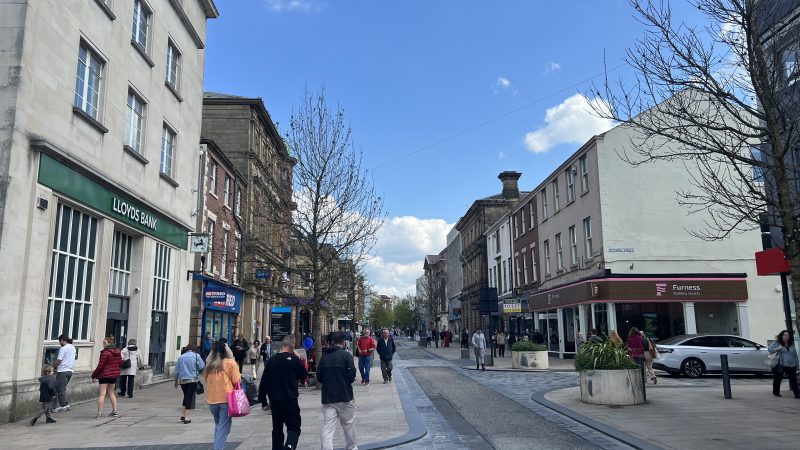

The Government’s economic strategy is its number one mission – but which one? The initial emphasis on achieving the ‘highest growth in the G7’ has since the start of this year been eclipsed by a focus on the cost of living, as calls for interventions on prices and bills have grown.
The political impulse is clear, but for living standards to rise the economy needs to grow.
For Britain to ‘turn the corner’ after the immediate effects of the rail fare freeze and energy bills measures have worn off, growth needs to be higher and translate into higher disposable incomes.
Place matters for this. Voters’ living standards won’t improve unless the economy within a few miles of where they live and work begins to improve.
READ MORE: Andy Burnham unveils bold plan for future economic growth in Greater Manchester
People in places like Burnley and Blackburn – with disposable incomes barely half those in London – are feeling the strain most because their local economy doesn’t generate enough prosperity to go around. Helping people feel the change in their pockets depends on the Government directly addressing the reasons why living standards vary up and down the country.
Despite more than a decade of economic stagnation and persistent regional divides, there is room for hope. A group of 11 cities and towns has grown its economic output on average 50 per cent faster than the rest of the country over the last decade. As a result, their residents have seen disposable incomes rise twice as fast as the rest of the country over the same period.
This group – including Warrington, Preston and Barnsley – aren’t all among the most affluent places in the UK.
This is important, because real-terms income growth makes them better equipped to tackle the cost of living. Centre for Cities estimates that people living in other cities and large towns like them – over half the UK population – would have pocketed £3,200 more in the last decade had their local economy achieved the same rate of living standards growth.
JOIN LABOURLIST ‘IN CONVERSATION’ WITH STEVE ROTHERAM ON 3rd FEB
That would lift households out of deprivation and provide stronger protection against rising bills than any temporary freeze on fares or energy prices.
What are the ingredients behind their success? What can Labour learn from them?
The first ingredient is a strong private sector
This depends on a broad base of ‘tradable’ firms that sell to customers in other locations, such as software, life sciences, and manufacturing. ‘Local services’ such as restaurants and shops rely on these tradable firms to bring money into the local economy where it can be spent on the high street.
Barnsley has been a top performer for securing these tradable jobs and has reported income growth twice as fast as the rest of the country. Barnsley has pursued a twin-track strategy – meeting high demand for logistics jobs near motorway junctions alongside a push for cutting-edge highly skilled professional services in the middle of the regenerated town centre.
The second ingredient is access to jobs
Employment is the biggest factor determining levels of income deprivation. The Government’s 80 per cent employment target will be particularly important in places like Blackburn, which has the lowest employment rate and disposable incomes in the country.
Subscribe here to our daily newsletter roundup of Labour news, analysis and comment– and follow us on Bluesky, WhatsApp, X and Facebook.
In most cities, action on job creation and skills training to help get people into the labour market will be key.
In big cities in particular, transport is also an important intervention. Neighbourhoods in Manchester that are well-connected by bus and rail to the city centre were twice as likely to see reduced deprivation as those that are not. Being able to access Manchester’s booming city centre, which has caught up to London in terms of the share of jobs that are in highly skilled professional services over the past decade, has been an important reason for the improvements Manchester has seen.
The third ingredient is tackling constraints to future growth
In places that already have economic growth, securing ‘good’ growth depends on keeping housing costs under control and housing supply connected to demand. Going further on planning reform to boost housebuilding and new commercial space is key, as is addressing overly tight council boundaries through devolution.
Warrington exemplifies how these ingredients interact to produce economic growth that translates into income growth for local people. Its economy grew twice as fast as the UK average since 2013. It has doubled the number of jobs in knowledge-based activities in the last decade and scored high marks on housebuilding too. All of this has translated into one of the largest drops in neighbourhood deprivation in the country.
Share your thoughts. Contribute on this story or tell your own by writing to our Editor. The best letters every week will be published on the site. Find out how to get your letter published.
The top-performing places show the government how it can achieve its mission everywhere. It must strongly back urban Britain with place-based measures that we know generate more prosperity in a local economy and give people access to it. For the cost of living crisis to be beaten, local economic growth must be the answer.
-
- SHARE: If you have anything to share that we should be looking into or publishing about this story – or any other topic involving Labour– contact us (strictly anonymously if you wish) at [email protected].
- SUBSCRIBE: Sign up to LabourList’s morning email here for the best briefing on everything Labour, every weekday morning.
- DONATE: If you value our work, please chip in a few pounds a week and become one of our supporters, helping sustain and expand our coverage.
- PARTNER: If you or your organisation might be interested in partnering with us on sponsored events or projects, email [email protected].
- ADVERTISE: If your organisation would like to advertise or run sponsored pieces on LabourList‘s daily newsletter or website, contact our exclusive ad partners Total Politics at [email protected].



More from LabourList
‘The politics of the Gambling Levy money’
Starmer attempts to reassure Britons amid fears of inflation spike, but did he go far enough?
‘From referee to coach – Labour needs a new theory of what it’s for’