


Time speeds up when you’re an MP and you’ve turned 51. The rolling phase of Wilsonian ‘long political weeks’, from Burnham to Mandelson, morphed into a day being a long time in politics as, earlier this month, I drove to Parliament for the Prime Minister’s address to the Parliamentary Labour Party (PLP).
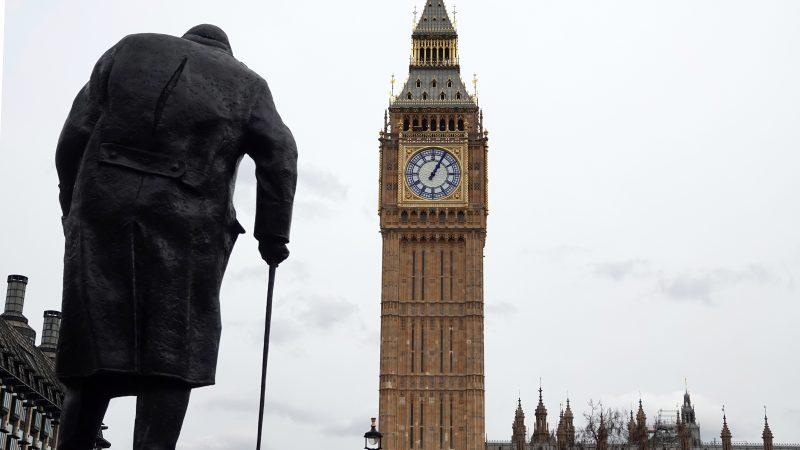
Never in the field of political punditry was so much claimed, about one man’s fate, by so many journalists. As a vocal defender of the PM, I was glad to witness the wave of support for him at that PLP meeting. As we continue to digest that historic meeting and this moment of accelerated and inflated narratives, outrage and demands in our politics, we need a modern incarnation of Churchill’s ‘action this day’ approach that could help the PM, the PLP and most importantly, the people.
In World War Two, the freedom of the country depended on the British state delivering on the government’s plans. Impediments were removed. Legislation was changed or emergency legislation introduced. Practical and practicable were the watchwords.
READ MORE: ‘Blair had a strategy: can Labour find one now?’
We’re not at war now, but we are facing a crisis of confidence in the ability of mainstream political parties to show that democratic government can improve society, and this poses significant dangers.
Since the global financial crisis of 2008, living standards, economic growth and public service improvement have been stagnant. The public’s legitimate frustration is being weaponised by populists and turned into an explosive anger that is inflaming our political debate and deepening polarisation.
Populists (often themselves drawn from the elite) direct this voter rage upwards at an alleged elite, while simultaneously punching down at minorities and migrants. Simplistic solutions are offered, designed to win power without having to answer the question of how to govern. It’s a playbook as old as the ancient Greek city states and recent history teaches that it can be successful.
The window when notable change can be delivered in this parliament is closing fast. The PM himself said in his 2026 New Year address “people must feel the benefits of change”. This lack of time is why we need to revisit the ‘action this day’ approach of WW2.
There are increasingly welcome signs of this approach taking root in government. Darren Jones is reorganising Whitehall under the mantra ‘move fast and fix things’ and will deploy the covid vaccine taskforce model, replicating the pandemic mindset of innovation, acceleration, calculated risk-taking, bringing in new leadership and more.
Only last week at the Munich Security Conference, in the shadow of the Ukraine war, the Prime Minister spoke in suitably stark terms about how Britain must be “ready to fight” and the 3% GDP on defence target was brought forward to 2029.
On the vexed issue of young people’s access to smart phones, social media and AI, the PM has said this week that Britain will be a leader, not a follower, when it comes to online safety.
Shabana Mahmood is gripping the immigration and small boats issues with renewed vigour.
These are policy issues where Whitehall and society have arguably been behind the curve for years and where there is a palpable sense of urgency due to risk or outrage. We need to extend the ‘action this day’ approach across government.
Some brief suggestions on how to do so follow.
On housing, to build on our reforms of the planning system and our house-building target we could signal that we will consider emergency legislation to avoid the threat of judicial review of major housing developments or new towns.
We could hardwire progressive, radical thinking into Whitehall by appointing a Minister for Younger and Future Generations to scrutinise all government policies and tilt the balance towards younger people.
We could indicate even firmer action on driving down the cost of living by looking at supermarkets’ profit and practices.
On defence procurement we could do more to ensure the much-needed funding uplift will boost military capacity and supply chain jobs, not merely defence contractors’ bottom lines.
Subscribe here to our daily newsletter roundup of Labour news, analysis and comment– and follow us on TikTok, Bluesky, WhatsApp, X and Facebook.
My Labour MP colleagues should give the PM and ministers the public and parliamentary backing needed to achieve this. That means using the administrative techniques that would be more akin to an emergency as serious as war, to bring about ‘action this day’ in the areas where voters feel most frustration.
I would be willing to sit all night to pass any legislation, emergency or otherwise that is needed to remove the impediments to change. The passing of emergency legislation to save the Scunthorpe blast furnaces and the Assisted Dying Bill debates show that this is a parliament that can be bold. MPs would have more pride in their role as parliamentarians, ministers would be empowered, and the civil service energised with a clearer sense of purpose.
The ‘legal-bureaucratic complex’ has for too long constrained the ability of democratically elected mainstream politicians to achieve the change needed to satisfy the legitimate needs of voters. We must break the veto that vested interests have over delivery, not the democratic system as we know it.
Share your thoughts. Contribute on this story or tell your own by writing to our Editor. The best letters every week will be published on the site. Find out how to get your letter published.
Voters will feel and see more change by the next election, but we should be honest in admitting we can’t solve every problem in one term or that it will be easy. ‘Action this day’ would be an antidote to the toxins currently pulsing through the veins of the body politic at a time when ‘a day is a long time in politics.’
-
- SHARE: If you have anything to share that we should be looking into or publishing about this story – or any other topic involving Labour– contact us (strictly anonymously if you wish) at [email protected].
- SUBSCRIBE: Sign up to LabourList’s morning email here for the best briefing on everything Labour, every weekday morning.
- DONATE: If you value our work, please chip in a few pounds a week and become one of our supporters, helping sustain and expand our coverage.
- PARTNER: If you or your organisation might be interested in partnering with us on sponsored events or projects, email [email protected].
- ADVERTISE: If your organisation would like to advertise or run sponsored pieces on LabourList‘s daily newsletter or website, contact our exclusive ad partners Total Politics at [email protected].



More from LabourList
‘The politics of the Gambling Levy money’
Starmer attempts to reassure Britons amid fears of inflation spike, but did he go far enough?
‘From referee to coach – Labour needs a new theory of what it’s for’