


Amid geopolitical turmoil, Britain positions itself as a champion of international law and the rules-based global order.
We have criticised U.S. threats to sovereign territory while expressing support for peace efforts in Gaza.
Yet our claims to legal and moral authority ring hollow without a formal acknowledgement and apology for our own role in creating the Palestinian crisis. Before lecturing others on international law, we must reckon with our own history of violating it.
This role began in 1917, when Britain issued the Balfour Declaration, committing itself to the establishment of a “national home for the Jewish people” in Palestine, without the consent of the overwhelming majority of its indigenous Arab population. Eerily echoed in Trump’s “Board of Peace”, Palestinian voices were not considered in a decision that would reshape their homeland.
READ MORE:‘Palestine recognition is the first, not final, step to achieving a durable peace’
Britain then occupied Palestine militarily, dismantling existing political structures and reshaping the country’s future, despite lacking the legal authority to do so. What followed was a decades-long transformation of Palestine’s political, demographic, and security landscape that systematically privileged one population while suppressing the rights of another.
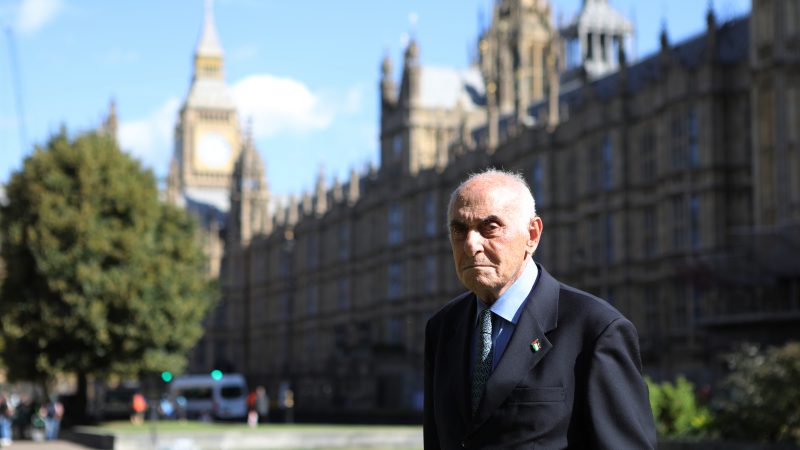
This history sits at the heart of a 400-page legal petition submitted by Palestinians, including philanthropist Munib Al Masri, under the banner of the Britain Owes Palestine campaign. Far from being a symbolic appeal, the petition is a detailed legal reckoning with Britain’s role between 1917 and 1948. Drafted by leading human rights lawyers Ben Emmerson KC, Danny Friedman KC, and a trio of academics from the universities of Oxford, Ohio, and Nottingham, it argues that today’s devastation in Palestine was the foreseeable outcome of Britain’s sustained violations of international law.
The charge is stark: during its occupation of Palestine, Britain repeatedly breached international law. Firstly, Britain acted unlawfully as an occupying power by transforming the political, social, and demographic character of Palestine in line with the Balfour Declaration, without possessing sovereign title to do so. Britain then compounded this illegality by engineering a Mandate for itself without proper legal authority, in breach of the Covenant of the League of Nations.
But the legal case does not stop at questions of sovereignty. Britain’s rule was also marked by brutality, most notably during the suppression of the Arab Revolt of 1936–1939. Under a regime of statutory martial law, Palestinians were subjected to widespread arbitrary detention, torture, collective punishment, and executions. According to the petitioners, these acts amount to war crimes and crimes against humanity.
Al Masri’s accompanying statement brings this violence into focus. He recalls British troops rounding up large numbers of Palestinian men, marching them through towns with their hands and feet bound, caging them for days, and later executing many of them.
Subscribe here to our daily newsletter roundup of Labour news, analysis and comment– and follow us on TikTok, Bluesky, WhatsApp, X and Facebook.
Britain also bears primary responsibility for the partition of Palestine. Having spent decades nurturing irreconcilable divisions through its policies, it then promoted partition as a solution. Worse still, it foresaw the likelihood of atrocities and mass expulsions and did nothing to prevent them. The result being over 700,000 Palestinians were forced or fled from their homes.
Finally, Britain unilaterally withdrew in 1948 in the midst of an armed conflict that its own policies had contributed to, in breach of international law, by failing to protect the rights of the indigenous Palestinian Arab population.
Share your thoughts. Contribute on this story or tell your own by writing to our Editor. The best letters every week will be published on the site. Find out how to get your letter published.
None of this is to suggest that Britain alone is responsible for today’s horrors in Gaza. History did not end in 1948. But moral seriousness demands honesty: a country that claims to defend legal obligations cannot ignore its own record of violating them.
A formal apology would not undo the past. But it would be a necessary step toward accountability. Until this happens, Britain’s calls for peace will ring hollow.
-
- SHARE: If you have anything to share that we should be looking into or publishing about this story – or any other topic involving Labour– contact us (strictly anonymously if you wish) at [email protected].
- SUBSCRIBE: Sign up to LabourList’s morning email here for the best briefing on everything Labour, every weekday morning.
- DONATE: If you value our work, please chip in a few pounds a week and become one of our supporters, helping sustain and expand our coverage.
- PARTNER: If you or your organisation might be interested in partnering with us on sponsored events or projects, email [email protected].
- ADVERTISE: If your organisation would like to advertise or run sponsored pieces on LabourList‘s daily newsletter or website, contact our exclusive ad partners Total Politics at [email protected].



More from LabourList
‘From referee to coach – Labour needs a new theory of what it’s for’
Ben Cooper column: ‘Labour must intervene to tackle the causes of the cost of living crisis’
Labour launch major attack ad campaign exposing Reform’s record