

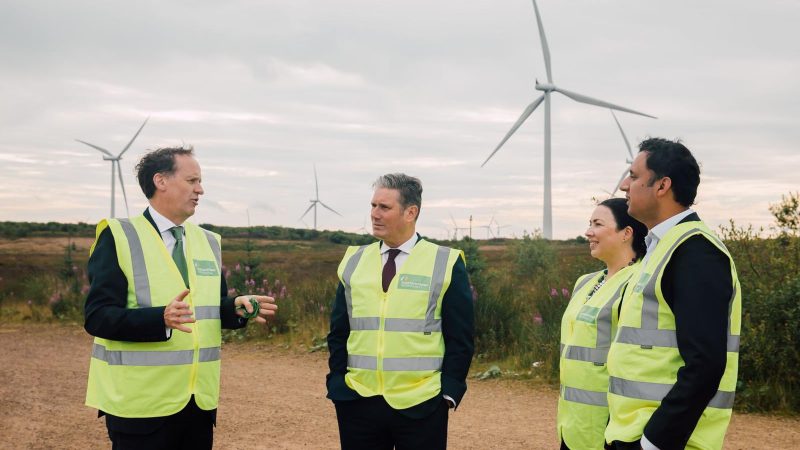

By now anyone who lives near the coast will be familiar with the sight of offshore windfarms in operation, delivering clean sustainable energy to the grid. What they may not yet be familiar with is the potential for offshore wind to deliver good quality local jobs. As we rush to expand offshore wind capacity and decarbonise our energy system, this needs to change.
Decarbonisation entails fundamental change for the foundation of our economy and the structure of work. With deindustrialisation, we saw the consequences of allowing fundamental change to happen without any kind of plan to support communities and generate good work into the future. That’s why it is so important that we take full advantage of the opportunities provided by the clean energy transition to create good jobs and ensure that those working in carbon intensive industries have other options available to them.
READ MORE: ‘Offshore wind is protecting us from price shocks – not cutting energy bills’
For too long there has been a stark difference between the quality of the jobs in the emerging renewables sector when compared to traditional forms of energy generation and offshore oil and gas. The energy industry has been a historic success story in terms of unionisation, and improving the pay, terms and conditions, and health and safety outcomes for those workers keeping the lights on. Ensuring this tradition continues with clean energy sectors – such as offshore wind – will be essential to ensuring that local communities up and down the country feel the benefits of the transition to clean power.
To that end, following a commitment made by the government in its Clean Energy Jobs Plan, trade unions have negotiated a Fair Work Charter (FWC) with industry, published today, which developers will be required to sign up to when they bid to access government support for new offshore wind projects.
We have negotiated this Charter at pace in time for the next offshore wind auction round. It is an interim and slimline Charter, rather than the final word on what good work in the sector looks like. Nevertheless, it contains important provisions which set out clearly how developers and their suppliers must engage constructively with trade unions. If they do not adhere to these requirements, they will not be eligible to receive Clean Industry Bonus payments.
This Charter has been negotiated against the backdrop of the Employment Rights Act (ERA), which has recently been signed into law. The ERA will guarantee trade union access to all workplaces when the relevant provisions come into place in October.
Subscribe here to our daily newsletter roundup of Labour news, analysis and comment– and follow us on TikTok, Bluesky, WhatsApp, X and Facebook.
However, it is extremely welcome that we are moving faster in offshore wind, and that we have set the precedent that government support for clean energy projects be conditional on developers creating good jobs and working constructively with trade unions.
Getting this right is not simply a moral imperative for the Labour Party but also a political one. Support for Reform is often strongest in peripheral, left behind areas, precisely where there are opportunities to create good clean energy jobs. The further it goes in creating good quality, unionised jobs in the areas that need them, the more it will be able to dent the rise of Reform and shore up its own support. To achieve this though, it must go further in leveraging the support it provides to clean energy developers and develop a more comprehensive charter which applies broadly across the energy sector.
The scale of the challenge was highlighted by polling that YouGov conducted last year for Climate Jobs UK, an organisation founded by Prospect and GMB, which showed that the delivery of jobs is crucial to maintaining public support for the clean energy transition. The polling showed that a majority of voters want a transition focused on jobs and the economy (55%) rather than speed (17%), with only small minorities currently believing that the transition will have a positive impact on job opportunities, both in the UK in general (31%) and in their own local area in particular (20%).
Share your thoughts. Contribute on this story or tell your own by writing to our Editor. The best letters every week will be published on the site. Find out how to get your letter published.
With numbers like these the government clearly has work to do keeping the public onside. Initiatives like the FWC can help with that, but we must now be more ambitious. The principle at the heart of the FWC is that if you want public money and government support, you must value the people who work for you and allow them to organise and bargain for their fair share. I would like to see this kind of quid pro quo replicated wherever the government is giving out contracts. The FWC may not look like a huge deal now, but it provides a blueprint for creating good jobs in the wider energy sector and beyond. We must build on the precedent it sets.
-
- SHARE: If you have anything to share that we should be looking into or publishing about this story – or any other topic involving Labour– contact us (strictly anonymously if you wish) at [email protected].
- SUBSCRIBE: Sign up to LabourList’s morning email here for the best briefing on everything Labour, every weekday morning.
- DONATE: If you value our work, please chip in a few pounds a week and become one of our supporters, helping sustain and expand our coverage.
- PARTNER: If you or your organisation might be interested in partnering with us on sponsored events or projects, email [email protected].
- ADVERTISE: If your organisation would like to advertise or run sponsored pieces on LabourList‘s daily newsletter or website, contact our exclusive ad partners Total Politics at [email protected].



More from LabourList
‘The politics of the Gambling Levy money’
Starmer attempts to reassure Britons amid fears of inflation spike, but did he go far enough?
‘From referee to coach – Labour needs a new theory of what it’s for’