

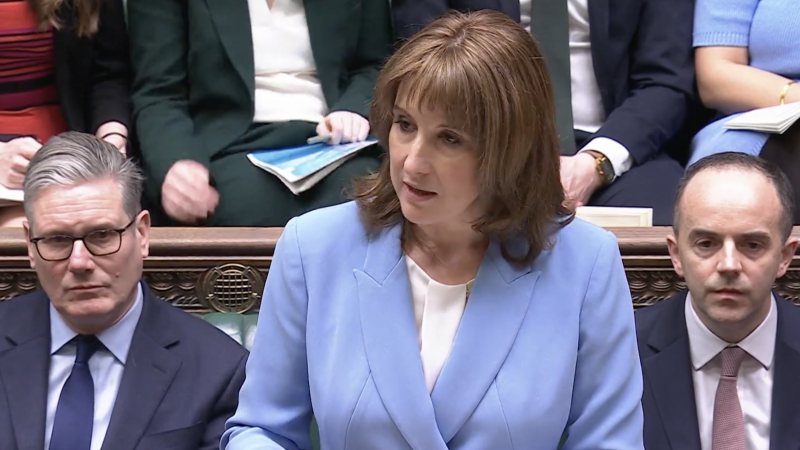

Chancellor of the Exchequer Rachel Reeves has delivered the Spring Statement to the House of Commons, as the Office for Budget Responsibility (OBR) projected slow growth in 2026 before improvements between 2027/2028 and 2029/2030.
The Chancellor stated that the recent OBR forecasts show that Labour is delivering the “right economic plan for the country”, arguing that in a “world uncertain”, given heightened global tensions at present, Labour’s efforts in government to deliver fiscal stability will “secure our economy against shocks.”
Key areas of her economic record that Reeves listed included both inflation and borrowing being down, as well as living standards improving while the economy is forecasted for growth.
The Chancellor also outlined that real wages are up, with the OBR also suggesting that inflation will come down even faster than the autumn forecast had predicted. She said that “keeping inflation low and stable” is the best way to support the nation’s economic situation.
Reeves did not solely focus on the benefits she could see that were validated by the OBR forecast, but also the difference Labour’s spending on public services and infrastructure would make. Her statement to the Commons made clear that the government had made spending choices for social justice as well as fiscal responsibility, rejecting the idea that these were mutually exclusive possibilities.
Freezing prescription charges and rail fares, alongside the recently announced cuts to energy bills were acknowledged as means to help working people, as the government continues to wrestle with the cost of living crisis. The Chancellor also outlined commitments to communities with the government’s Pride in Place funding, alongside further investments to schools and the NHS.
Reeves also showed clear pride in the government’s approach to tackling child poverty, with her announcing that the spending decisions to deal with this issue were delivering the biggest reduction on record.
Subscribe here to our daily newsletter roundup of Labour news, analysis and comment– and follow us on TikTok, Bluesky, WhatsApp, X and Facebook.
Borrowing is now less than the G7 average, with the chancellor announcing a reduction by £18 billion, as NET borrowing is set to drop over the next five years from 4.3% to 1.8%. Debt is also set to be lower in every year of the spring forecast compared to what was presented back in autumn at the budget, with £4 billion lower spending on debt interest as the yield on UK government debt falling while others in the G7 saw theirs rise.
The forecast on lower debt spending indicates an extra £15 billion that will be able to be invested in working people, the Chancellor highlighted.
While increases to economic headroom are welcomed, the Chancellor also warned that “every pound can be wiped out by a change of course”, stating that the government must continue to “reject austerity” as well as “reject political instability”, with the latter potentially a reference to questions being posed of the party leadership following the Gorton and Denton by-election defeat and a drop in the polls to third place behind Reform and the Greens.
Share your thoughts. Contribute on this story or tell your own by writing to our Editor. The best letters every week will be published on the site. Find out how to get your letter published.
-
- SHARE: If you have anything to share that we should be looking into or publishing about this story – or any other topic involving Labour– contact us (strictly anonymously if you wish) at [email protected].
- SUBSCRIBE: Sign up to LabourList’s morning email here for the best briefing on everything Labour, every weekday morning.
- DONATE: If you value our work, please chip in a few pounds a week and become one of our supporters, helping sustain and expand our coverage.
- PARTNER: If you or your organisation might be interested in partnering with us on sponsored events or projects, email [email protected].
- ADVERTISE: If your organisation would like to advertise or run sponsored pieces on LabourList‘s daily newsletter or website, contact our exclusive ad partners Total Politics at [email protected].



More from LabourList
‘On Europe, can Labour learn to (Swiss) roll with it?’
Gorton and Denton, Iran and election season – Ann Black’s NEC report
Gary Smith re-elected as GMB general secretary unopposed